

News archive
Search
Selected range: all news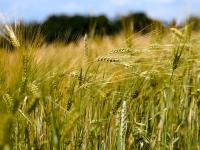
Barley is one of the most significant agricultural crops, yet it still holds surprises. An international team of researchers from seven countries, including Olomouc-based scientists from the Institute of Experimental Botany of the CAS, compared the genomes of 25 barley species. They discovered that the plant’s evolutionary history is much more turbulent than previously assumed. The results of the study, published in the journal Nature, can aid in barley breeding.
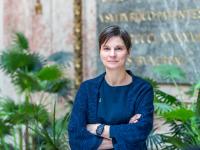
How should an ombudsperson approach a conversation with someone who comes to confide in them about a difficult experience? Sixteen ombudspersons from the institutes of the Czech Academy of Sciences completed a two-day training course led by professional mediators, where they honed this skill. CAS Ombudsperson Dana Plavcová, who organised the event, describes the insights the participants gained.
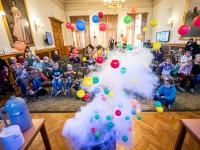
The sixth annual Week of the Czech Academy of Sciences, held from 2 to 8 November 2026, brought over three hundred science popularisation events to locations throughout the Czech Republic, from Prague to Ostrava. Spanning more than fifty research institutes across the natural, technical, humanities, and social sciences, the festival offered open days, lab tours, and a varied accompanying programme full of lectures, workshops, debates, and panel discussions – all free of charge.
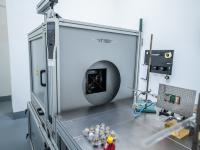
Next year, Czech astronaut Aleš Svoboda is set to participate in a mission to the International Space Station. Experts from the Nuclear Physics Institute of the Czech Academy of Sciences are testing some of the equipment and experiments he will bring on board. A new high-performance T100 cobalt irradiator, officially inaugurated on 30 September 2026 by CAS President Radomír Pánek, will be a key asset in this process. The T100 is one of the most powerful devices of its kind in the Czech Republic and is located at the institute’s Bulovka facility in Prague.
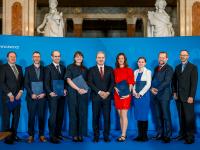
Three experienced researchers and six promising scientists received the Academic Award – Praemium Academiae and the Lumina Quaeruntur fellowship on 9 November 2026. Each of these awards targets a different group of researchers at various stages of their careers, but there is one thing the honours have in common: they are the highest form of grant support that the Czech Academy of Sciences offers. Thanks to this funding, the laureates can focus on research with the potential to transform their fields and influence people’s lives.
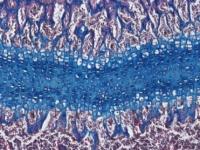
People with achondroplasia are documented throughout history – from ancient Egypt to the courts of European kings. Only today has science reached a level where it can successfully unravel the complex causes of growth disorders and find treatment options. One researcher who has long focused on this topic is cell biologist Pavel Krejčí from the Institute of Animal Physiology and Genetics of the Czech Academy of Sciences, whose work we featured in A / Magazine, the annual English-language magazine of the Czech Academy of Sciences.
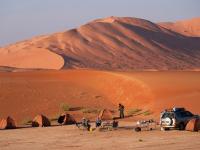
Desert settlement models have long been based on the assumption that where there was water, there were people. According to a new study published in the prestigious journal Nature, however, stone was an equally important resource. If it was absent, the area remained uninhabited despite an abundance of freshwater. Scientists from the Czech Republic, Austria, Portugal, the United Kingdom, the USA, and Oman have created a freely available model that predicts where in arid regions anywhere in the world people dependent on stone tools could permanently live.
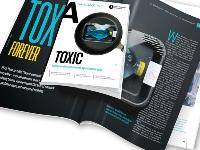
They have been found in the snow on the peak of Mount Everest and in the depths of the Mariana Trench. We drink them in our water, and they rain down on us. And because they essentially don’t decompose, they accumulate in the environment. In other words: every milligram of “forever chemicals” ever created on Earth is still circulating somewhere in the ecosystem, with more added every single day. While the chemicals known as PFAS are human-made, many animals also produce remarkable cocktails of toxic substances. Common bees are a case in point. What happens when one stings us, and what toxins unleash a cascade of pain, burning, and itching?
Poisons take center stage in the latest issue of A / Magazine.
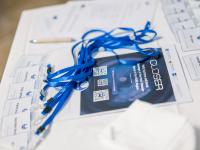
How do social divisions shape political parties and political systems in the post-Ottoman space? How different are the social and political cleavages in the Middle East and North Africa region from those in Europe, and how were they influenced by history? The international, interdisciplinary CLOSER project aims to take a deeper look at a region that is often not fully understood by European elites and the public alike. Supported by a European Research Council Synergy Grant, the project started in June 2026 and will run until 2032. On Friday, 16 October 2026, the Czech Academy of Sciences hosted the kick-off meeting for the project’s principal investigators, leadership from participating institutions, researchers, and students.

Czech, German, Austrian or Italian? Preacher, philosopher, or mathematician? Prague's Bernard Bolzano, born exactly 245 years ago, was all these things. Now, all his works are to become available online, thanks to Mexican researcher Elías Fuentes Guillén, who has been based at the Institute of Philosophy of the Czech Academy of Sciences since 2018, making the immensely rich legacy of this versatile National Revival intellectual accessible to the public. In the latest issue of A / Magazín, he explains why Bolzano became a crucial figure for subsequent generations of researchers and why he was a thorn in the side of some of his contemporaries.
The Czech Academy of Sciences (the CAS)
The mission of the CAS
The primary mission of the CAS is to conduct research in a broad spectrum of natural, technical and social sciences as well as humanities. This research aims to advance progress of scientific knowledge at the international level, considering, however, the specific needs of the Czech society and the national culture.
President of the CAS
Prof. Radomír Pánek started his first term of office in March 2025. He is a prominent Czech scientist specializing in plasma physics and nuclear fusion.