
ERC-funded CLOSER Project Highlights the Middle East and North Africa Region
21. 10. 2026
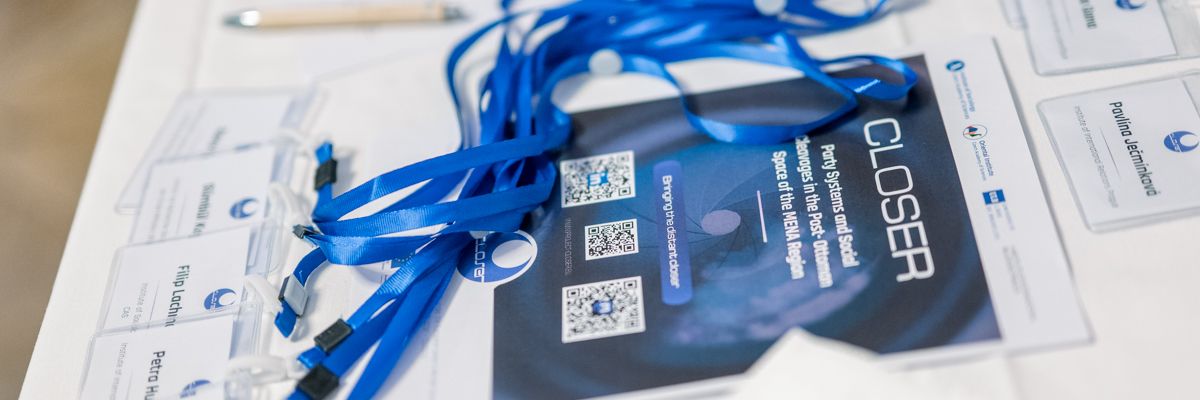
How do social divisions shape political parties and political systems in the post-Ottoman space? How different are the social and political cleavages in the Middle East and North Africa region from those in Europe, and how were they influenced by history? The international, interdisciplinary CLOSER project aims to take a deeper look at a region that is often not fully understood by European elites and the public alike. Supported by a European Research Council Synergy Grant, the project started in June 2026 and will run until 2032. On Friday, 16 October 2026, the Czech Academy of Sciences hosted the kick-off meeting for the project’s principal investigators, leadership from participating institutions, researchers, and students.
The project is unique in its international reach and the collaboration of its three principal investigators: French political scientist Clément Steuer from the Institute of Sociology of the CAS, who has long been based in the Czech Republic and serves as CLOSER’s coordinator; historian Jan Zouplna from the Oriental Institute of the CAS; and electoral geographer Gilles Van Hamme from the Université libre de Bruxelles.
“We anticipate a team of around forty researchers in total. The project will yield top-tier publications and contributions to the field on both an empirical and theoretical level. Our aim is to deepen our understanding of how political parties function in the Middle East and North Africa,” explains Jan Zouplna.
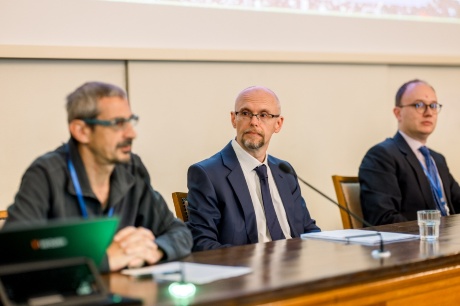
The three principal investigators, from left: Gilles Van Hamme, Jan Zouplna, and Clément Steuer
The researchers will focus on a set of countries that were all part of the Ottoman Empire at one time, but since the late 19th century – and especially following World War I – have undergone diverse historical developments. This divergence is reflected, among other things, in a range of present-day societal differences. CLOSER intentionally compares countries with distinct political systems: Tunisia, Egypt, Lebanon, Israel, Palestine, Jordan, Türkiye, and Kuwait.
Examining the past, including the region’s post-colonial legacy, will be a crucial part of the study. Local researchers are set to play a significant role in the project. “In my team, for instance, they make up roughly half the members. Across the entire project, we have scholars from Europe, the Middle East and North Africa, as well as the United States,” adds Jan Zouplna.
This is the first-ever ERC grant for both the Oriental Institute and the Institute of Sociology of the CAS. It represents a significant achievement, given the immense difficulty of securing this type of funding. The European Research Council, established by the European Commission, has awarded the project nearly €10 million for the next six years of research.
News and updates about the project will be shared on the project’s website and on its LinkedIn profile.
Text: Leona Matušková, External Relations Division, CAO of the CAS
Translated by: Aneta Ryntová, External Relations Division, CAO of the CAS
Photo: Pavlína Jáchimová, External Relations Division, CAO of the CAS
 The text and photos marked CC are released for use under the Creative Commons license.


Read also
- Bernard Bolzano: An Inconvenient Genius Ahead of His Time
- Our Health in the Hands of AI: How to Regulate It and What to Watch Out For?
- CAS condemns attack on National Academy of Sciences of Ukraine
- New CAS Program Already Has First ERC Grant Winners to Its Credit
- Three researchers from the Czech Academy receive prestigious ERC grants
- Ombudswoman of the CAS Dana Plavcová: I'm glad when things change for the better
- Early-Career Researchers from the CAS Received the 2026 Otto Wichterle Award
- Jackal Expansion Across Europe Facilitated by Humans, Curbed by Wolves
- Languages Don’t Overload the Brain, Psycholinguists Say
- Czech Academy of Sciences Evaluation – Beyond Metrics, Accent on Peer Review
The Czech Academy of Sciences (the CAS)
The mission of the CAS
The primary mission of the CAS is to conduct research in a broad spectrum of natural, technical and social sciences as well as humanities. This research aims to advance progress of scientific knowledge at the international level, considering, however, the specific needs of the Czech society and the national culture.
President of the CAS
Prof. Radomír Pánek started his first term of office in March 2025. He is a prominent Czech scientist specializing in plasma physics and nuclear fusion.