

Ombudswoman of the CAS Dana Plavcová: I'm glad when things change for the better
27. 08. 2026
Sometimes it is enough just to listen to someone and offer advice. At other times, however, she must investigate the case and propose measures. Dana Plavcová has been the Ombudswoman of the Czech Academy of Sciences for almost a year and in that time, she has received 31 complaints. What has she managed to change? Why is she expecting the number of cases to potentially rise further? And what can each of us do to foster a more respectful environment?
Dana Plavcová joined the Academy in September 2025 after more than 20 years in the non-profit sector. She spent 15 of those years in the People in Need organization, where she worked on development programs in sub-Saharan Africa and protecting both employees and aid recipients from unethical behavior. In addition to investigating complaints, her role as CAS Ombudswoman also involves the prevention of inappropriate behavior. We looked back together at her tenure so far.
How did you spend the summer? Did you get to rest?
I spent the summer at my cottage. It is a great base for trips, but above all, a never-ending source of manual labor. It really cleared my head and strengthened my back and other muscles.
When you started at the Academy of Sciences, you considered it an advantage that you were coming from outside the institution. Does that still hold true after a year?
My opinion hasn’t changed. It’s a good thing that, as the ombudswoman, I don’t have a work history at the Czech Academy of Sciences. It's easier to maintain objectivity and perspective because I don't have any ties that would constrain me.
In the first three months, you received 13 concerns. How many do you have under your belt now?
Over the eleven months, a total of 31 concerns have come in. Most of them have pertained to workplace conflicts. Lately, colleagues have also been coming to me for advice on how to handle a particular situation.
Are the types of concerns changing as well?
Compared to last year, more sensitive or serious cases are coming in. I received the most concerns during January.
What do you think is behind this?
It seems that during the holidays, people had time to reflect on things, think their situation through, and only then decided to address it with me. Also, some people's employment contracts came to an end, and they didn't want to leave without speaking up about the problems in their workplace.
Could you remind us how an investigation is conducted?
I conduct investigations in approximately half of the reported cases – it depends on the agreement with the person filing the concern and the type of the case. For example, if someone complains about being bullied, in the first phase, I try to find out from them exactly what the alleged bullying looks like, how it manifests, when it occurs, how often, how long such behavior has been going on, and what had preceded it. I also ask for emails or other documents that would substantiate the described behavior. Additionally, I find out who witnessed such situations, and whether the person allegedly engaging in the behavior acts similarly towards anyone else.
And if it turns out that more people have a similar experience?
In that case, I want to obtain their statements as well. If the described behavior is serious and there are witnesses, I want to contact them before I approach the person whom the complaint concerns – especially if they are in a position of power from which they could influence the witnesses.
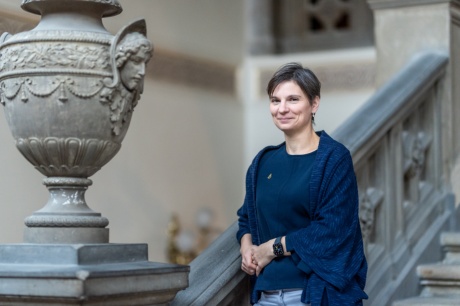
Dana Plavcová is the first Ombudsperson of the Czech Academy of Sciences.
What is essential for you when conducting an investigation?
I try to remain neutral and objective, and to separate facts from their interpretations. To protect the rights of both parties, I also place great emphasis on confidentiality. In the initial phases, I usually also inform the director of the respective institute. In less serious cases, I don't need to conduct a major investigation with many witnesses; instead, my focus is on discretion and finding an amicable solution. But every case is a bit different. Only my goal remains the same – that the inappropriate behavior, if it is occurring, stops.
On the other hand, which cases do not require an investigation?
Sometimes it is not necessary because it might just be a dispute between two people, and we don't need to prove who did what to whom. Rather, we try to better establish their cooperation and communication. Another category consists of consultations, where the person comes for advice on a specific situation, which we discuss and evaluate possible scenarios and their risks. This often results in the person deciding to resolve their problem themselves, because it is nothing they cannot handle – they just need to clarify what their options are. There are also cases where employees just want to complain about someone. However, when I ask for further details needed to assess the allegedly unethical behavior, they either do not provide them or say that just talking to someone about it was enough for them.
Do you also recommend remedial measures to the institutes?
Yes, and it happens quite often. I have already recommended training or coaching, labor law measures, reassignment from a leadership position to a different one, moving to another office, or professional mediation. I am glad that my recommendations are usually implemented in practice.
How do institute directors perceive your work?
I think most of them realize that the role of an ombudsperson can help them establish a healthier and safer environment. However, some certainly fear that a more serious case might surface, which I understand. So far, working with the directors has mostly been excellent.
Have you already achieved systemic changes at the level of the entire Academy of Sciences?
One of the first reports I received concerned the different working conditions that an institute was offering to scientists of retirement age, regardless of their performance. The director of the institute adjusted the conditions, but it turned out that other institutes were applying similar practices as well.
What did you do next?
I raised the issue during a meeting of the Academy Council, institute directors, and institute board chairpersons. Offering worse working conditions to scientists of retirement age than to their working-age colleagues can indeed be seen as discriminatory, if age is the sole reason. I haven't recorded any further concerns of this nature since then, so I hope it is no longer occurring.
What other measures are you currently working on?
I am advocating for an update to the Code of Conduct of the Czech Academy of Sciences and its expansion to address close personal relationships in situations of unequal hierarchical power, including safeguards against the related conflicts of interest.
Which of your other planned activities have you already managed to get off the ground?
I have prepared lectures in Czech and English about my work and different forms of inappropriate behavior, as well as a workshop using model scenarios involving ethically ambiguous situations. I am planning a similar workshop for managers. By the way, the National Contact Centre for Gender and Science is finalizing an online course on social safety. I am not involved in the course myself, but I am very pleased about it, and I am sure it will be useful within the Czech Academy of Sciences.
Where can colleagues find out more about your activities?
The website provides colleagues with the most important information about my work. Some institutes are also incorporating the role of the Ombudsperson of the Czech Academy of Sciences into their internal policies – a practice I would like to strengthen next year.
Are you continuing the collaboration with ombudspersons at individual institutes as well?
Currently, 27 institutes have ombudspersons, and we meet twice a year. In addition, I organize training sessions for them; this autumn, we will focus on effective communication – a topic they chose themselves. Many of my colleagues are new to the role and have no previous experience in rights protection. Therefore, together with two colleagues, both experienced ombudswomen, we organized an "ombuds essentials" training course. Institute ombudspersons can also consult me on more complicated matters, and some have already made use of this option.
Do you consider it important for institutes to have their own ombudspersons?
If an institute ombudsperson is independent, trained, and trusted by the majority of colleagues, and if the employees additionally perceive the management as fair, they can catch and resolve most cases that would otherwise end up with me. They can generally identify problems, typically conflicts, before they escalate to massive proportions, when the opposing parties are already entrenched in their positions, making it harder to mend their relationships. So yes, the role of ombudspersons at individual institutes makes sense.
However, external ombudspersons operating at some institutes don't have this advantage, do they?
That is true, although on the other hand, employees may perceive external ombudspersons as more independent. However, it is always crucial that ombudspersons are well-selected, have a clear mandate, and are supported by the management – not only in their professional development but especially when resolving problematic situations.
And what if the complaints involve the management?
In that case, complainants can turn directly to me.
Can it happen that an institute ombudsperson forwards a case directly to you for investigation?
Yes, if they find themselves in a conflict of interest and do not feel sufficiently independent, if the case is particularly sensitive, or for other reasons. It is essential, however, that the person submitting the concern agrees to this.
Does it work the other way around, too – that you send an investigation back to the institute?
That doesn't happen. Colleagues usually have a reason for coming straight to me. If I felt their case should be handled by the institute ombudsperson, I would ask the person in question whether I could open the matter with the ombudsperson, and I would respect their wishes.
Do you also share your experiences from the Czech Academy of Sciences with ombudspersons from other institutions?
Yes. I am a member of the School Ombuds Platform, which brings together ombudspersons from universities. I am glad to be part of it because in our role, we often work independently and without a team with whom we could discuss matters related to protecting people’s rights. In the School Ombuds Platform, however, we share our practices and learn from one another. I have also been a member of the European Network of Ombuds in Higher Education for several months now.
How supported do you feel by the leadership of the Czech Academy of Sciences and the Scientific Integrity Committee of the CAS?
I feel a great deal of support from the President and members of the Academy Council, with whom I am now in more frequent contact. I truly appreciate it. I meet with President Radomír Pánek once every three months, and I brief him on more serious cases as well as my other activities. If I need to deal with anything urgently, however, he always makes time for me. We also have a good working relationship with the Scientific Integrity Committee of the CAS, and I am in contact with its president, Oldřich Tůma.
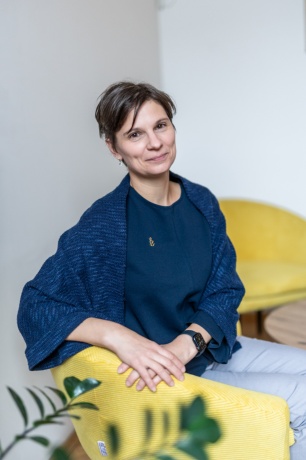
Dana Plavcová assumed the role of Ombudsperson in September 2025.
What are your plans for the new academic year?
As I mentioned earlier, I would like to advocate for the Code of Conduct to address close personal relationships and the resulting conflicts of interest. I also want to oversee that the upcoming Career Development Rules do not implicitly disadvantage certain groups – such as caregiving parents or scientists of retirement age. I would like to continue with our preventive activities and visit other institutes that I haven't been to yet, especially those without an ombudsperson.
What should change in the protection of employees' rights as soon as possible?
In the institutes, there are often people in leadership positions at various levels who are excellent scientists, but they haven't always received the support to also become good managers. Training and cultivating a systematic culture of respect, open communication, timely and sensitive conflict resolution, and transparent and fair decision-making would help change the situation. This way, we can prevent more serious interpersonal problems. But there are other challenges, too.
Such as?
Fixed-term contracts do not protect workers during critical phases of their lives, for instance, during pregnancy. In some places, men hold a significant majority of leadership roles, which can exacerbate inequalities in access to decision-making, career advancement, and resources.
What groups are similarly vulnerable?
PhD students are among the most vulnerable due to the power imbalance. They are often dependent on their supervisor. There are cases where they cannot simply change research groups because it would mean not finishing their PhD. Occasionally, they have to endure behavior that should not occur at the Academy of Sciences. Yet they are afraid to speak up, fearing it would make their situation even worse.
What can each of us do about this?
Stand up for them. If you see that PhD students are not being treated with respect, speak up for them. Pressure from team colleagues can stop inappropriate behavior and contribute to improving the working environment.
You mentioned that the number of reported cases might decrease thanks to prevention. Do you think this will become apparent anytime soon?
It is probably still too early for that. I actually expect a further increase as trust in the ombudsperson institution grows. I am convinced that there are still many people at the Academy of Sciences who are subjected to some form of inappropriate behavior and are considering whether to reach out to me. It is not easy for them. They might feel they are risking their career and reputation, that nothing will be resolved anyway, and moreover, that they will be seen by others as "troublemakers." And so they often tend to tell themselves, "I will just put up with it."
What would be your message to them?
If you are experiencing anything unethical, but you are hesitating about whether to contact me, please do reach out. We will discuss the situation and talk about how to resolve it. In absolute confidence. I will not take any action on my own without your consent.
What is your main takeaway from your first year?
That my work is meaningful. I feel good when things change for the better. Inappropriate behavior is named and put to a stop, people regain a sense that they are being treated with dignity and fairness, and their trust in their employer is restored. Fortunately, there have been quite a few such cases.
|
Ing. Dana Plavcová Dana Plavcová spent more than twenty years working in the non-profit sector. For fifteen of those years, she worked in the People in Need organization (Člověk v tísni), where she held various positions, including advisor for equal opportunities. Most of her work focused on the quality and advancement of humanitarian and development programs in sub-Saharan Africa. In this role, she helped establish and strengthen measures to protect workers and aid recipients from unethical conduct by staff. She has been serving as the Ombudsperson of the Czech Academy of Sciences since 2025. |
Prepared by: Zuzana Dupalová and Luděk Svoboda, External Relations Division, Centre of Administration and Operations of the CAS (SSČ AV ČR)
Translated by: Aneta Ryntová, External Relations Division, CAO of the CAS
Photo by: Jana Plavec, External Relations Division, CAO of the CAS
 The text and photos marked CC are released for use under the Creative Commons license.
Read also
- Bernard Bolzano: An Inconvenient Genius Ahead of His Time
- Our Health in the Hands of AI: How to Regulate It and What to Watch Out For?
- CAS condemns attack on National Academy of Sciences of Ukraine
- New Academy of Sciences Program Already Has First ERC Grant Winners to Its Credit
- Three researchers from the Czech Academy receive prestigious ERC grants
- Early-Career Researchers from the CAS Received the 2026 Otto Wichterle Award
- Jackal Expansion Across Europe Facilitated by Humans, Curbed by Wolves
- Languages Don’t Overload the Brain, Psycholinguists Say
- Czech Academy of Sciences Evaluation – Beyond Metrics, Accent on Peer Review
- Ordovician Fauna Beneath Prague – New Arthropod Found During Metro Line Dig
The Czech Academy of Sciences (the CAS)
The mission of the CAS
The primary mission of the CAS is to conduct research in a broad spectrum of natural, technical and social sciences as well as humanities. This research aims to advance progress of scientific knowledge at the international level, considering, however, the specific needs of the Czech society and the national culture.
President of the CAS
Prof. Radomír Pánek started his first term of office in March 2025. He is a prominent Czech scientist specializing in plasma physics and nuclear fusion.