
Languages Don’t Overload the Brain, Psycholinguists Say
04. 06. 2026
People who speak multiple languages tend to be more flexible – and their brains resist dementia for longer. The mechanisms behind multilingualism are being studied by Kateřina Chládková and her team at the Institute of Psychology of the CAS. In the 1/2026 issue of A / Magazine, the researcher also explained why it’s worth taking inspiration from infants and toddlers when learning languages.
“Včera I was at school a bylo to děsně boring,” says a roughly ten-year-old girl to her friend at a bus stop in Prague, Czech Republic. An older passerby shakes his head in disapproval, muttering something about today’s youth and the butchering of Czech. What he doesn’t realize is that the girl has just demonstrated textbook code-switching – switching mid-sentence from one language or dialect to another – a hallmark of bilingualism. And it’s something that deserves admiration rather than contempt.
“When someone jumps between languages, even within a single sentence, it shows they’re using their cognitive resources to the fullest,” explains psycholinguist Kateřina Chládková from the Institute of Psychology of the CAS, who studies language acquisition. “They’re speaking Czech but suddenly reach for an English phrase or word because it comes to mind faster, is easier to pronounce, or simply fits the context better.”
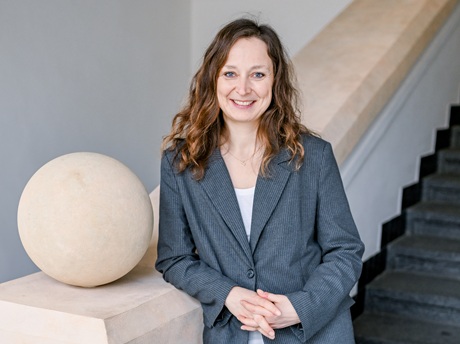
Kateřina Chládková from the Institute of Psychology of the CAS.
What exactly happens in the brain during code-switching is the subject of intensive research. We already know that speaking multiple languages affects the brain’s structure. As it happens to turn out, languages are not stored separately in the brain – they coexist and constantly interact. And this metaphorical drawer in our heads appears to be somewhat expandable.
“People can accommodate a large number of languages, provided they are exposed to them sufficiently and in the right way. You cannot ‘overload’ on languages. Researchers haven’t found any limit even when it comes to children. In Ghana, for example, it’s common to speak four languages, and some people speak as many as six,” the psycholinguist notes.
Africa is, in fact, the cradle of multilingualism. Around 2,000 languages are spoken there – roughly a third of all the world’s languages. In a single village, dozens of them may intermingle. But multilingualism isn’t unique to this continent. It thrives in Asia and the Americas, as well as in Europe. In fact, most of the world’s population today speaks more than one language. The Czech Republic is no exception – due in part to Slovak, German, and Polish in its border regions, as well as Russian among older generations and English in professional settings.
HELLO, DADDY, HOLA, MAMÁ!
Let’s say we have a mother who speaks Spanish, the father English. From birth, their child is in the process of acquiring both languages – though usually not evenly. Typically, the child will hear one language more often, and their first word is often spoken in that one. But it doesn’t come later than in the case of children whose parents or guardians speak the same language.
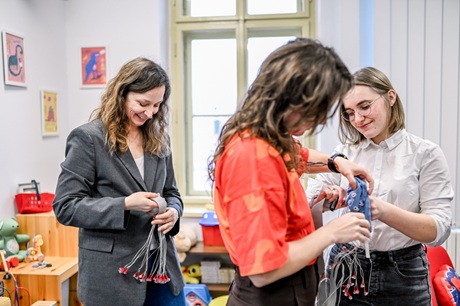
Multilingualism makes it easier to accept and respect otherness, says a researcher from the SPEAKin lab led by Kateřina Chládková.
“In a study last year, Polish researchers monitored hundreds of monolingual and bilingual infants and compared the age at which they began to babble. They did not detect any difference,” says Chládková, debunking a common myth.
According to her, how bilingual children use their two languages changes not only over time, but also depending on the situation. As toddlers, they tend to use the language of their parent or guardian who spends more time with them; as they get older, they favor the language of daycare, school, or friends.
The advantages of bilingualism are lasting – and there are many. In addition to being able to communicate across a number of countries, multilingual individuals tend to be more flexible, because their brains are better at switching between tasks. Research also suggests that they develop certain social and communicative skills earlier, along with an awareness that other people may hold different opinions. Exposure to various languages – and therefore cultures – likely makes it easier for them to accept and respect otherness and diversity.
This phenomenon has also been explored by the Prague-based research group SPEAKin lab, led by Kateřina Chládková. Her colleague Lucie Válková invited Czech monolingual and bilingual toddlers into the lab, where a nursery rhyme in Czech was read to them by a native speaker as well as a woman with a French accent. Both speakers then offered the children identical toys. The result? The one-year-olds from multilingual families were more likely to take the toy from the person with the non-native accent, whereas monolingual children tended to turn to the woman speaking more standard-sounding Czech. Together with Natálie Kikoťová, the researchers observed similar tendencies among preschoolers choosing a friend.
|
BABBLING IN SILENCE CODA – children of deaf adults – is the term used worldwide for hearing children of deaf parents. This is far from rare: up to 95 percent of deaf couples have children that are not deaf or hard of hearing. In the Czech context, such children typically first acquire Czech Sign Language and only learn spoken Czech later, in preschool. They are therefore bilingual – bimodally bilingual, across two modalities. “Some can even sign and speak at the same time, which is incredible,” says Kateřina Chládková, who also studies this type of bilingualism together with her colleague Michaela Svoboda. |
“We develop language-based preferences from a very early age, and we often carry them into adulthood. But a more diverse verbal and cultural experience can help weaken these biases,” the researcher believes.
ALZHEIMER’S CAN WAIT
Multilingualism also offers clear benefits in old age. According to some studies, learning or using multiple languages over a lifetime can delay the onset of neurodegenerative diseases by up to five years.
A recent cross-EU study likewise found that multilingualism slows brain aging. And the more languages a person knows, the more pronounced the difference compared to their monolingual peers.
That’s probably also why more and more couples from the same linguistic background are trying to give their children the advantage of a second language from infancy. Czech parents, for instance, might decide that the mother will speak with the child only in her native tongue, while the father will use only English.
Psycholinguists welcome such strategies – they believe success simply requires that the family feel comfortable with this approach. An adult’s accent in a foreign language isn’t necessarily an obstacle, either. The child effectively receives the tremendous gift of another language practically for free. However, the parent who gives up their native language in communication with their child should bear in mind that their second language might tend to be less emotionally charged.
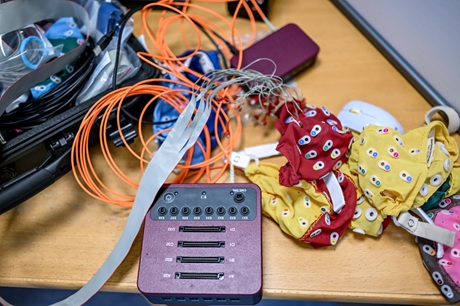
In a psycholinguistics lab, sensors, cables, and audiovisual equipment are part of the standard toolkit.
“It’s often easier to swear in a foreign language, for instance, because you don’t fully realize the weight of the words. But when someone insults you in your native tongue, it hits harder than in a foreign one – even if you understand it. Emotions simply work a bit differently in your native versus a non-native language,” Chládková notes.
Together with her colleague, Kateřina Cook, she is also exploring whether a multilingual environment could help children with a familial risk of dyslexia. Current findings suggest that dyslexia is not just about difficulties with reading and writing – its roots may lie in differences in how speech sounds are processed as early as infancy. According to one hypothesis, richer linguistic exposure could have a positive effect on children predisposed to dyslexia. Researchers at the SPEAKin lab are now testing this idea with Czech infants.
But does simultaneous bilingualism – that is, acquiring two languages from birth or very early childhood – have any downsides? A few, perhaps, but nothing alarming. For instance, it might take bilingual children a bit longer to retrieve words from a specific language on demand. If you suddenly ask them to list as many words as possible starting with “k” in one of their languages in sixty seconds, they’ll actually likely perform worse than a monolingual peer of the same age. Not because their vocabulary is smaller, but because in their mind, both languages are competing for attention.
LIKE STRINGING BEADS
According to a well-known Czech saying, “ more languages you know, the more of a person you are.” And researchers tend to agree. Each new language comes with a new culture and its specific features – and, according to research, this can subtly shape our personality.

Children take part in many of the experiments while sitting on their mother’s lap.
In one American study from several years ago, Japanese immigrant women fluent in both Japanese and English were asked to fill out a psychological questionnaire twice. When working in their native language, they appeared more reserved and home-oriented in their answers; in English, they came across as more assertive and goal-driven.
So learning a foreign language is not just about picking up new words – it also means trying out new ways of thinking. And when is the best time to start expanding this linguistic – and perhaps even character-trait – repertoire? According to Chládková, the earlier, the better: as early as preschool, ideally in a way that mirrors the natural process of first-language acquisition – and preschool is an age when children readily accept a new language as part of their world. Initially, it’s enough to surround children with the language during everyday activities and let them absorb its melody and rhythm.
“By tuning into the sound of the language, they create this imaginary thread on which they can later string individual beads – words and grammatical rules. Without a solid thread, the beads can scatter at any moment. Melodic and rhythmic patterns also signal connections between parts of sentences, which makes learning much easier,” the psycholinguist explains.
That’s why nursery rhymes, songs, and clapping or tapping to the rhythm – just like in first-language learning – are such helpful tools. Engaging the body also makes it easier to internalize a new language.
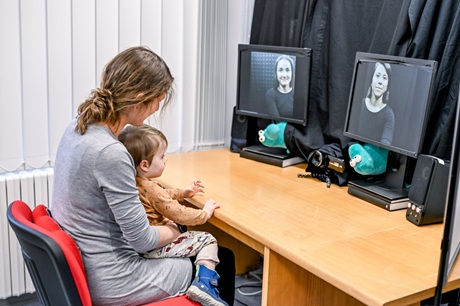
A young research participant listening to a speaker with and without a foreign accent. Researchers then observed from whom the child took a toy.
IS TEXT HOLDING US BACK?
By contrast, it’s better to hold off on written text, as it can distract from the melody of the language. For preschoolers or schoolchildren who are still learning to read and write in their native language, working with written material in another language may even be confusing. According to Chládková, children should encounter their first textbook only after several years of exposure to the spoken form. After all, even in our native language, we first listen, then speak, and it’s not until more than five years that we cautiously step into the world of reading and writing.
For Czech children, who under new national curriculum guidelines will begin compulsory English from first grade starting in September 2027, this could mean encountering written English only around fifth grade onward.
In the early stages of language learning, forced memorization of vocabulary, graded translations, and even an emphasis on speaking are also counterproductive. A more useful approach is to integrate the new language into school subjects like art, music, or physical education. The teacher then simply speaks English during the lesson, allowing students to absorb the language naturally – without drills or stress.
“My son had a woodshop class held in English, where they were building birdhouses. For a long time, he didn’t even realize he was acquiring another language. And it worked really well,” Chládková recalls.
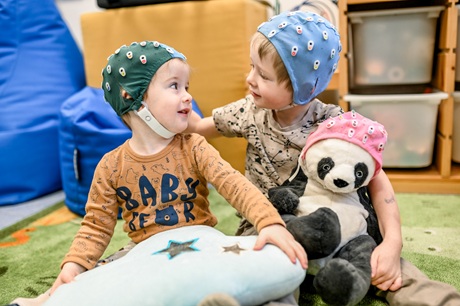
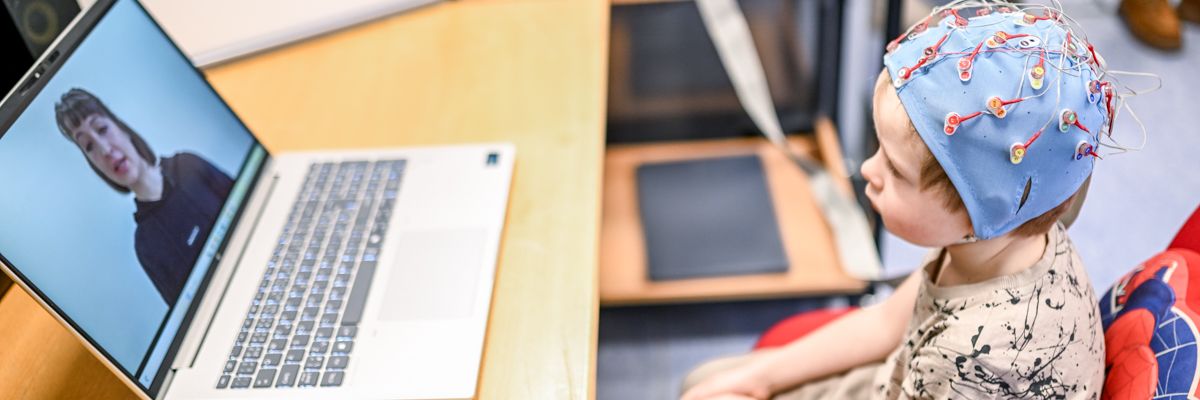
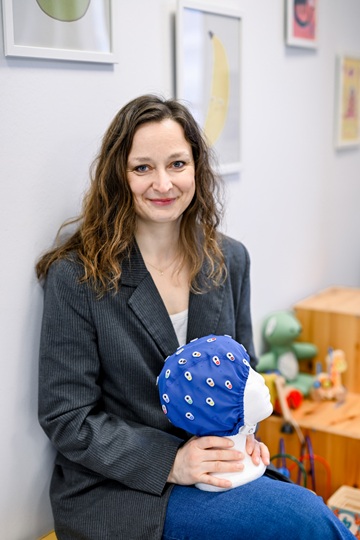
Researchers measure children’s responses to language stimuli using special sensor-equipped caps.
“So, what did you learn in Spanish today?” parents like to ask their kids when they come home from school. This is precisely the kind of question, however, that psycholinguists recommend avoiding. Excessive pressure on performance undermines motivation. For the same reason, it’s neither a good idea to constantly correct children when they might make a few mistakes singing songs in a different language.
So how can we nurture a love of languages in a way that keeps it enjoyable? One option is to watch and talk about foreign fairy tales and films in their original versions, which allow children to soak up unfamiliar expressions like sponges. For (not only) younger generations, interactive video games can also be a surprisingly powerful source – all in moderation, of course.
Don’t expect miracles, though. Sitting your child in front of a TV or computer a few times a week won’t make them fluent in “[insert language]” within a year. But you can’t go wrong by showing them why languages matter and what they can enable them to do – travel or talk about other countries, cuisines, customs, and everyday life. Curiosity and genuine interest are often the strongest drivers of language development.
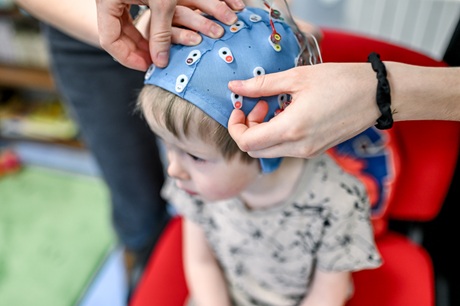
The caps used in experiments are covered with sensors that record brain activity.
DO ACCENTS GET IN THE WAY?
Around one-and-a-half billion people worldwide speak English, yet only about a quarter of them are native speakers. The vast majority communicate with a non-native accent – including TEFL (English as a Foreign Language) teachers.
Whether this can affect comprehension was the focus of an experiment by researcher Monika Kučerová. One group of preschoolers listened to an English fairy tale read by two British teachers, another by two Czechs, and a third by one Brit and one Czech. The researchers then tested how many new words the children could identify in a follow-up task. “All three groups performed comparably. It seems that preschoolers can make out new words regardless of their teacher’s accent,” Chládková sums up.
According to the psycholinguist, Czech speakers generally find it easier to communicate in closely related languages such as Slovak, Polish, or Croatian. However, mastering the vocabulary and grammar of a language branch (like Slavic languages) can actually be more difficult than with more distant languages, where we feel less compelled to map everything onto (in this case) Czech expressions and rules.
Phonetically, languages like Italian may feel more natural to Czech speakers. Italian has a regular rhythm, a distinctive melody that’s hard to miss, and a vowel–consonant structure similar to Czech.
|
A MATERNITY WARD INSTEAD OF A LAB “Malicherné báje zpupného oře” (The trifling myths of a mutinous steed.) or “Kmet podlehl spanilé larvě” (The peasant succumbed to a graceful larva). These are the kinds of phrases Martina Dvořáková and Josef Urbanec from the SPEAKin lab played to Czech newborns in a maternity ward in Havlíčkův Brod. They then replayed the same sentences with altered rhythm – and babies just one day old could already tell the difference! Their brains reacted more strongly to the unusual prosody. The researchers detected this using near-infrared spectroscopy, measuring brain activity through special sensor-equipped caps. They demonstrated that even immediately after birth, infants can distinguish between a native and non-native accent in their mother tongue. |
LIKE IN THE WOMB
Imagine dunking your head in a bucket of water and trying to listen to people talking around you. That’s roughly how a fetus perceives external sounds in the womb. It may not be able to make out specific words or sentences through the amniotic fluid, but it can clearly pick up on intonation, rhythm, and melody of speech. These then serve as a springboard for developing the native language.
According to the researcher, tuning into sound this way could also make language acquisition easier in adulthood. Fortunately, this doesn’t mean spending nine months with your head in a bucket. A kind of “prenatal listening” to a foreign language can be tried, for instance, using learning apps like Mooveez, based on current insights into how newborns acquire their mother tongue.
“Adults tend to hunt for familiar words in a foreign language, which distracts them from its rhythm. If they gave it a few weeks and listened to it in a filtered form, they might tune into its melody more easily – and then it might stick more readily,” says Chládková, who contributed to the development of Mooveez with her team.
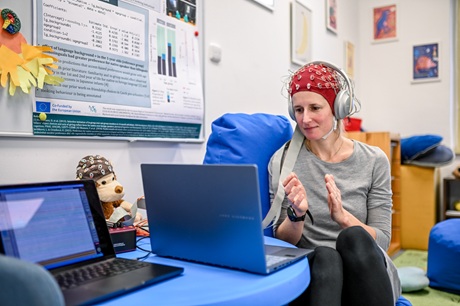
Psycholinguists at the SPEAKin lab also study foreign language acquisition in adulthood.
According to Chládková, it pays off to take inspiration from infants in later stages of learning a language as well. Since babies spend months after birth simply listening attentively to language in its natural form (speech), adults should try and do the same – exposing themselves to the target language for at least thirty minutes a day, without trying to understand it. With repeated listening – for example to a favorite podcast – they should gradually begin to pick out individual words and phrases and grasp connections.
Babies start to babble at around six months of age. This activity is also worth emulating when learning a foreign language as an adult. “Don’t put off speaking. It doesn’t have to be real words right away. Try imitating the language somewhere in private, playing with its intonation. Literally just babbling. That alone will help get you talking,” the researcher recommends, adding that it’s crucial not to fear making mistakes.
Young children make countless errors in their native language – and yet, they end up mastering it perfectly, in part thanks to those very mistakes. That’s because when they communicate something different than what they intended, their brain receives invaluable feedback that helps them move forward.
|
BABYLAB: SPEECH DEVELOPMENT EXPERIMENTS Would you like to help advance research on speech development and language acquisition? For its experiments, the SPEAKin lab is looking for bilingual and monolingual infants and toddlers – with or without a family risk of dyslexia – as well as preschoolers with and without symptoms of ADHD. The experiments take place in Prague or Olomouc. More information, including registration forms, is available online. |
MĀORI OR MALAY?
Joseph Conrad, an English-language writer and novelist of Polish origin, whose works appeared at the turn of the 19th and 20th centuries, became known for his highly refined prose. His spoken English, however, was less polished, likely because he learned the language primarily through texts, which later made it harder for him to grasp everyday speech. The extent to which the so-called Conrad phenomenon holds true is also being investigated by the SPEAKin lab.
“Our research suggests that the written form of a foreign language can block our ability to feel out its rhythm. We then tend to constantly compare the new language to our native one, which, in the early stages, is undesirable. If we begin learning with a textbook, as is often the case, we’re essentially starting from the wrong end,” Chládková says.
In one experiment, her team played a five-minute recording in Māori to Czech volunteers. While one group only listened, others also had access to various forms of transcription. The researchers then played all the groups different sentences in Māori and in Malay – a language with a very similar sound profile – this time in filtered versions so that individual words were unintelligible, forcing participants to rely solely on rhythm and melody. Their task was to identify which of the two languages they had heard in the initial recording. The results were clear: the participants who had also seen the written form performed worse than those who relied on listening alone.
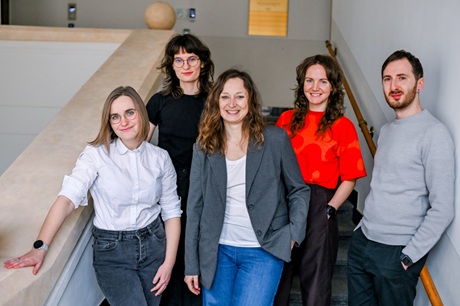
Kateřina Chládková (center) with part of her team (from left): Michaela Svoboda, Monika Kučerová, Martina Dvořáková, and Maroš Filip.
“Even the adult brain can tune into the sound structure of language, much like babies in the womb. It simply works better when text doesn’t interfere with the process,” the researcher notes.
That’s also why, in the early stages, it may make sense to watch films without subtitles – they force us to concentrate on reading, which weakens our ability to tune in to the language and absorb its rhythm. This skill appears to be far more important for mastering a language than, say, the age at which we begin acquiring it. The brain retains its ability to form new connections – the foundation of learning – throughout life. A teenager and a sixty-year-old can both absorb Māori; the younger one will usually just do so a bit more quickly.
This raises the question of whether tone-deaf people are at a disadvantage when learning foreign languages. Researchers don’t have a clear answer yet. Available findings suggest, however, that if such learners start in the traditional way, with a textbook in hand, breaking into a new language can be more difficult for them. But if they follow the path of newborns and rely heavily on listening, even a weaker sense of musicality may not be an obstacle.
“Anyone who has managed to learn their native language can’t be ‘bad at languages.’ Anyone can learn a new language, and at any age at that. You just have to take the right approach,” Chládková concludes with a smile.
 |
Kateřina Chládková, M.A., Ph.D. Kateřina Chládková spent ten years working at universities in the Netherlands and Germany. Since 2018, she has been based at the Faculty of Arts, Charles University, and the Institute of Psychology of the CAS, where she founded her own research group, SPEAKin lab. Her work focuses on native language development from the prenatal period, language acquisition and adaptation in childhood and adulthood, and the social aspects of speech communication. In 2022, Chládková received the Otto Wichterle Award, followed in 2023 by the Lumina Quaeruntur fellowship, supporting five-year research into the brain and the rhythm of speech. She also helped develop the Mooveez app for adult language learning. Together with their three children, Chládková and her husband are building a cider house in South Bohemia. |
*
The article was first published in Czech in the 1/2026 issue of A / Magazine:

1/2026 (version for browsing)
1/2026 (version for download)
All Czech and English issues of A / Magazine – the official quarterly of the Czech Academy of Sciences – are available online.
We offer free print copies (of the Czech version and the two English issues from 2024 and 2025) to anyone interested – please contact us at predplatne@ssc.cas.cz.
Written and prepared by: Radka Římanová, External Relations Division, CAO of the CAS
Translated by: Tereza Novická, External Relations Division, CAO of the CAS
Photo: Pavlína Černoch Jáchimová, External Relations Division, CAO of the CAS
 The text and photos are released for use under a Creative Commons license.
Read also
- Bernard Bolzano: An Inconvenient Genius Ahead of His Time
- Our Health in the Hands of AI: How to Regulate It and What to Watch Out For?
- CAS condemns attack on National Academy of Sciences of Ukraine
- New Academy of Sciences Program Already Has First ERC Grant Winners to Its Credit
- Three researchers from the Czech Academy receive prestigious ERC grants
- Ombudswoman of the CAS Dana Plavcová: I'm glad when things change for the better
- Early-Career Researchers from the CAS Received the 2026 Otto Wichterle Award
- Jackal Expansion Across Europe Facilitated by Humans, Curbed by Wolves
- Czech Academy of Sciences Evaluation – Beyond Metrics, Accent on Peer Review
- Ordovician Fauna Beneath Prague – New Arthropod Found During Metro Line Dig
The Czech Academy of Sciences (the CAS)
The mission of the CAS
The primary mission of the CAS is to conduct research in a broad spectrum of natural, technical and social sciences as well as humanities. This research aims to advance progress of scientific knowledge at the international level, considering, however, the specific needs of the Czech society and the national culture.
President of the CAS
Prof. Radomír Pánek started his first term of office in March 2025. He is a prominent Czech scientist specializing in plasma physics and nuclear fusion.