

Our Health in the Hands of AI: How to Regulate It and What to Watch Out For?
01. 10. 2026
Two thirds of Czech hospitals are already using artificial intelligence tools – most frequently for diagnostics and evaluating imaging methods. The role of AI has grown exponentially in recent years, and understandably so. The ability to "delegate" routine tasks to computers saves doctors time, accelerates care, and can even help make decision-making more precise. However, it also brings pitfalls. Leading European experts from EASAC and FEAM are drawing attention to these risks and issuing key recommendations to policymakers.
Artificial intelligence is developing faster than the regulations meant to govern it. This trend is especially pronounced in healthcare, which is an exceptionally sensitive field. AI systems are already being used in many areas of the sector, and have the potential of significant added value, mainly in clinical care and public health. However, without clear rules, there is a risk of data breaches, algorithmic bias and a loss of human control.
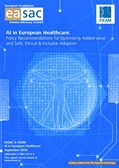
The European Academies Science Advisory Council (EASAC) and the Federation of European Academies of Medicine (FEAM) have now published a report with the aim of ensuring responsible usage of artificial intelligence in European healthcare and are calling for AI to be treated like any other measure in healthcare: its benefits must be proven, its risks understood and its performance continuously monitored.

Artificial intelligence is already helping with the evaluation of magnetic resonance imaging (MRI) scans, for instance.
“Now is the time to act, if we want to entrust our health to AI,” emphasizes André Knottnerus, EASAC Co-Chair of the Working Group. The report, written by 22 scientists from across Europe, includes ten core recommendations aimed primarily at policymakers. “It’s up to policymakers to ensure the regulatory preconditions for patient-centered, effective, safe, fair and transparent AI approaches,” adds Knottnerus.
Transparency first
In the working group, the Czech Academy of Sciences was represented by Eva Fialová from the Institute of State and Law, who worked on the chapter on legislative framework (Chapter 8 of the EASAC–FEAM report). She also stresses the importance of strategic funding for the development of both AI and support systems. "There will always be diagnoses for which it is not profitable to develop AI diagnostic tools, even if they are of great importance. The support for such development should come from other sources," she says.
It is also essential to provide representative data for training AI to prevent any group of patients from being overlooked. A fitting parallel can be found in autonomous vehicles: if an AI driver is trained exclusively on situations involving white men, it could hit an African American woman in real-world traffic. "In healthcare, this is also particularly dangerous because users tend to trust artificial intelligence and may consequently neglect the health conditions of certain groups," warns Eva Fialová.
According to the researcher, AI in healthcare does not need to be addressed in a single package. A range of legal instruments already exist that can be applied to it. The goal of the EASAC and FEAM report is to contribute to the implementation of the EU Artificial Intelligence Act and the European Health Data Space (EHDS) Regulation, the preparation of relevant legislation, and the planned EU initiative on artificial intelligence in healthcare.
|
Ten Recommendations for National Policymakers 1. Proof over promises. Before a new AI tool is implemented in hospitals – and all throughout its operation – there must be hard data showing that it genuinely helps patients. Developer promises are not enough. 2. Europe-wide guidelines. Common rules are needed to ensure AI does not favor one group of patients over another, functions reliably under diverse conditions, and does not consume excessive energy. 3. Looking ahead. It is not just about AI systems not harming a single patient today. It is necessary to address how the functioning of the entire healthcare system will change over a decade or two, how AI will reshape the doctor-patient relationship, and what impact it will have on future generations. 4. Functional integration with real-world practice. Even the best program is useless if it doesn’t work in practice. Essential prerequisites include investing in IT system modernization, harmonizing laws, and adapting workflows so that AI makes healthcare workers’ jobs easier, not more complicated. 5. A healthcare system that’s always learning. AI systems should be continuously improving through feedback and new practical experience. However, this entire process must be subject to strict oversight to prevent errors. 6. Secure cross-border data sharing. Hospitals and researchers across EU member states should be able to share data securely under uniform technical standards, with an absolute emphasis on patient privacy protection. 7. Training for doctors, developers, and management. Clinicians must learn to work correctly with AI and understand its limits, while programmers need to grasp how hospitals actually operate. It is necessary to fund training for everyone who decides on AI deployment or uses it daily. 8. Openness with patients and public trust. The public should be involved right from the system design stage. Patients have the right to know when AI co-decides their care, and clear avenues for redress must exist in case of error. 9. Smart investment in research. Funding for AI research in healthcare should not target new features alone, but also integration into routine care and oversight activities, ensuring AI does not remain a "black box." 10. Strict oversight, audit, and accountability. It must be completely clear who bears responsibility when something goes wrong. Independent bodies must regularly inspect AI systems and intervene immediately at the first sign of risk. |
Written by: Jana Kuřátková, External Relations Division, CAO of the CAS
Translated by: Aneta Ryntová, External Relations Division, CAO of the CAS
Photo: EASAC, Shutterstock
 The text is released for use under the Creative Commons license.
Read also
- CAS condemns attack on National Academy of Sciences of Ukraine
- New Academy of Sciences Program Already Has First ERC Grant Winners to Its Credit
- Three researchers from the Czech Academy receive prestigious ERC grants
- Ombudswoman of the CAS Dana Plavcová: I'm glad when things change for the better
- Early-Career Researchers from the CAS Received the 2026 Otto Wichterle Award
- Jackal Expansion Across Europe Facilitated by Humans, Curbed by Wolves
- Languages Don’t Overload the Brain, Psycholinguists Say
- Czech Academy of Sciences Evaluation – Beyond Metrics, Accent on Peer Review
- Ordovician Fauna Beneath Prague – New Arthropod Found During Metro Line Dig
- Wildfires on the Rise in Europe and Set to Double by 2100. What Can We Do?
The Czech Academy of Sciences (the CAS)
The mission of the CAS
The primary mission of the CAS is to conduct research in a broad spectrum of natural, technical and social sciences as well as humanities. This research aims to advance progress of scientific knowledge at the international level, considering, however, the specific needs of the Czech society and the national culture.
President of the CAS
Prof. Radomír Pánek started his first term of office in March 2025. He is a prominent Czech scientist specializing in plasma physics and nuclear fusion.