
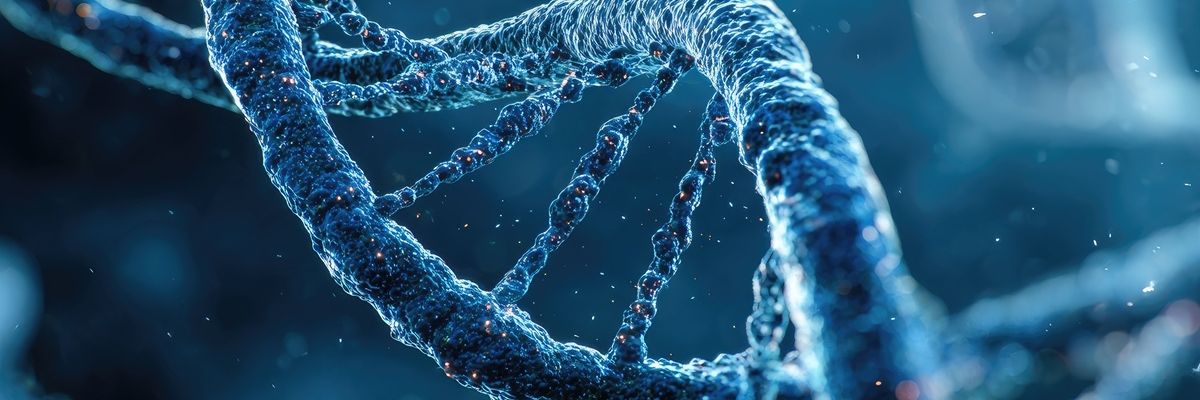
Three researchers from the Czech Academy receive prestigious ERC grants
03. 09. 2026
Cellular memory, modern OLED displays, and Chinese medicine – these are the topics studied by the researchers from the Czech Academy of Sciences who have received this year's ERC Starting Grants. The successful projects are led by Hana Polášek-Sedláčková from the Institute of Biophysics of the CAS, Ondřej Mrózek from the Institute of Inorganic Chemistry of the CAS, and Hedwig Waters from the Institute of Ethnology of the CAS. Each of them will receive 1.5 million EUR (approximately 36 million CZK) for their research over a period of five years.
Can cells “remember” how to correctly replicate their DNA? Hana Polášek-Sedláčková from the Institute of Biophysics of the CAS addresses this question in her REWIRE project. Her previous research has shown that in addition to DNA, information between cell generations can also be carried by DNA-replication proteins themselves. Now, the researcher will examine how this replication memory is created, how it is maintained during cell division, and how it is passed on to daughter cells.
“We want to test whether key DNA-replication proteins act as a kind of molecular bookmark, allowing the cell to preserve information on how to properly copy its DNA," the scientist explains.
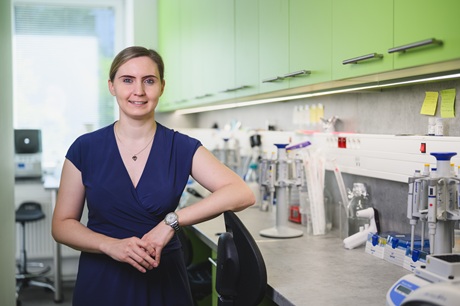
Hana Polášek-Sedláčková from the Institute of Biophysics of the CAS
Together with her team, she will also monitor this mechanism during the regeneration of the small intestine, one of the human body's fastest-renewing tissues. She also plans to investigate how replication memory is restored after extensive cell damage. The results could thus contribute to a better understanding of tissue regeneration, for example following radiotherapy or chemotherapy.
Cheaper and non-toxic displays
They offer better image quality and lower power consumption in phones. However, the main disadvantage of popular OLED displays is their price, as their core contains heavy metals – very rare and expensive elements concentrated in only a handful of deposits on the planet. Finding a functional replacement using widely accessible elements can reduce European industry's dependence on critical raw materials.
This is precisely the focus of Ondřej Mrózek from the Institute of Inorganic Chemistry of the Czech Academy of Sciences. As part of the LUMICA project, he is developing new luminescent compounds designed to replace elements like iridium or ruthenium in modern devices with readily available elements such as sodium, zinc, or carbon in low oxidation states.
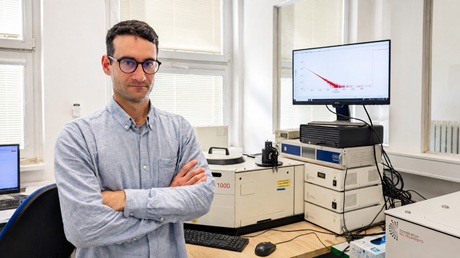
Ondřej Mrózek from the Institute of Inorganic Chemistry of the CAS
“Heavy metals are not only rare but also toxic. Our molecules built from light elements emit light just as efficiently. They could make future OLED displays and other photonic applications more accessible, sustainable and affordable,” explains the researcher.
How "wildness" is produced
Roughly eighty percent of traditional Chinese medicine remedies rely on plants, with consumers preferring wild-sourced materials. This multi-billion-dollar industry thus faces a problem: it needs stable supplies, yet climate change is making nature increasingly unpredictable.
The MetWilds project, headed by Hedwig Waters from the Institute of Ethnology of the CAS, explores how the phenomenon of "simulating wildness" is spreading. These experiments mimic natural habitat conditions with the goal of cultivating plants identical to those from the wild, as wild populations are changing due to both climate and human impacts.

Hedwig Waters from the Institute of Ethnology of the CAS
"Using five ethnographic case studies from different countries, we will show how scientists identify, stabilize, and reproduce the metabolic properties associated with wild plants," describes Hedwig Waters.
MetWilds will also describe how artificial environments through "simulated wildness" can become a source of future pharmaceuticals, biodiversity, and new forms of adaptation between plants and humans.
For the Institute of Ethnology of the CAS, this is already its fifth ERC grant, representing an unprecedented success given the small size of the institute.
Czech success
A total of six ERC Starting Grants is heading to the Czech Republic this year, half of them to institutes of the Czech Academy of Sciences. The prestigious funding honors innovative projects and grants valuable freedom to researchers who completed their doctorates no more than ten years ago.
"For a young scientist, receiving an ERC Starting Grant primarily means confirmation that their own research vision has held its ground in exceptionally demanding European competition," says Radomír Pánek, President of the Czech Academy of Sciences.
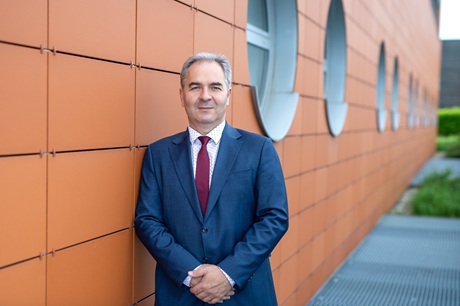
Radomír Pánek, President of the Czech Academy of Sciences
According to him, the awarding of these grants will allow talented figures to pursue bold scientific questions and begin building their own teams. "And I am very pleased that the Academy of Sciences is the most successful institution in the Czech Republic when it comes to obtaining the prestigious ERC grants," he adds.
ERC Incubator as a helping hand for researchers
From 2007 to the present, a total of 116 ERC grants has gone to the Czech Republic or to Czech principal investigators, with 46 secured by experts from the Czech Academy of Sciences. Charles University holds 32 grants, and Masaryk University in Brno has succeeded 18 times.
"Our goal is for more quality researchers to apply for ERC funding and to have the best possible conditions to succeed. That is why we are creating an ERC Incubator at the Academy of Sciences, which has been helping scientists prepare their projects and guiding them through the entire process since the beginning of this year," adds Radomír Pánek.
In this year's round, the European Research Council (ERC) received a record 4,807 applications for ERC Starting Grants and selected 421 of them. It will distribute more than 705 million EUR (17 billion CZK) into projects lasting a maximum of five years, with each project receiving up to 1.5 million EUR (around 36 million CZK).
Prepared by: Radka Římanová, External Relations Division, CAO of the CAS, drawing on the CAS press release
Translated by: Aneta Ryntová, External Relations Division, CAO of the CAS
Photo: Shutterstock, Ondřej Mrózek, Institute of Inorganic Chemistry of the CAS; Hana Polášek-Sedláčková, Institute of Biophysics of the CAS; Hedwig Waters, Institute of Ethnology of the CAS; Jana Plavec, External Relations Division, CAO of the CAS
Read also
- Bernard Bolzano: An Inconvenient Genius Ahead of His Time
- Our Health in the Hands of AI: How to Regulate It and What to Watch Out For?
- CAS condemns attack on National Academy of Sciences of Ukraine
- New Academy of Sciences Program Already Has First ERC Grant Winners to Its Credit
- Ombudswoman of the CAS Dana Plavcová: I'm glad when things change for the better
- Early-Career Researchers from the CAS Received the 2026 Otto Wichterle Award
- Jackal Expansion Across Europe Facilitated by Humans, Curbed by Wolves
- Languages Don’t Overload the Brain, Psycholinguists Say
- Czech Academy of Sciences Evaluation – Beyond Metrics, Accent on Peer Review
- Ordovician Fauna Beneath Prague – New Arthropod Found During Metro Line Dig
The Czech Academy of Sciences (the CAS)
The mission of the CAS
The primary mission of the CAS is to conduct research in a broad spectrum of natural, technical and social sciences as well as humanities. This research aims to advance progress of scientific knowledge at the international level, considering, however, the specific needs of the Czech society and the national culture.
President of the CAS
Prof. Radomír Pánek started his first term of office in March 2025. He is a prominent Czech scientist specializing in plasma physics and nuclear fusion.