
Four CAS Scientists Named Among the World’s Most Highly Cited Researchers
26. 11. 2026
Microbiologist Petr Baldrian, physicist Tomáš Jungwirth, and botanists Ondřej Novák and Petr Pyšek from the Czech Academy of Sciences (CAS) are among the world’s most highly cited scientists. They have been included in the Highly Cited Researchers list, for which Clarivate, the operator of the Web of Science database, selects researchers with the greatest influence in the natural sciences, social sciences, and humanities. Only about one in a thousand researchers receives this recognition. Six researchers from the Czech Republic made the list this year; four of them work at CAS institutes.
“The success of four of our researchers from fields as diverse as microbiology, physics, botany, and ecology shows that the CAS institutes are centres of research with outstanding international impact – research that scientists around the world build on. Moreover, with four researchers on the list, the CAS is the most successful Czech institution in this ranking,” said Pavel Baran, President of the Science Council of the CAS, commenting on the publication of the list.
In the Highly Cited Researchers list, researchers are recognised in 21 fields defined by the Essential Science Indicators (ESI) classification or in the Cross-Field category for those whose influence extends beyond a single discipline. This year’s list includes 3,839 awards in individual fields and 3,251 in the Cross-Field category. Some researchers were recognised in more than one field: 226 appear in two fields and 29 in three or more. The total number of awards (7,090) is therefore higher than the number of individual researchers listed (6,802).
PETR BALDRIAN – MICROBIOLOGY
“I am pleased that my fellow scientists find the results of my research interesting and inspiring. It is precisely the sharing of ideas and mutual inspiration from the results achieved that drive scientific research forward,” said Petr Baldrian from the Institute of Microbiology of the CAS, commenting on his repeated inclusion on Clarivate’s list of the most highly cited researchers.
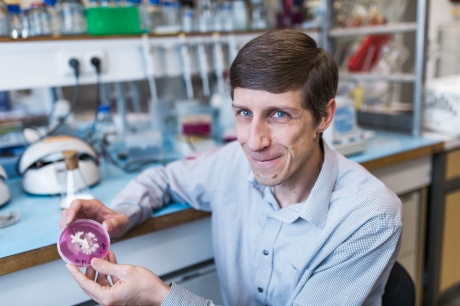
Petr Baldrian from the Institute of Microbiology of the CAS
Baldrian studies the ecology, physiology, and biochemistry of fungi and bacteria in their natural environment, particularly in soil. He initiated the creation of GlobalFungi, a global database of fungal occurrence that serves as a fundamental tool for studying fungal distribution. He is interested in how microorganisms contribute to ecosystem functioning, what relationships they have with other organisms, and how they are affected by land management and climatic factors.
From 2021 to 2025, Baldrian served as President of the Czech Science Foundation. Since April 2025, he has been a member of the Academy Council of the CAS, where he is responsible for coordinating the agenda of excellence support programmes within the CAS and in the international context.
TOMÁŠ JUNGWIRTH – PHYSICS
Tomáš Jungwirth from the Institute of Physics of the CAS has made the list of the most highly cited researchers in his category for the fifth time. He is also the only awardee from the Czech Republic representing the physical sciences. At his home institute, the renowned physicist heads the Department of Spintronics and Nanoelectronics, which he and his colleagues have built into a world-leading centre of spintronics research. He also works at the University of Nottingham in the United Kingdom.
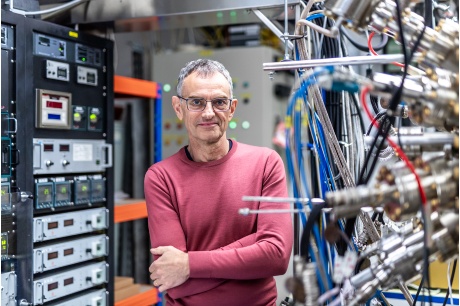
Tomáš Jungwirth from the Institute of Physics of the CAS
Spintronics is a modern field that uses not only the electron’s electric charge but also what is known as its spin to store, transmit, and process information. Spin is an intrinsic and immutable property of the particle. It can be pictured as the rotation of a tiny charged piece of matter around its own axis: the electron does not actually rotate, but it behaves as if it had this rotational motion and the small magnetic field associated with it.
In recent years, Jungwirth has focused mainly on antiferromagnetic spintronics. For more than a century, scientists assumed that magnetic materials belong to one of two fundamental classes: ferromagnets or antiferromagnets. The discovery of altermagnets as a third fundamental class, to which Jungwirth contributed, has therefore changed the way magnetic materials are understood and classified.
In September 2026, Jungwirth, together with his colleague Libor Šmejkal and Spanish-American theoretical physicist Jairo Sinova, received the Europhysics Prize from the European Physical Society for the discovery of altermagnetism.
You can read more about Jungwirth’s research in issue 4/2023 of A / Magazín, the official quarterly of the Czech Academy of Sciences (in Czech).
ONDŘEJ NOVÁK – CROSS-FIELD RESEARCH
Ondřej Novák from the Laboratory of Growth Regulators, a joint facility of the Faculty of Science of Palacký University in Olomouc and the Institute of Experimental Botany of the CAS, has been named among the world’s most highly cited scientists for the eighth time.
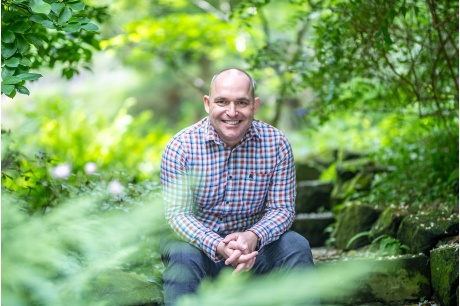
Ondřej Novák from the Institute of Experimental Botany of the CAS
“I do not see this award merely as a personal success, but above all as an acknowledgement of the work of the entire team at the Laboratory of Growth Regulators. I am glad that our joint results have an international impact. It is just a pity that rankings like this can recognise individuals but not the entire team behind these results,” said Novák.
Novák specialises in the biosynthesis and metabolism of plant hormones using highly sensitive mass spectrometry. He focuses on the relationships between the chemical structure of hormones and their biological activity. He has also long been engaged in developing new bioanalytical procedures and improving methods for isolating biologically active substances from biological samples. In 2024, he became part of a team that was awarded an ERC Synergy Grant.
You can read more about Novák’s research in the article “Leaf growth, root formation, and reproduction – Look to hormones for the answer”.
PETR PYŠEK – CROSS-FIELD RESEARCH
Botanist, ecologist, and invasion biologist Petr Pyšek works at the Institute of Botany of the CAS, where he founded the Department of Invasion Ecology, which studies alien plants introduced by humans. He investigates the global patterns that determine their distribution, why some species become invasive, and what consequences invasions have. He also contributed to the development of an international classification of alien species according to the severity of their impact on nature (Environmental Impact Classification for Alien Taxa). In addition, he is a co-author of a conceptual framework for invasions and a classification of the invasion process, as well as the founder of GloNAF (Global Naturalized Alien Flora), a global database of naturalised alien plants. In 2022, he received the Czech Head National Government Award for his research.
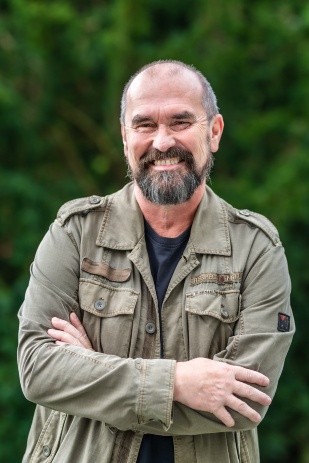
Petr Pyšek from the Institute of Botany of the CAS
Pyšek returned to Clarivate’s list of the most highly cited researchers after a one-year break. Until 2024, he had appeared on it for ten consecutive years, so this year marks his eleventh inclusion.
OVERALL INFLUENCE, NOT JUST CITATION COUNTS
The list of the most highly cited researchers is compiled by analysts at the Institute for Scientific Information (ISI) at Clarivate. To make the list, researchers must have authored multiple papers that ranked in the top 1 per cent by citations for their field and year of publication in the Web of Science Core Collection over the past 11 years.
Citations alone, however, are not decisive. Analysts further refine the selection using additional quantitative indicators, qualitative analysis, and expert assessment. Filters exclude cases of excessive self-citation, hyperprolific authorship, and anomalous publication and citation patterns. This year, for the first time, Clarivate adjusted these filters for each field separately so that they do not penalise practices that are common in a given discipline.
“At a time when trust in research is increasingly at risk, we are committed to applying rigorous criteria and expert analysis, upholding the highest standards of research integrity,” said Bar Veinstein, President of Academia & Government at Clarivate.
THE UNITED STATES LEADS, CHINA IS CATCHING UP
This year’s list includes a total of 6,802 researchers from more than 1,200 institutions in 62 countries and regions, showing where the world’s most influential scientists are concentrated. The United States has the most awards, with 2,606 (37% of the total), followed by mainland China with 1,484 (21%), whose share continues to grow. With 264 awards, the Chinese Academy of Sciences is the single most successful institution worldwide. By country and region, the United Kingdom ranks third with 520 awards (7%), followed by Germany with 373 (5%) and Australia with 292 (4%). With six researchers on the list, the Czech Republic has achieved the best result among the countries of Central and Eastern Europe.
Top-tier science is, however, highly concentrated. Although the researchers on the list work in 62 countries and regions, 86% of the awards go to just ten, and 74% to the top five.
The complete list of Highly Cited Researchers is available on the Clarivate website, where it can be browsed by country and institution.
Want to stay up to date? The A / From the Academy newsletter brings you the highlights from across the Czech Academy of Sciences – interviews, features, events, and news from our institutes. We send it out once a month in both Czech and English to CAS employees and other interested readers. You can subscribe here.
Prepared by: Luděk Svoboda, External Relations Division, CAO of the CAS, drawing on press releases from the Institute of Physics of the CAS and Palacký University Olomouc
Translated by: Aneta Ryntová, External Relations Division, CAO of the CAS
Photo: Pavlína Černoch Jáchimová and Jana Plavec, External Relations Division, CAO of the CAS
 The text and photos are released for use under a Creative Commons licence.
Read also
- CAS to Support Research on Protecting Cultural Heritage from Climate Change
- Decoding Barley: Scientists Reveal It Acquired Genes from Distant Grasses
- Ombudspersons at the CAS Practised Navigating Difficult Conversations
- Highlights from the 2026 Week of the Czech Academy of Sciences
- New Cobalt Irradiator to Aid Radiobiology and Space Research
- Czech Academy of Sciences to Support Groundbreaking Research by Nine Scientists
- Cartilage, Step on the Gas: New Treatments for Rare Growth Disorders
- Water Is Not Enough for Settlement. Stone Was Equally Important
- A / Magazine: Toxins, Languages, and Lightning on Jupiter
- ERC-funded CLOSER Project Highlights the Middle East and North Africa Region
The Czech Academy of Sciences (the CAS)
The mission of the CAS
The primary mission of the CAS is to conduct research in a broad spectrum of natural, technical and social sciences as well as humanities. This research aims to advance progress of scientific knowledge at the international level, considering, however, the specific needs of the Czech society and the national culture.
President of the CAS
Prof. Radomír Pánek started his first term of office in March 2025. He is a prominent Czech scientist specializing in plasma physics and nuclear fusion.