
The CAS Launches New Research Programs as Part of Its Strategy AV21
20. 04. 2026
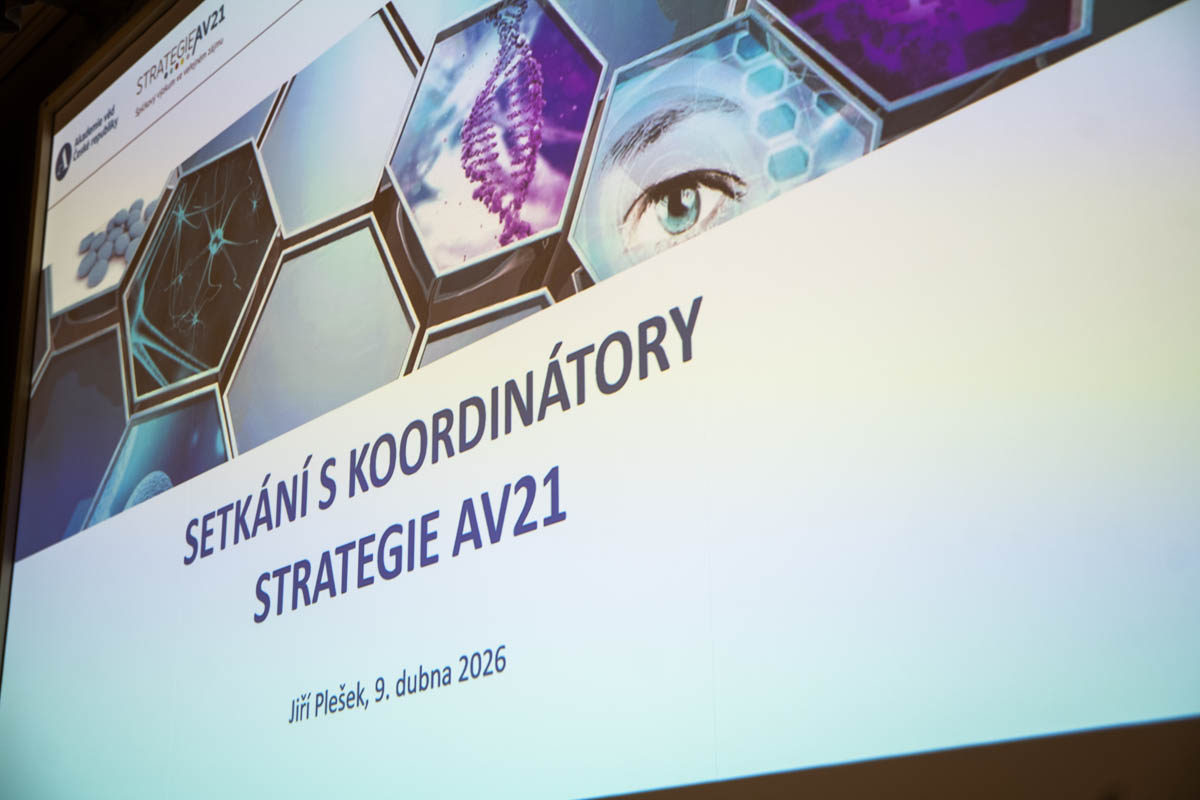
The Strategy AV21 supports research that positively impacts people’s lives. To this end, it has connected institutes of the Czech Academy of Sciences, universities, industrial partners, and the state and public sectors for over a decade. Its new research programs The Power of Objects: Materiality Between the Past and the Future, Global Biodiversity Crisis: Risks and Opportunities for Human Society, and Infectious Diseases: New Targets and Strategies were introduced at a meeting of coordinators on 9 April 2026.
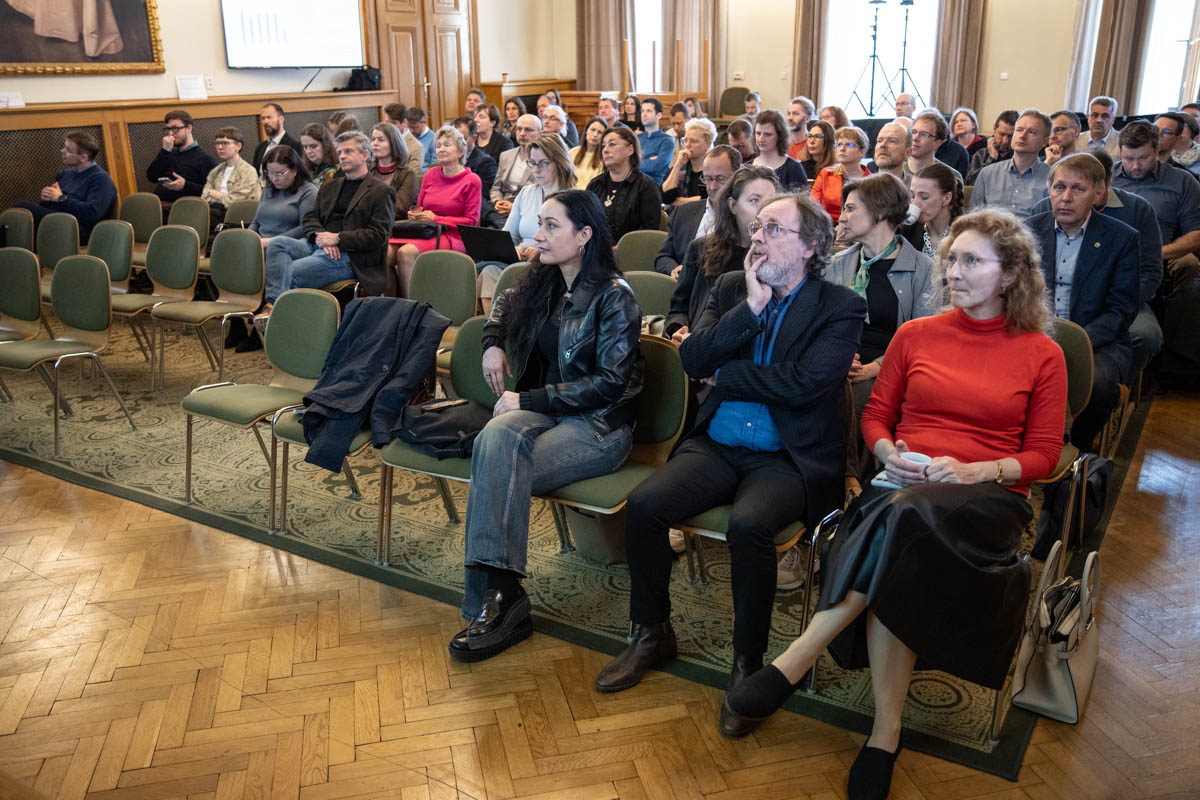
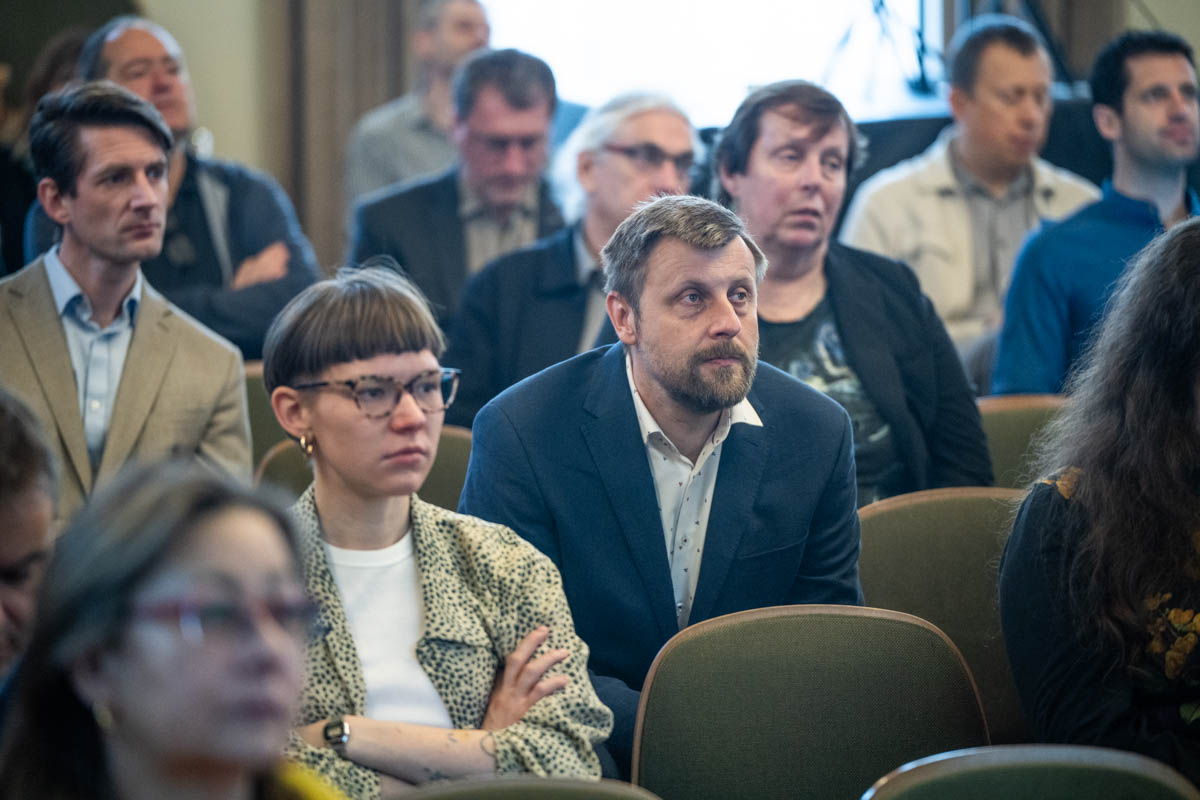
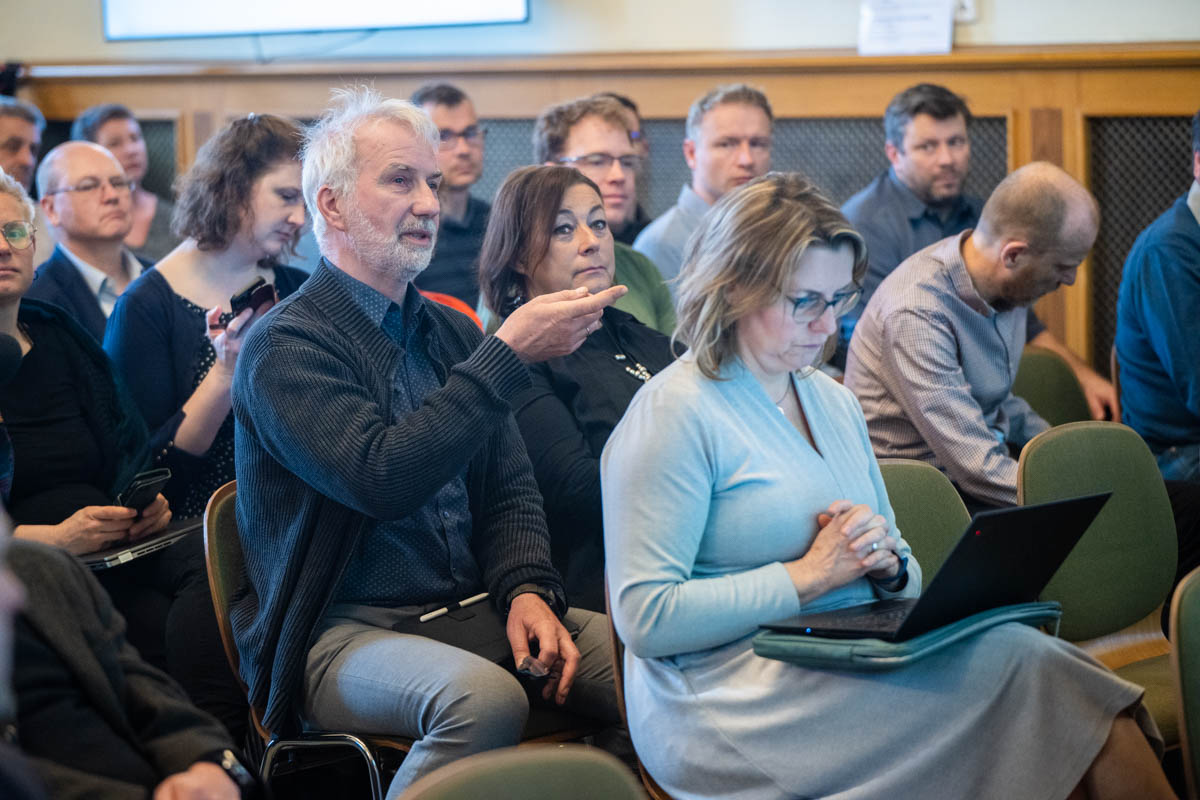
The spring meeting of coordinators of the Strategy AV21 (Strategy of the Czech Academy of Sciences for the 21st Century) research programs took place at the institution’s headquarters on Národní Street in Prague.
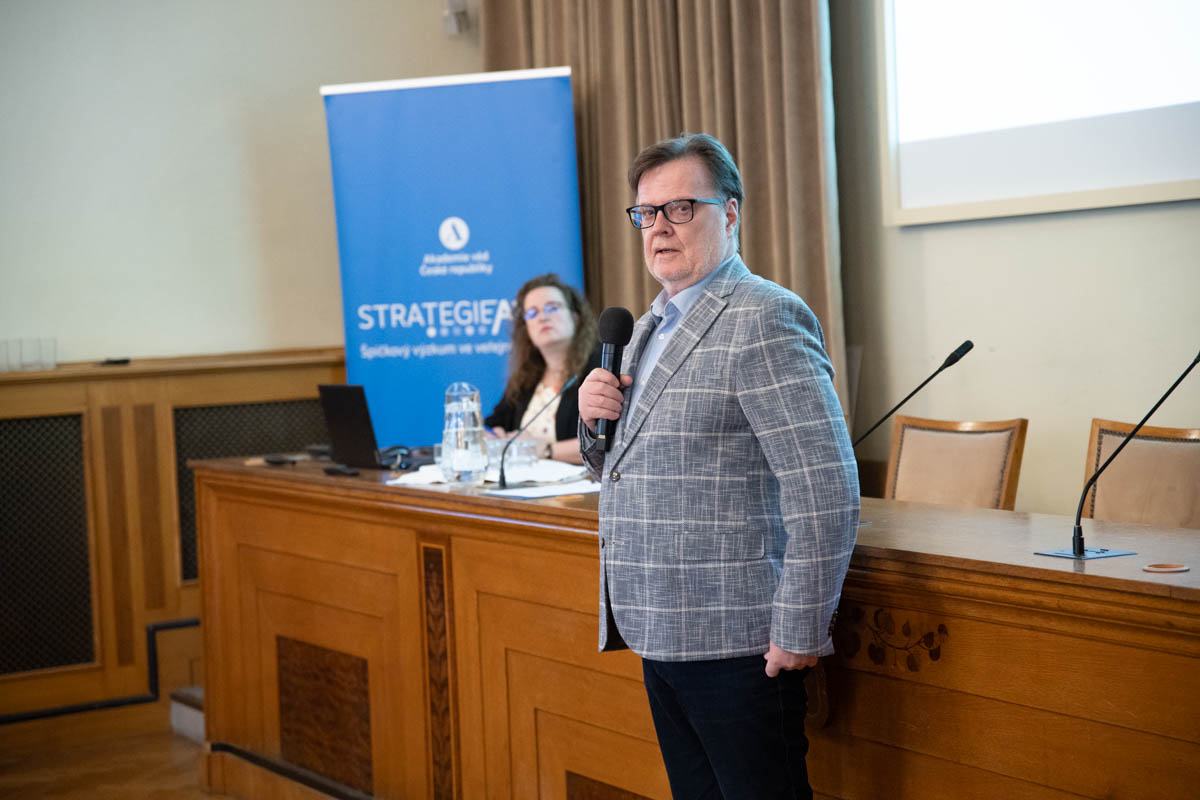
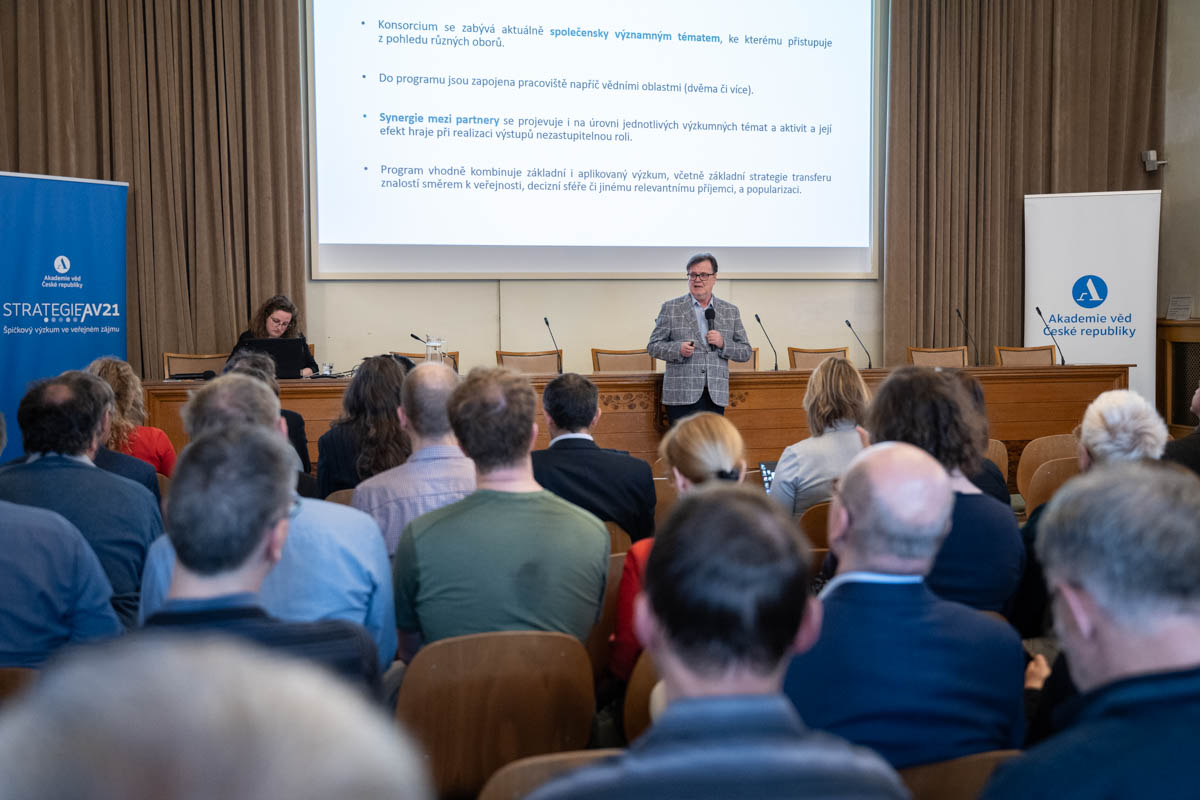
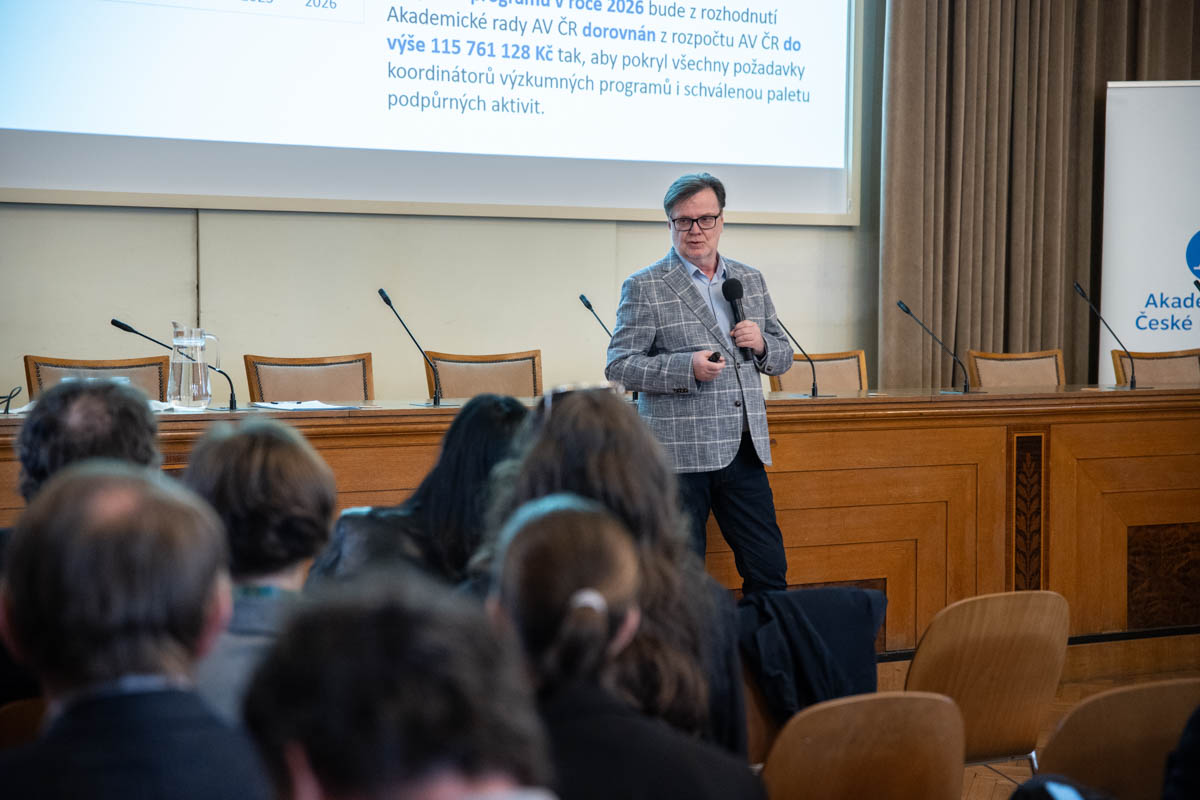
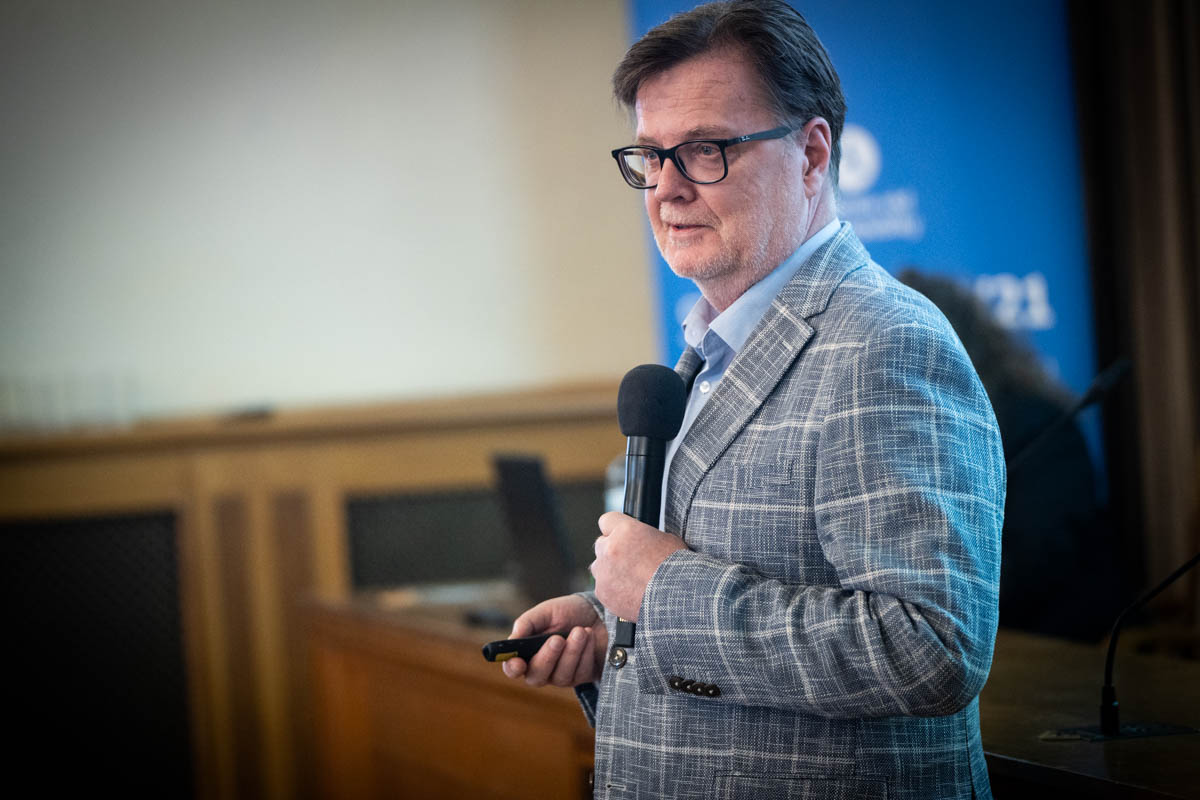
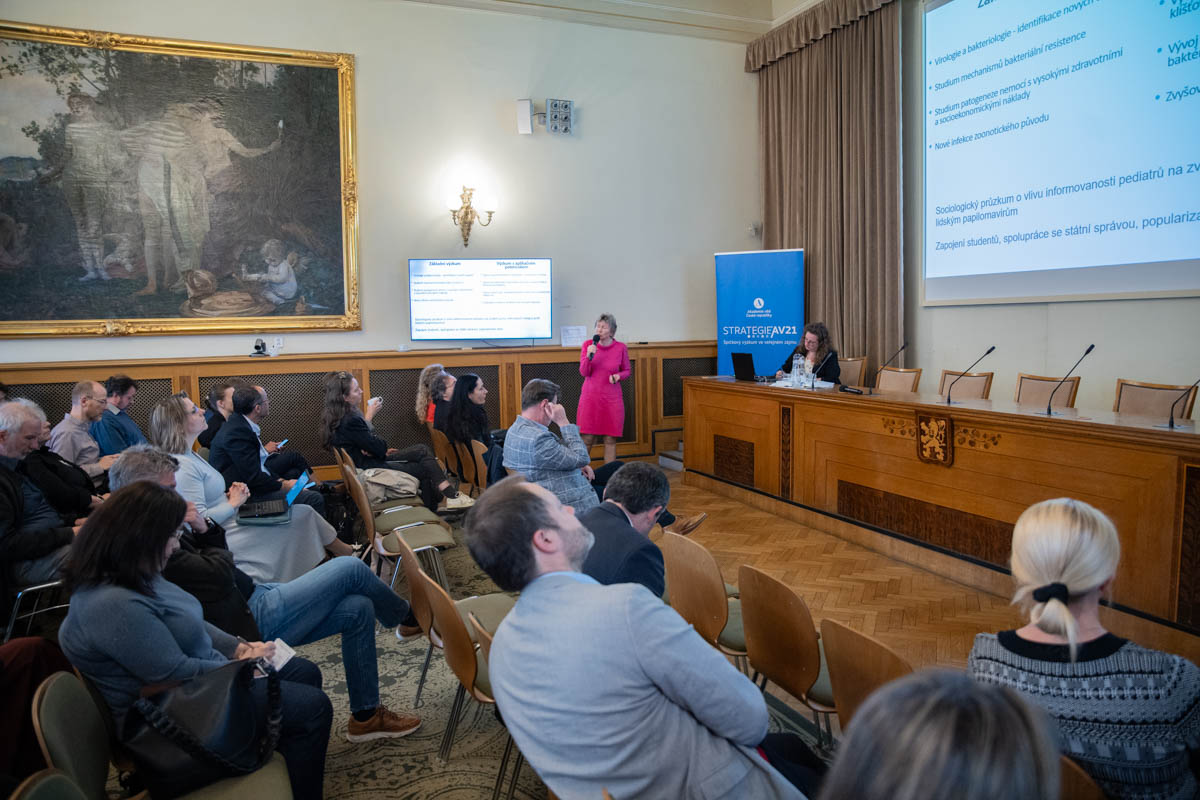
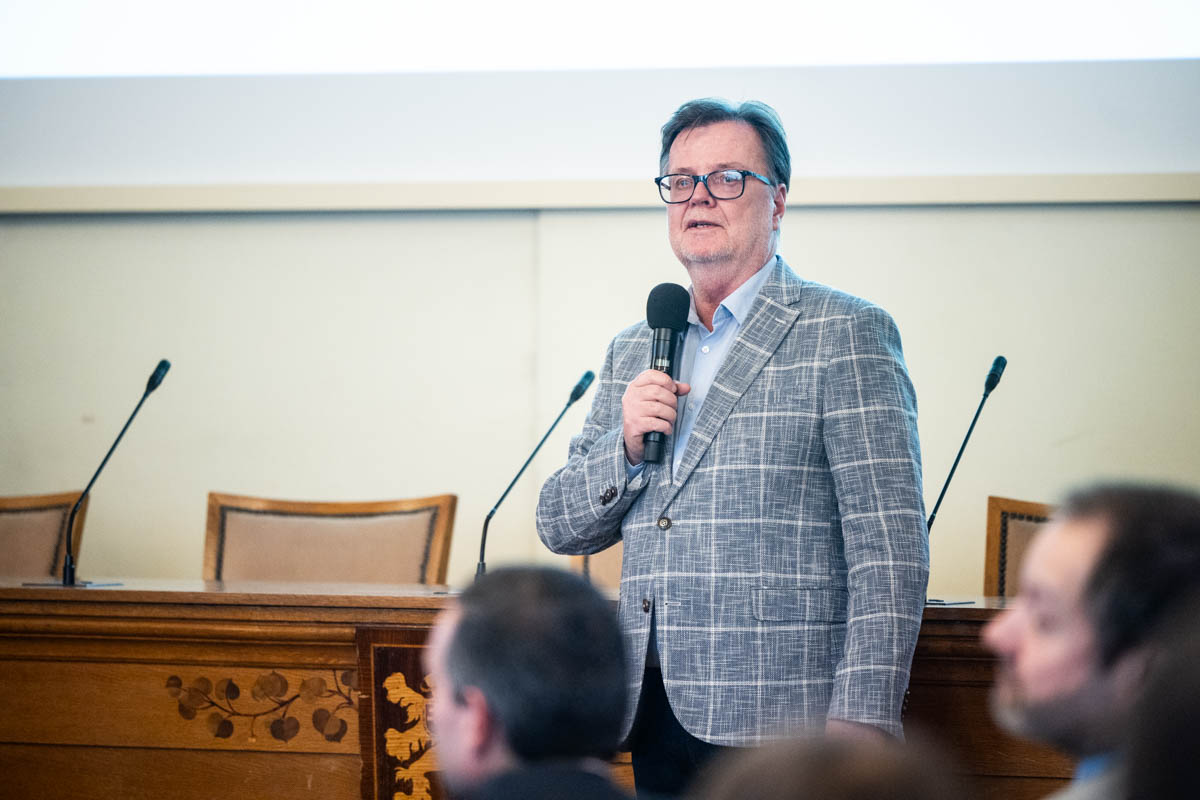
Jiří Plešek from the Academy Council of the CAS, who is responsible for coordinating the Strategy AV21, noted in his opening remarks that fifteen research programs are currently under way. Their quality is underscored, among other things, by their success rate in grant proposals. “Since 2023, we have been tracking grant collaborations that arise thanks to the Strategy AV21. In that period, researchers submitted 344 grant applications, including 135 in 2025, of which 59 percent received funding,” Plešek emphasized.
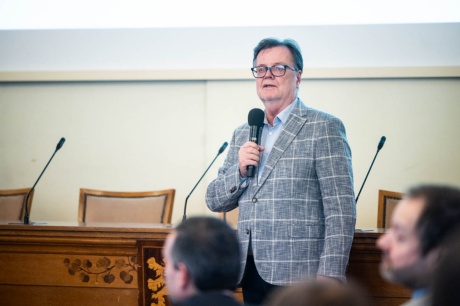
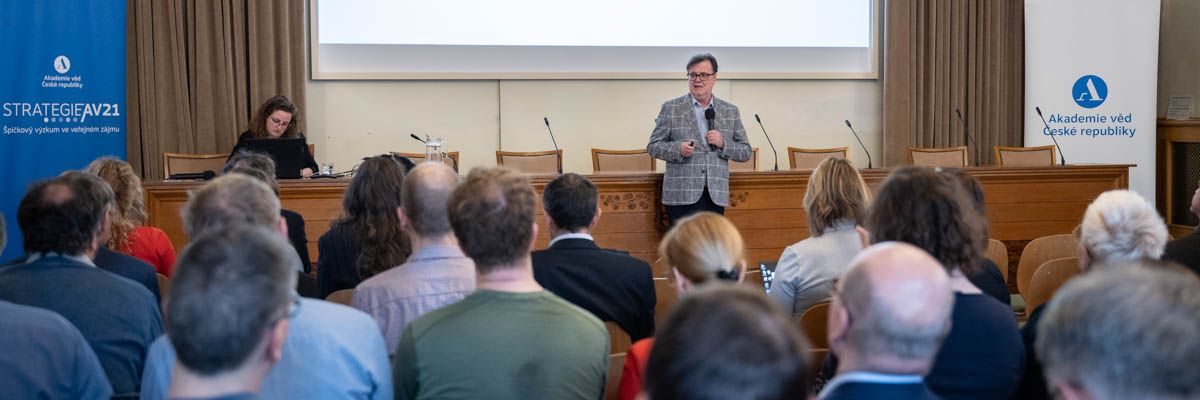
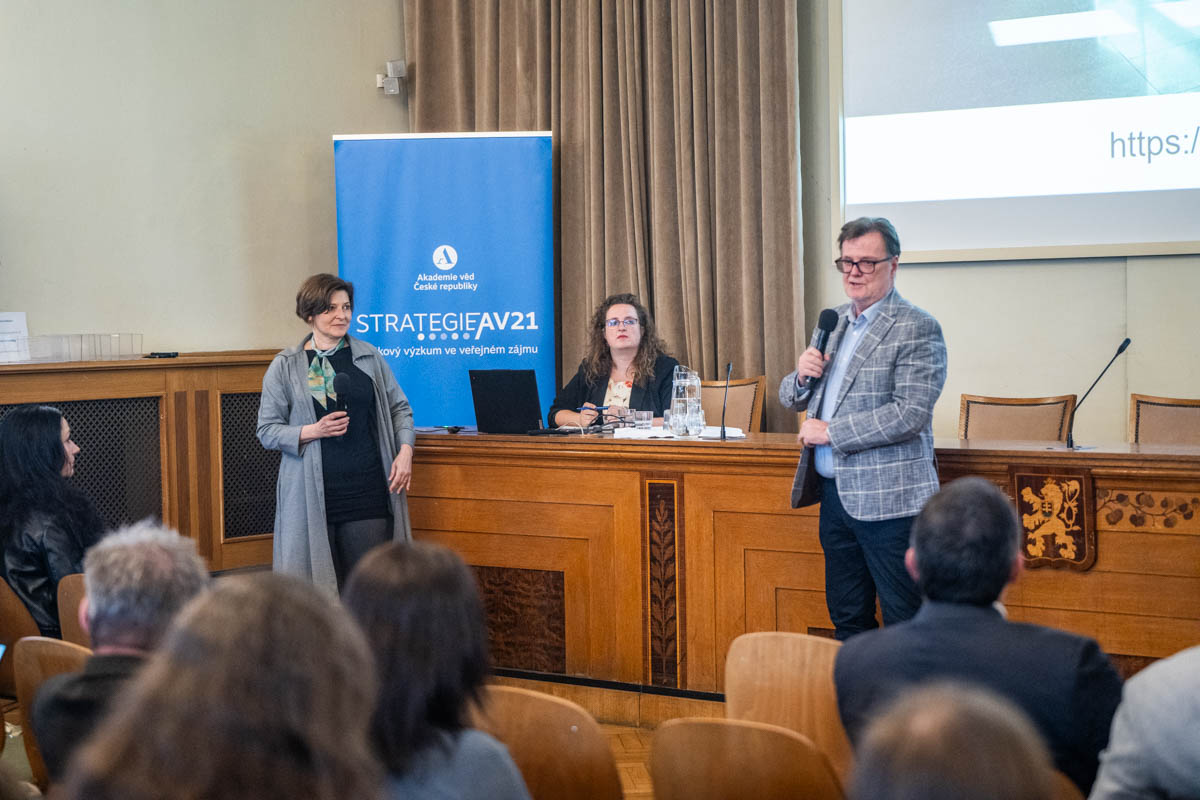
The meeting was opened by Jiří Plešek from the Academy Council of the CAS, who coordinates the CAS Strategy AV21.
The Strategy AV21 of the CAS is entering its next phase of development. “We will focus not only on strengthening research activities, but also on coordinating and presenting them more effectively,” Plešek said, adding that four new programs will be selected this year, with funding to start in 2027: “We want to see the creation of interdisciplinary consortia that will focus on socially important topics and further advance the transfer of knowledge.”
The development of Strategy AV21 will also be supported by more intensive communication of its activities. Plans include modernizing the existing website, with an emphasis on easier access to information and on presenting research findings and output more clearly.
SCIENCE FOR POLICYMAKING
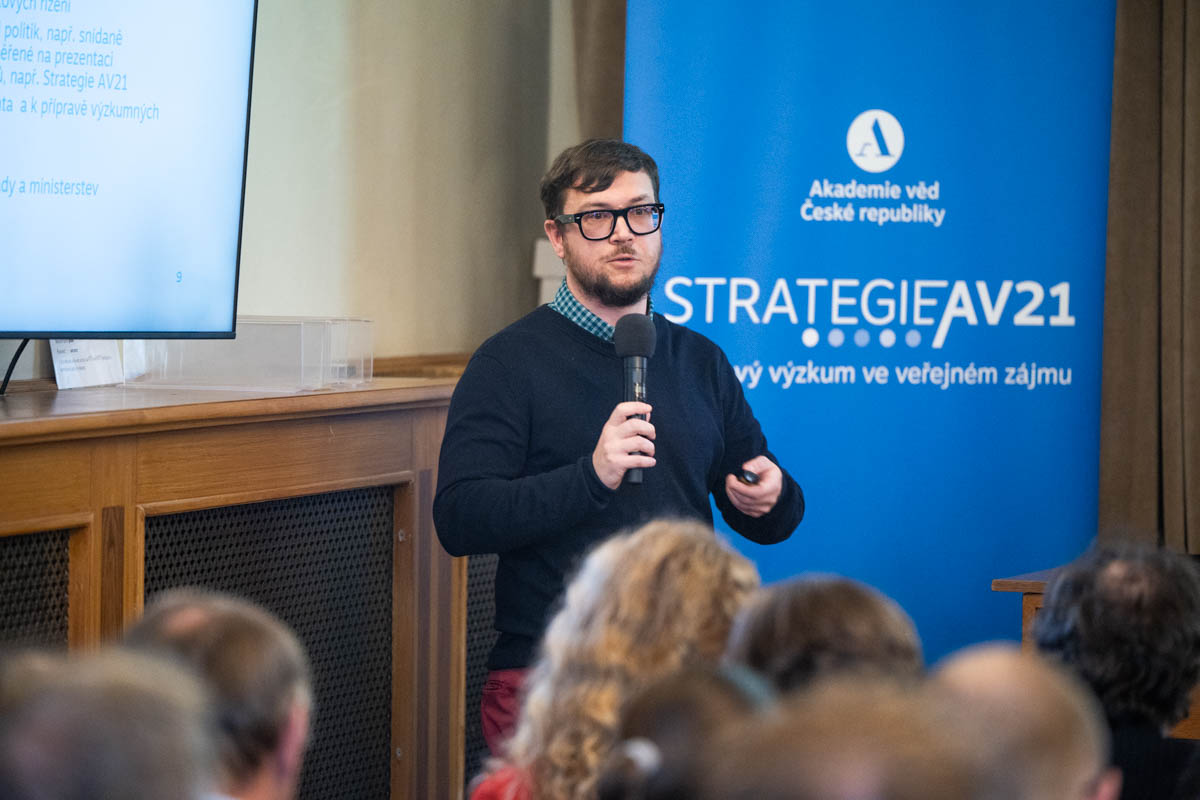
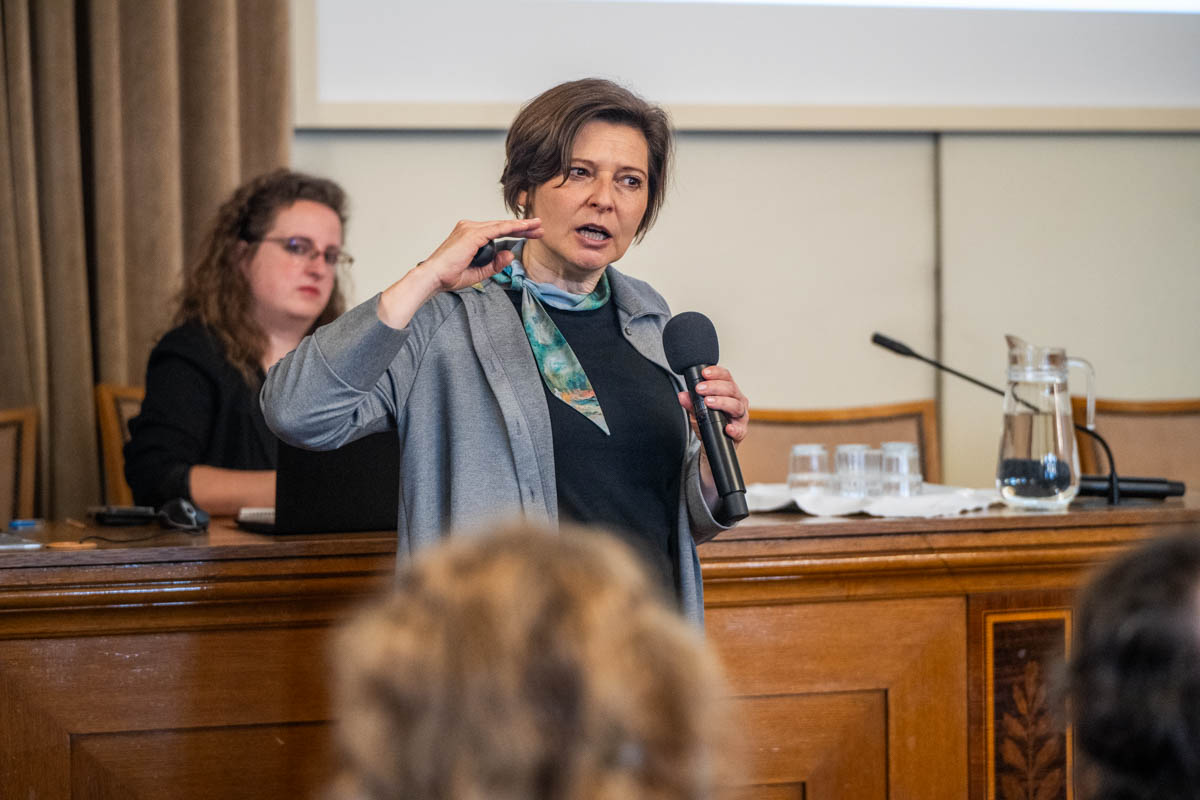
Jan Mareš from the Transfer Centre of the CAS (CETAV), part of the Centre of Administration and Operations of the CAS, introduced Science4Policy – a platform launched last year. Its first aim is to support knowledge transfer and science for policymaking activities. The second goal is the preparation of analyses that the Academy’s leadership uses in communication with political representatives. The Science4Policy platform will also strengthen the institution’s involvement at the European level – particularly in negotiations on the new EU financial framework.
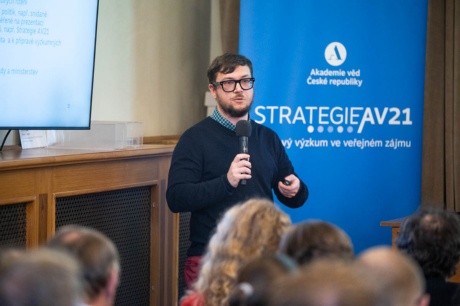
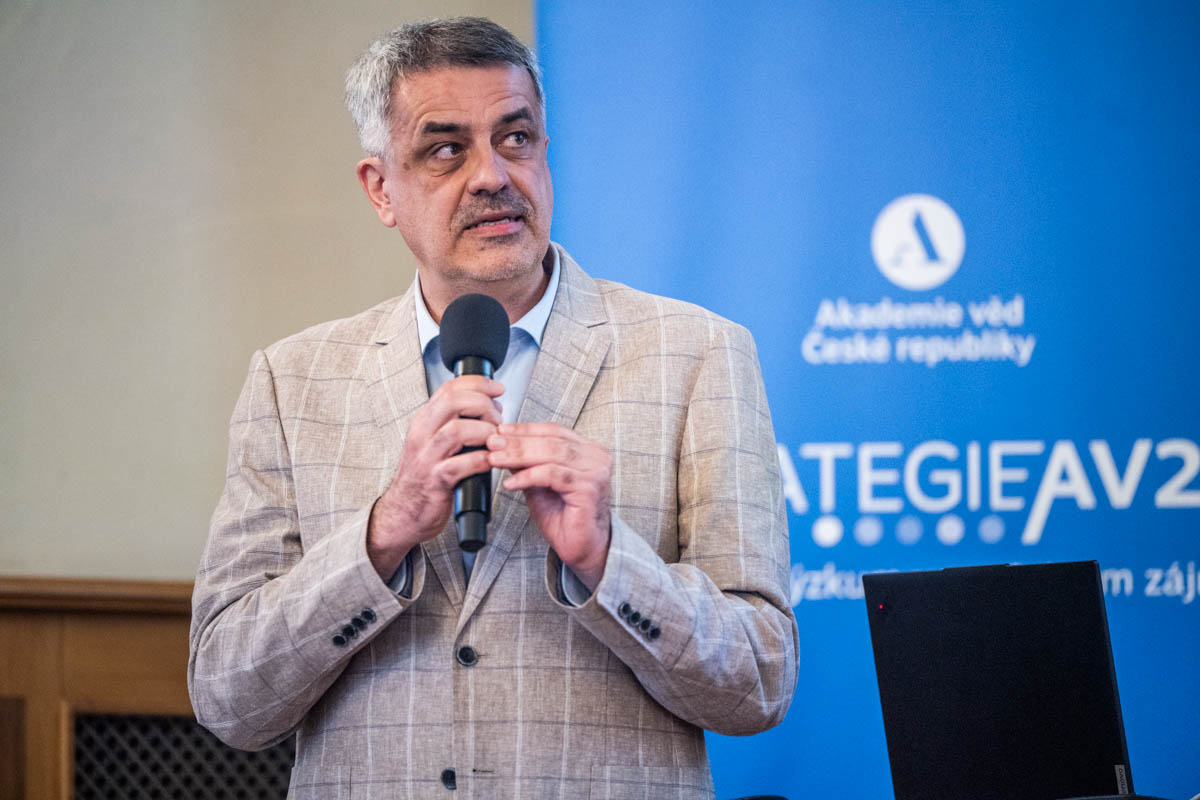
Jan Mareš from the Transfer Centre of the CAS presented the activities of the Science4Policy platform.
An important part of these activities includes policy papers and policy briefs. “The most recent policy brief, prepared in cooperation with one of the Strategy AV21 research programs, addresses security aspects and the role of the Orthodox Church in the Czech Republic,” said Mareš, adding that the Transfer Centre of the CAS also wants to strengthen the Academy’s involvement in public debates and to support networking and presentation activities targeting policymakers. “At the same time, we are working to build ties with the application sphere and to support socially relevant projects.”
Mareš added that, as the science-for-policy coordinator, he is offering Strategy AV21 research teams consultations in designing and planning activities intended for public administration and for decision-making based on scientifically sound data.
THE POWER OF OBJECTS
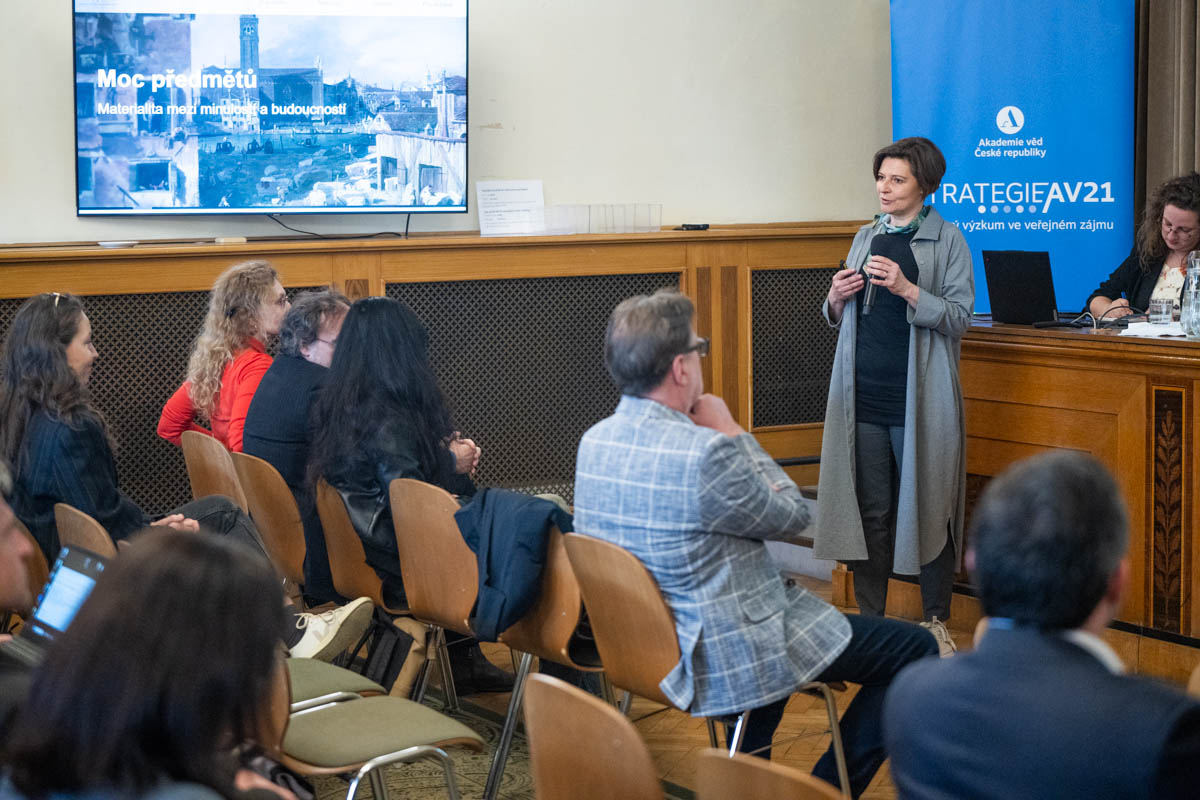
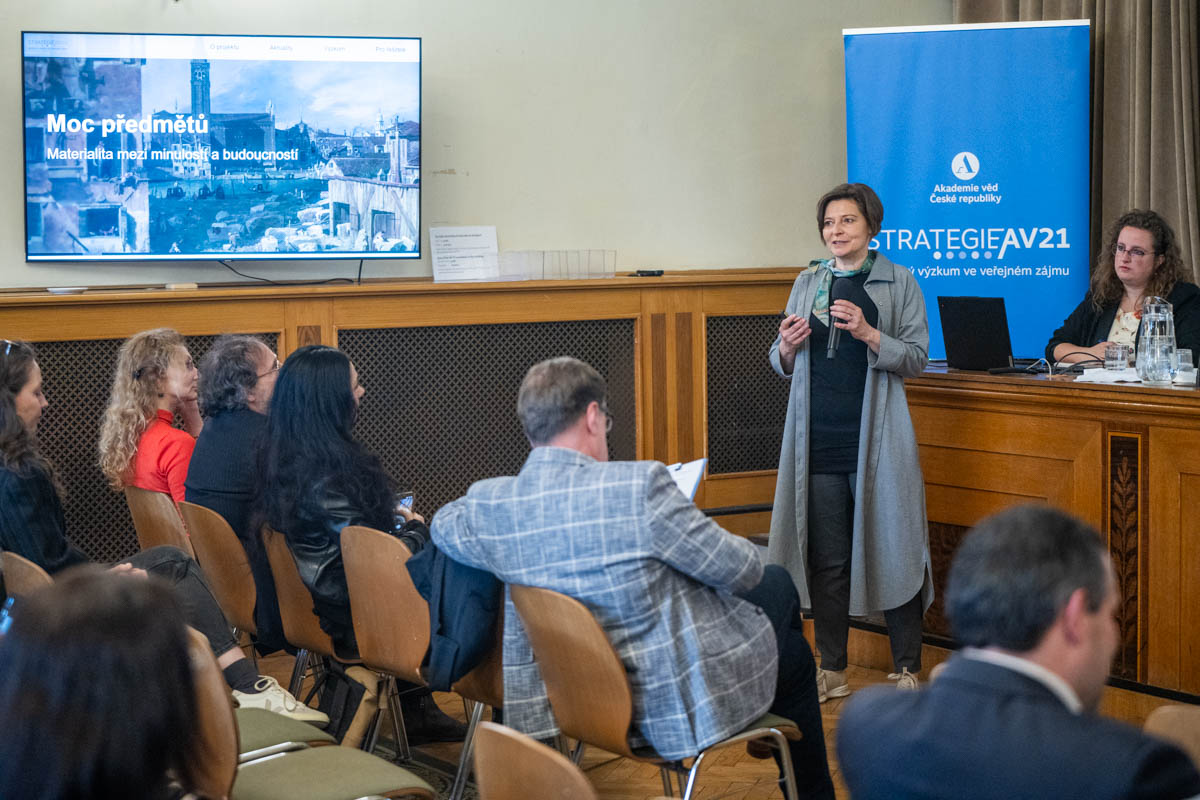
While some people thoughtlessly accumulate possessions, others lack even basic resources. New technologies and modern products bring not only progress to societies, but also new risks. The research program The Power of Objects: Materiality Between the Past and the Future explores precisely how objects and materials have shaped history. Its specific focus was outlined by coordinator Adéla Gjuričová, Director of the Institute of Contemporary History of the CAS.
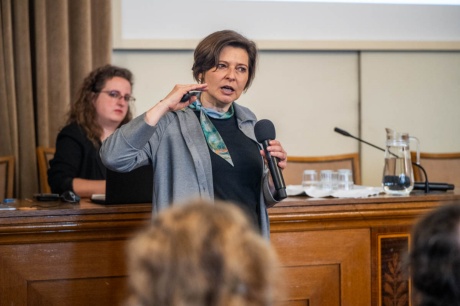
Adéla Gjuričová, coordinator of the research program The Power of Objects: Materiality Between the Past and the Future.
The program brings together 11 CAS institutes and six partner institutions. “We connect archaeology, premodern and contemporary history, and ethnology, as well as materials research and computer science. I am particularly proud that inorganic chemists have joined our endeavor,” Gjuričová noted. In her view, the program can generate insights into the historical, cultural, and technological roots of the issues we face, thereby contributing to possible solutions to our current crises.
A CRISIS OF BIODIVERSITY
The destruction of habitats, intensive agriculture, and other human activities are causing a decline in the diversity of life on Earth. Wild animals and plants are disappearing, and we are altering our planet’s biodiversity to such an extent that we are putting ourselves at risk. The good news is that we know what to do – we just mustn’t be afraid to act, emphasized Radim Hédl, coordinator of the research program Global Biodiversity Crisis: Risks and Opportunities for Human Society.
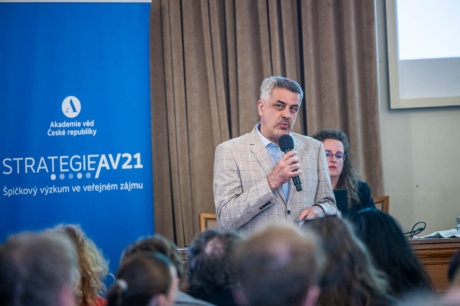
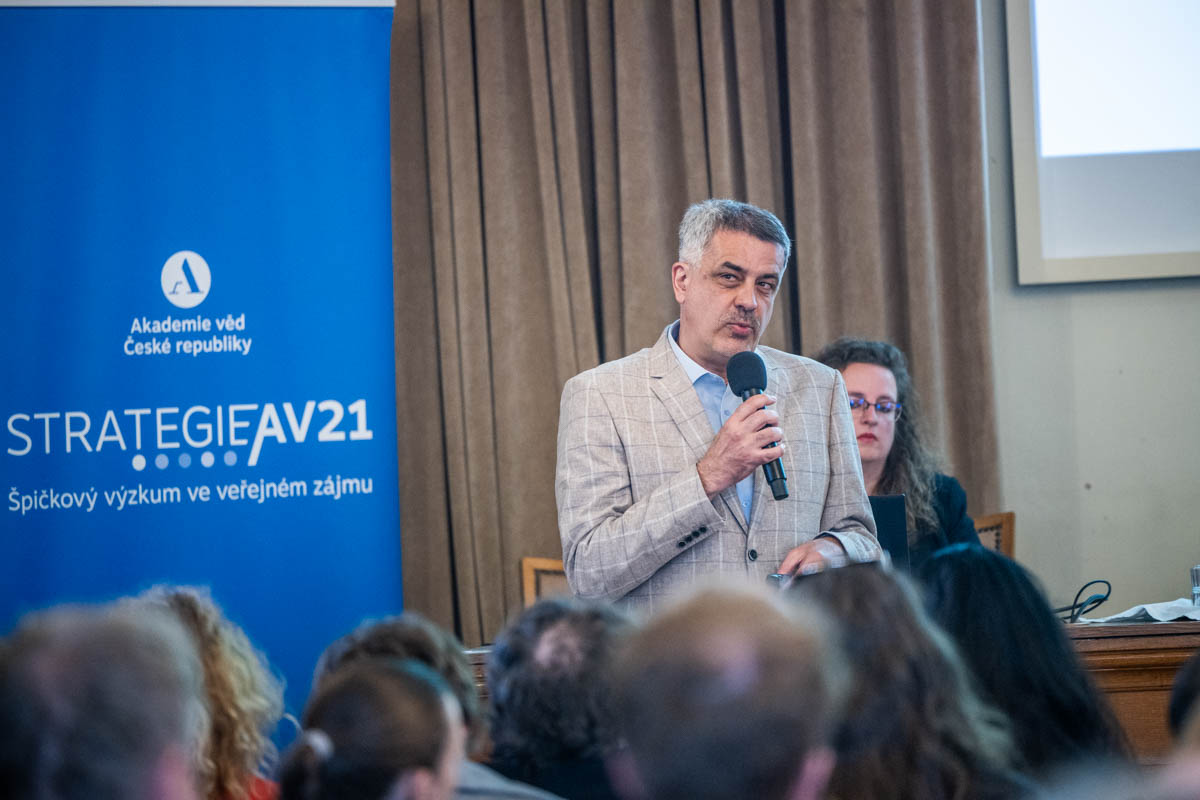
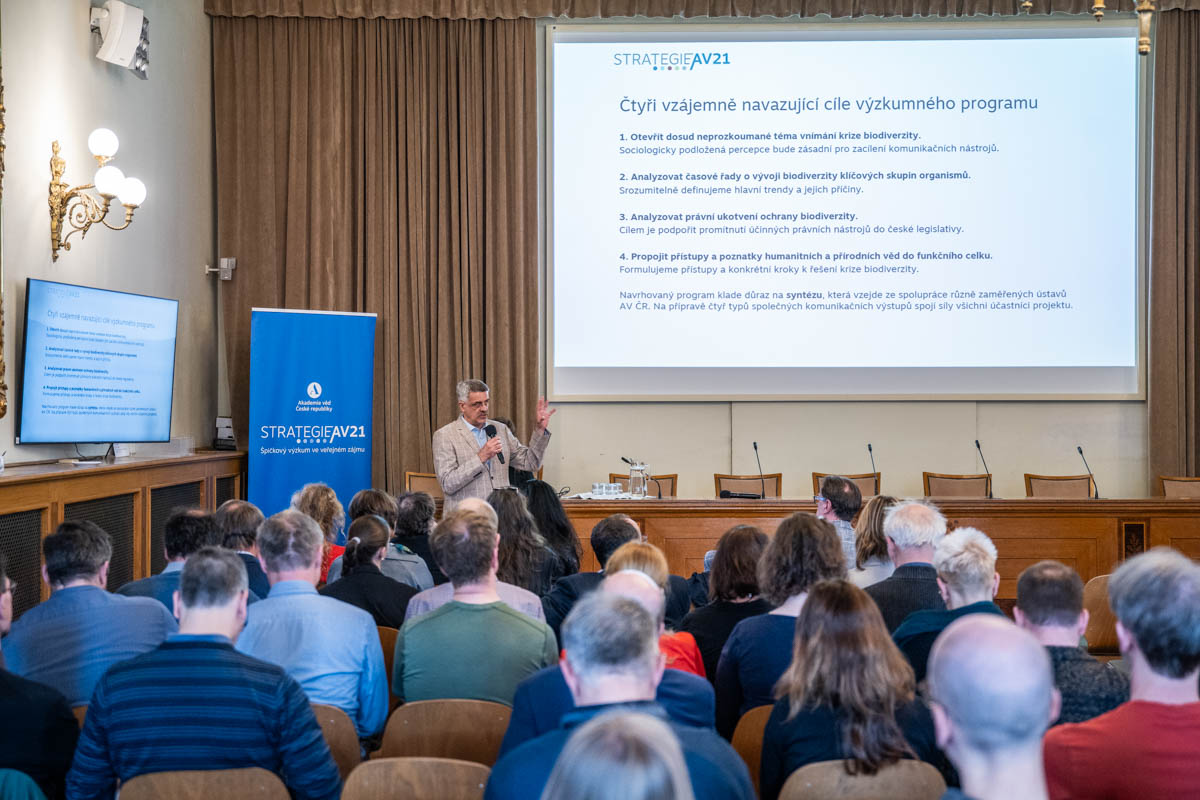
Radim Hédl, coordinator of the research program Global Biodiversity Crisis: Risks and Opportunities for Human Society.
Under Hédl’s leadership, the research program brings together researchers and teams not only from CAS institutes. Drawing on both the humanities and natural sciences, they will examine how humans influence biodiversity, how our society perceives this biodiversity crisis, and whether Czech legislation is adequately addressing the effective protection of landscape diversity.
“We’d like to achieve three objectives. First, to explore how society perceives biodiversity and the crisis of biodiversity. Second, to analyze how biodiversity is embedded in our legal system, which is a prerequisite for improving its condition. And third, in the biological sciences, our aim is to integrate and analyze fragmented data on biodiversity change,” Hédl explained.
INFECTIOUS DISEASES
“Infectious diseases have accompanied humankind since time immemorial. They have played an important role in our history, causing high mortality and significant economic damage,” emphasized Iva Pichová from the Institute of Organic Chemistry and Biochemistry of the CAS, who coordinates the research program Infectious Diseases: New Targets and Strategies.
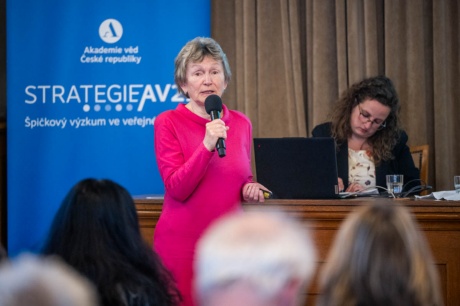
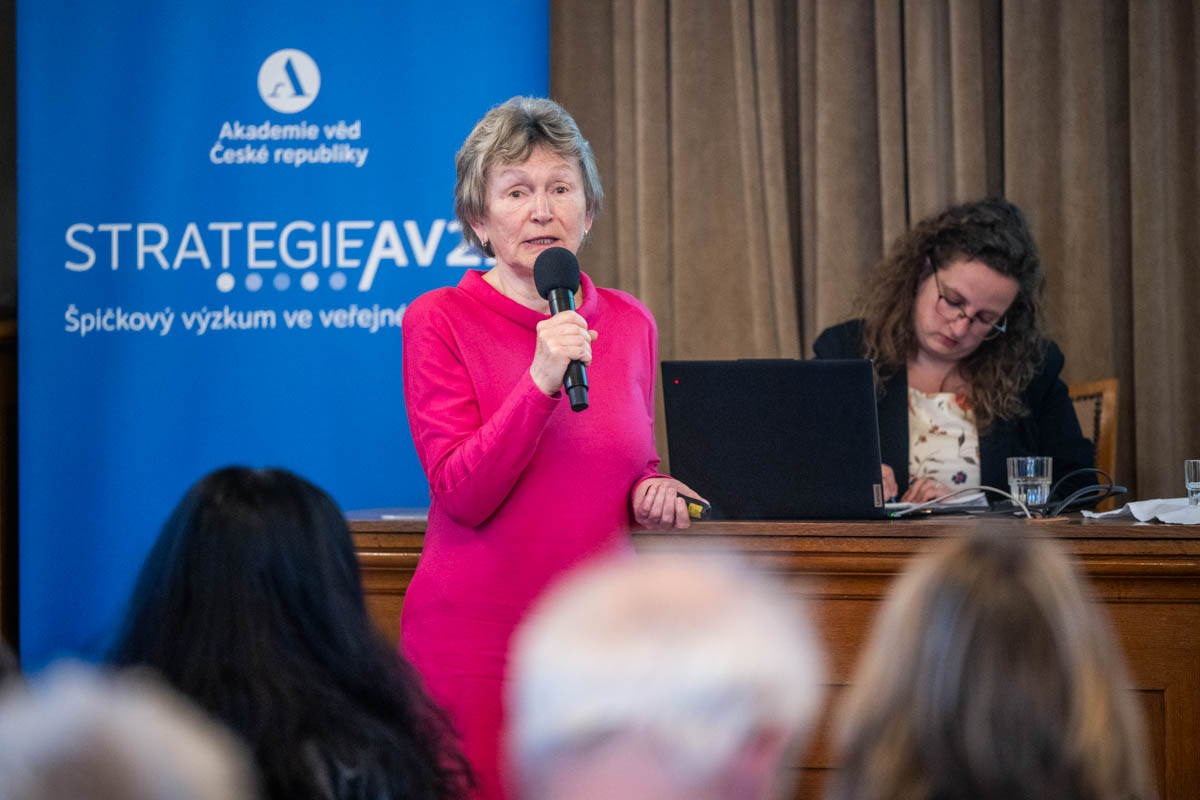
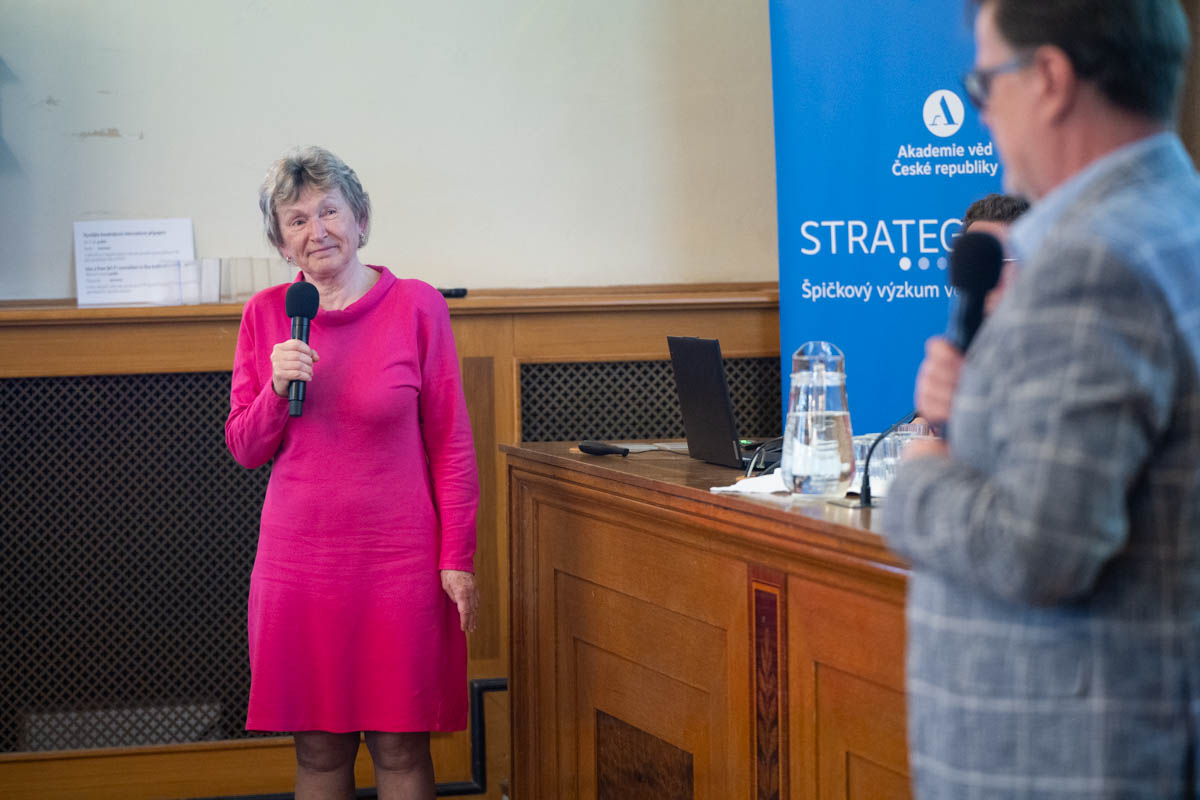
Iva Pichová, coordinator of the research program Infectious Diseases: New Targets and Strategies.
For this reason, research into viral and bacterial diseases remains highly relevant today. This includes understanding the mechanisms of bacterial resistance to antibiotics, developing new types of antivirals, antibiotics, and vaccines, as well as analyzing epidemics and pandemics based on robust data. Equally important is raising awareness among general practitioners and the public about prevention.
The program will involve thirteen teams from six CAS institutes. “Our research will focus, for instance, on the influenza virus, SARS-CoV-2, tick-borne encephalitis, and other RNA viruses such as the Dengue virus and the Zika virus,” Pichová explained.
Prepared by: Luděk Svoboda, External Relations Division, CAO of the CAS
Translated by: Tereza Novická, External Relations Division, CAO of the CAS
Photo: Josef Landergott, External Relations Division, CAO of the CAS
 The text and photos are released for use under a Creative Commons license.
Read also
- ERC-funded CLOSER Project Highlights the Middle East and North Africa Region
- Bernard Bolzano: An Inconvenient Genius Ahead of His Time
- Our Health in the Hands of AI: How to Regulate It and What to Watch Out For?
- CAS condemns attack on National Academy of Sciences of Ukraine
- New CAS Program Already Has First ERC Grant Winners to Its Credit
- Three researchers from the Czech Academy receive prestigious ERC grants
- Ombudswoman of the CAS Dana Plavcová: I'm glad when things change for the better
- Early-Career Researchers from the CAS Received the 2026 Otto Wichterle Award
- Jackal Expansion Across Europe Facilitated by Humans, Curbed by Wolves
- Languages Don’t Overload the Brain, Psycholinguists Say
The Czech Academy of Sciences (the CAS)
The mission of the CAS
The primary mission of the CAS is to conduct research in a broad spectrum of natural, technical and social sciences as well as humanities. This research aims to advance progress of scientific knowledge at the international level, considering, however, the specific needs of the Czech society and the national culture.
President of the CAS
Prof. Radomír Pánek started his first term of office in March 2025. He is a prominent Czech scientist specializing in plasma physics and nuclear fusion.