

The Academy of the Future? A New Vision for Attracting Scientific Talent
04. 02. 2026
A bold name, a clear goal – to raise the prestige of the Czech Academy of Sciences (CAS) and make it more attractive to researchers from the Czech Republic and abroad. The Academy of the Future program is now getting under way and will soon support its first scientists and their institutes. Its objectives are outlined below by Petr Baldrian, Member of the Academy Council of the CAS, responsible for research excellence and career support.
*
At the seminar What’s New in Supporting Excellence and Research Careers at the Czech Academy of Sciences, Petr Baldrian emphasized that the Academy of the Future integrates support for individual scientists with support for the CAS institutes themselves: “This will strengthen the responsibility of the CAS institutes and enable them to support their employees while also fostering their own development.” How does the program aim to achieve this?
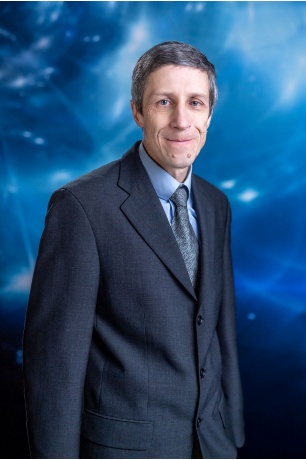
Petr Baldrian
The name of the program sounds almost visionary. Why ‘The Academy of the Future’?
The program should help us shape the Czech Academy of Sciences as we want it to be. To transform it into an institution of top-tier research that supports its staff not only in pursuing science, but also in developing their careers in harmony with their personal lives. And, of course, to turn it into the most attractive research organization in the Czech Republic – one that draws talent from abroad and offers excellent working conditions.
Was existing support insufficient?
The CAS has long invested in research career development and excellence across its institutes – for instance, by means of the Academic Award, the Lumina Quaeruntur fellowship, and support for postdoctoral researchers. However, the ambitions I’ve outlined require greater financial investment as well as targeted programs that address areas not yet covered.
Which areas are those?
Research stays that have the potential to expand international collaboration, recruitment of outstanding scientists from abroad, and support for researchers after career breaks, for instance due to parenthood.
You led the Czech Science Foundation (GAČR) for several years. Did you draw on that experience when shaping this new program?
Support schemes of the CAS differ from grant schemes. In our case, we’re combining support for individual scientists with support for their institutes. Program proposals therefore have to deliver more than just solving a specific research question. Still, I hope my experience has helped us to design support in a way that appropriately complements the targeted funding that principal investigators and their teams receive from the Czech Science Foundation, the Technology Agency of the Czech Republic, and the Czech Ministry of Education, Youth and Sports.
Did the Academy Council of the CAS also look to models used elsewhere?
At the Czech Science Foundation, we have monitored the approaches to supporting researchers after career breaks, for example due to parenthood. Analyses showed that support at the level of research institutions and universities is the most effective. Incentives to attract scientists from abroad are also common in institutions similar to the CAS. While such support could in principle be organized at the level of individual institutes, given the size of the Czech Academy of Sciences, joint programs are more efficient.
So how has the Academy of the Future expanded the existing system?
Through more precisely targeted forms of support – situations like researchers returning after a career break, the development of ideas with commercial potential, or recruiting scientists from abroad. The program also expands existing schemes by introducing fellowships that can bring in additional know-how, stimulate the submission of international research proposals, or improve CAS institutes’ capacity to administer prestigious international projects.
The scope of the program seems to be quite broad.
Yes. The shared idea is more effective support for researchers. This will help not only them or research project staff, but also the CAS institutes themselves.
The program has three strategic priorities. Could you outline them?
The first focuses on supporting international research stays, sharing know-how, and preparing projects for international providers of highly competitive funding. The second places greater emphasis on careers and supports returns after career breaks, returns from institutions abroad, and the recruitment of scientists from abroad to CAS institutes. The third targets outstanding research teams and projects with potential for commercial application.
Do researchers apply for support directly, or do their affiliated institutes apply?
Formally, the institutes have to apply. In practice, however, every proposal for a research project, fellowship, or return is driven by the vision of an individual researcher.
What criteria do applicants have to meet to receive support?
They must convince us that their project is scientifically sound and will benefit the affiliated institute as well. Resources are limited, so support will go to those researchers whose plans prove most compelling. Decisions on support for fellowships and for colleagues returning after career breaks are left to the CAS institutes. More robust, multi-year proposals will undergo a more comprehensive evaluation, and final decisions on their funding will be made by the Academy Council of the CAS, taking into account the budget available for the given year.
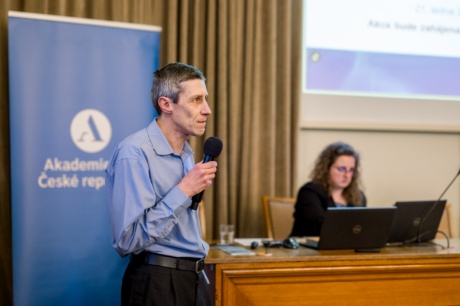
Petr Baldrian introduced the Academy of the Future program at the seminar that took place at the CAS headquarters.
How long will researchers receive support?
It depends on the type of program. While the duration of fellowships may be from seven days up to six months, the longest support – for researchers returning from abroad – will run for three years. In multi-year programs, funding is released annually, provided that the research project is being implemented satisfactorily.
When will the first call for applications be launched?
We have already allocated budgets to individual CAS institutes for fellowships and returns following career breaks. They can therefore already select candidates who will receive support this year. Other programs will also be announced this year so that funding will be able to begin in the following year.
Will funding for existing programs be reduced?
We will preserve current programs (the Academic Award, Lumina Quaeruntur, the Otto Wichterle Award, and the Program for the Support of Promising Human Resources) and their funding levels. Based on feedback from the CAS institutes and researchers, we will just plan to make minor adjustments to some of them.
What kind of adjustments?
The most significant change will be the replacement of the Program for the Support of Promising Human Resources with the Program for the Support of Postdoctoral Researchers. It will target the same group – early-career researchers shortly after completing their Ph.D. – but selection will newly be carried out by the CAS institutes themselves.
Do you believe the Academy of the Future will increase the institution’s success in securing major European Research Council (ERC) grants?
Absolutely. As part of the Academy of the Future program, we will support fellowships for ERC applicants at the host institutions of principal investigators working abroad. Staff from project support offices will also be able to undertake fellowships at the institutions where they can learn how to prepare and administer projects. We also expect ERC grant proposals to be submitted by researchers who make use of the programs supporting returns from abroad. Targeted support for ERC grant applications, however, is primarily the domain of the new ERC Incubator Program.
We began with the future, so let’s end there as well. Where should the Czech Academy of Sciences be heading?
Our institution should be a place that attracts scientists from the Czech Republic and abroad not only because they can carry out high-quality research here, but also because it enables career growth and is welcoming to their family members. In short, it should be the first choice for scientists with the ambition to conduct excellent basic or applied research.
What would you like to say in closing to your colleagues?
The most important thing: it is you, our staff, that comprise the Czech Academy of Sciences. You are not here for the Academy – the Academy is here for you. High-quality research always grows out of the plans and ideas of scientists and research teams. So please, make use of the opportunities offered by the Academy of the Future, the ERC Incubator, and our other support programs to realize your scientific dreams. I wish you every success!
|
Prof. RNDr. Petr Baldrian, Ph.D. Petr Baldrian is responsible for coordinating the agenda of excellence and career support programs within the Czech Academy of Sciences and in the international context. He is also involved in addressing conceptual issues of program and project cooperation within the Czech Science Foundation. As a researcher, he works at the Institute of Microbiology of the CAS. He is the author or co-author of more than 300 scientific papers published in leading scholarly journals. His work has been cited over 31,000 times, and his H-index is 93. From 2021 to 2024, he served as President of the Czech Science Foundation (GAČR). |
Written and prepared by: Zuzana Dupalová and Luděk Svoboda, External Relations Division, CAO of the CAS
Translated by: Tereza Novická, External Relations Division, CAO of the CAS
Photo: Jana Plavec, External Relations Division, CAO of the CAS
 The text and photos are released for use under the Creative Commons license.
Read also
- Small but Mighty – The Enceladus Moon Is Flexing with Saturn’s Magnetic Field
- Light vs. Antibiotics – Can We Get Harmful Substances Out of Our Water?
- Better ECGs and Industrial Superlasers – Real-World Results of CAS Research
- Czech Academy of Sciences to launch a joint-stock company
- In the Age of AI, Spotting a Fake Photo Is Harder Than Ever, Expert Says
- How to Turn Ideas into Successful Grants: The New ERC Incubator Is Offering Help
- SciComm 360° Tackled How to Communicate Science in the Age of Disinformation
- When Cars Fly and Bullets Swerve – Physics Gone Wrong on the Silver Screen
- The Academy to Boost Excellence and Careers in Research with New Programs
- Could an asteroid hit Earth? The risk is low, but astronomers are keeping watch
The Czech Academy of Sciences (the CAS)
The mission of the CAS
The primary mission of the CAS is to conduct research in a broad spectrum of natural, technical and social sciences as well as humanities. This research aims to advance progress of scientific knowledge at the international level, considering, however, the specific needs of the Czech society and the national culture.
President of the CAS
Prof. Radomír Pánek started his first term of office in March 2025. He is a prominent Czech scientist specializing in plasma physics and nuclear fusion.