

How to Turn Ideas into Successful Grants: The New ERC Incubator Is Offering Help
18. 02. 2026
European Research Council grants are not rewards for playing it safe. They demand bold ideas, enough time to prepare, and institutional backing that supports researchers at just the right moment. This January, the Czech Academy of Sciences launched the ERC Incubator. As its scientific coordinator Luděk Brož explains, the aim is to help researchers enter ERC grant competitions as well-prepared as possible.
A brilliant idea is only the beginning. In the world of science, you usually have to translate it into a grant proposal to secure funding to bring it to life. The more ambitious the idea, the greater the effort required. The proverbial holy grail of targeted research funding are the grants awarded by the European Research Council (ERC). In this highly competitive arena, success goes to those who are best prepared.
How, according to Luděk Brož from the Institute of Ethnology of the Czech Academy of Sciences (CAS), can the ERC Incubator Program (ERC-in for short) help researchers fine-tune their proposals?
*
Which ERC projects have recently caught your attention?
Naturally, I’m fond of the projects of my colleagues at the Institute of Ethnology. I’ve seen them grow from their earliest ideas to their current stage of implementation. I’ve noticed others because they touched on topics close to my own research.
For instance?
The VetValues project by Else Vogel at the University of Amsterdam explores how different value hierarchies and orientations shape veterinary care in European livestock production. Matei Candea from the University of Cambridge has turned freedom of speech into an anthropological topic of research – something I find just as intellectually stimulating as it is relevant.
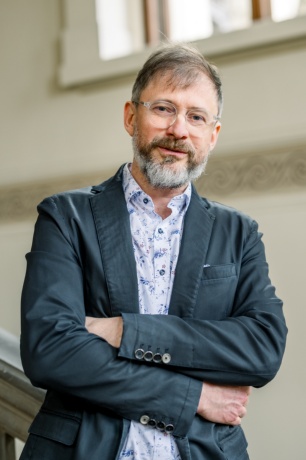
Luděk Brož
In 2019, we interviewed you on the occasion of your becoming the first fellow of the TANDEM program, which encouraged researchers to apply for ERC grants. At the end of that same year, you were awarded an ERC Consolidator Grant. How did TANDEM help you?
It was crucial for me because it used the carrot-and-stick method a bit. On the one hand, it created the conditions for me to be able to prepare the proposal – from a more dignified salary, which is something we rarely talk about in the Czech Republic even though it’s essential, to the opportunity to build a small team that effectively served as a think tank during the preparation process. On the other hand, TANDEM was also a commitment, an obligation to submit the project.
What was your project about?
Thanks to a COVID-related extension, the project is still ongoing. We’re examining the role of veterinary medicine in contemporary societies, specifically focusing on the spread of African Swine Fever across Europe. The disease is dramatically reshaping our relationships with growing wild boar populations, our perceptions of borders and fences, and the broader concept of biosecurity that various measures are meant to ensure. It’s also changing our relationships with hunters. In many European countries, hunters have become the front line in managing this economically and politically significant disease, creating tensions, for example, between them and veterinary authorities.
How did the grant support your research?
For instance, it helped us convince colleagues in veterinary epidemiology, parasitology, ethology, and other fields of the importance of a social science perspective for understanding animal diseases. The grant also had a profound impact on our immediate research environment. It significantly transformed the Institute of Ethnology as a research institution.
The Institute of Ethnology is now one of the most successful CAS institutes in securing ERC grants. What is the secret to its success?
That depends on how you measure success in ERC grant competitions. Among the CAS institutes, the Institute of Organic Chemistry and Biochemistry, the Biology Centre, and the Institute of Physics clearly rank among the most successful. That said, if we recalculate results per number of researchers, the Institute of Ethnology holds its own. We simply gathered a “supercritical mass” of outstanding researchers with ambitious visions. That helped change the institutional culture and set off a chain reaction.
Success breeds success, it seems.
When your colleagues sitting next door are not afraid to apply for an ERC grant, succeed, and share their experience, the likelihood that you’ll yourself try increases. The first “win” certainly helped the institute attract ambitious researchers. In a way, it was about not being afraid to start – something we probably owe in part to the TANDEM program.
Did the institute management also provide project support?
Yes. On the proverbial front line we have a highly effective project support department. It’s not a luxury reserved for larger institutes – from our experience, it’s a necessity if you take comprehensive grant support seriously. Investing in project management pays off handsomely – provided, of course, that the institute employs researchers capable of formulating and securing projects with proper support.
The Academy has now taken an important step in supporting its researchers by launching the ERC Incubator [ERC-in for short]. Is this what has been missing?
Any incubator, no matter how well designed and implemented, can only assist an outstanding researcher. At the same time, our ambition is higher than simply filling a gap for researchers who want to submit grant proposals.
In what way is the ERC Incubator’s ambition higher?
It should help change the atmosphere at the Czech Academy of Sciences by encouraging many more researchers to apply for ERC grants – whether because our support gives them the confidence to submit a proposal, or because CAS institutes begin to recruit researchers with that goal in mind.
What is your role in ERC-in?
I serve as scientific coordinator and also as the guarantor for the humanities and social sciences. Mathematics, physics, and earth sciences are overseen by Constantinos Skordis from the Institute of Physics of the CAS, and life and chemical sciences by Vojtěch Novotný from the Institute of Entomology at the Biology Centre of the CAS.
By the way, how successful is the Academy in securing ERC grants compared to other institutions?
We founded the incubator just this January, and one of its first tasks is to gather and analyze data that will allow us to answer that question precisely.
Can colleagues contact you directly?
Absolutely. Basic information is available on the ERC-in website, and researchers can also contact the administrator, Jana Whalen, who will direct them to the appropriate members of the team.
Were you inspired by the Technology Centre Prague, which also provides support to researchers applying for ERC grants?
Definitely. At the same time, I’ll repeat what Zdeněk Strakoš, a senior figure in the Czech ERC community, has emphasized for years: support must be initiated by the institution itself – in our case, both at the level of individual CAS institutes and at the level of the Academy as a whole. A lack of institutional support cannot be compensated at the national level. There, different issues are addressed using different tools. In other words, success in ERC grant competitions should primarily be driven by the applicant’s employer – that is, the future host institution and its founding body.
How is the incubator meant to work?
It rests on four pillars: individualized, comprehensive support for applicants; support for the CAS institutes as host institutions; communication about ERC agendas; and the collection and analysis of information – whether from the European Research Council or from our own institutes – so that we know where we stand and what we need to improve.
So you will guide applicants through the entire process?
Yes. Right now we’re boarding an already moving train, but once the program is fully up and running, we plan to admit applicants into the preparation process roughly ten to twelve months before the deadline of the relevant call. That way, we’ll be able to support them at every stage of shaping their proposal. If they advance to the second round, we’ll also offer interview preparation, including individualized mock interviews. We’ll provide consultations during the period leading up to the signing of the grant agreement as well.
Do researchers apply to join the program directly, or via their institutes?
Via their institutes, which become the recipients of the grant funding. Of course, we’re happy to answer questions about the program directly as well.
How will you select the projects the program will support?
Admission is decided by the Academy Council of the CAS, based on a proposal from the incubator’s board, which may also consult additional experts in reaching its decision.
When will you help your first applicants?
We can support the first applicants immediately. To illustrate, researchers who submitted a project proposal to the ERC Starting Grant 2026 call with an October 2025 deadline that will advance to the second round can contact us for help in preparing for the interview. All the information about timelines and deadlines for ERC-in support is available on the ERC-in website.
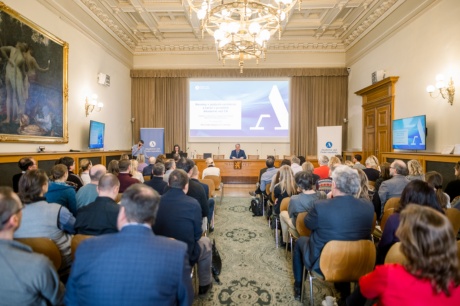
The ERC-in program was presented at the seminar What’s New in Supporting Excellence and Research Careers at the Czech Academy of Sciences.
What are the prerequisites for a successful ERC grant application?
At the core is a compelling idea – one capable of reshaping the way research in a given field is considered and conducted. Such an idea must be carefully developed, which takes time, depending on the field and the individual applicant. At ERC-in, we believe that ten to twelve months of preparation is sufficient in most cases.
What do panel members consider important when evaluating proposals? Do “trends” influence their content?
I have experience as a grant holder, evaluator, and mentor, but not as a panel member, so I’m not exactly qualified to give a definitive answer. In any case, the format of the application is currently undergoing significant changes. If one can speak of “trends,” I would assume those are evolving as well.
What kinds of topics are gaining traction? Do they have to be original at all costs?
In the past, the European Research Council often described grant projects with the phrase “high risk, high gain.” More recently, it has favored adjectives such as ambitious, creative, and original. In any case, the ERC would certainly like to see topics that are only just beginning to “take off” – perhaps partly thanks to the support it provides. Applicants try to convince panels that their work will not simply reproduce existing trends, but help shape new ones.
Does the situation differ across scientific domains?
The main principles apply across the entire ERC funding scheme. Their concrete forms, however, differ and are specific to the disciplinary clusters served by individual panels. That’s why we are putting together ERC-in as individualized support, coordinated within the context of a particular scientific domain.
What other steps would help the Czech Academy of Sciences secure more grants?
We should also focus on the other end of ERC funding – what happens after it ends. It is crucial what CAS institutes and the Czech Academy of Sciences as a whole then offer grant holders. Why would a researcher bring an ERC grant here – and stick to it – if we cannot guarantee them a permanent position or decent working conditions once it concludes? An institution’s ability to secure and retain grants largely depends on its ability to attract and retain outstanding researchers.
What should change?
That’s a question for the Academy Council, but the will to find a solution is there. Out of the ideas discussed so far, the most promising seems to be substantial financial support for the CAS institutes’ budgets after ERC projects end. Host institutions would receive such support for a sufficiently long period – for example, ten years – provided that the grant holder continues to work at the institute. With those resources, CAS institutes could offer grant holders a dignified tenure track. At the same time, it would be a transparent way to reflect research excellence in institutional funding.
Preparing ERC grant proposals is demanding both administratively and time-wise. How do you respond to the view that researchers should instead pursue “smaller” grants?
I find it hard to agree. Last year, the Czech Science Foundation (GAČR) funded approximately 15% of standard project applications, while ERC grant competitions funded around 11%. To me it seems reasonable to invest effort in an application that can secure more funding for research over a longer period of time. But the reasons run deeper.
In what way?
If scientists are seeking maximum research freedom, dignified salaries for themselves and their teams, and a generous overhead to support their institution’s development, ERC funding has no real alternative. Moreover, the ERC label is a mark of quality not only in Europe and opens up further opportunities for both the grant holder and the host institution – in research collaboration as well as in additional grant funding.
Can researchers turn to ERC-in if they are applying for other grants?
No, that is not the purpose of ERC-in. However, the incubator’s board may recommend to the applicants to pursue a more suitable funding source – for example, in the case of junior researchers without international experience, the Marie Skłodowska-Curie Postdoctoral Fellowships. Or it may suggest preparing another proposal in parallel, such as for the Junior Star program of the Czech Science Foundation.
How will you inform researchers about ERC-in activities?
The primary hub is the ERC-in website. We’re also planning information campaigns, seminars, and other events. And we are ready to answer specific questions at any time.
In conclusion, what advice would you give researchers to increase their chances of securing an ERC grant?
If you want to increase your chances of winning the lottery, you have to buy a ticket – so, submit a proposal. And since the ERC is not a random lottery, it also holds true that while the clever learn from their own mistakes, the wise learn from the mistakes of others. That is precisely why ERC-in was created: so that we can learn from both the failures and the successes of others and create an inspiring and motivating environment across our CAS institutes that do not see one another as competitors, but as a part of the Czech Academy of Sciences. That is where our strength lies. So my advice to anyone preparing to apply for an ERC grant is this: definitely reach out to us. And set caution aside. We’ll help you.
|
Mgr. Luděk Brož, M.Phil., Ph.D. Luděk Brož works at the Institute of Ethnology of the CAS, where he heads the Department of Ecological Anthropology. As principal investigator of the BOAR project, funded by an ERC Consolidator Grant, he is focusing on the consequences of animal diseases and the role of veterinary expertise in contemporary societies. Specifically, Brož examines the impact of the spread of African swine fever on European hunting cultures, particularly the growing role of biosecurity in game management and hunting. He is the scientific coordinator of the ERC Incubator, launched by the Czech Academy of Sciences in January 2026. |
Written and prepared by: Zuzana Dupalová and Luděk Svoboda, External Relations Division, CAO of the CAS
Translated by: Tereza Novická, External Relations Division, CAO of the CAS
Photo: Pavlína Černoch Jáchimová, External Relations Division, CAO of the CAS
 The text and photos are released for use under the Creative Commons license.
Read also
- We Must Prioritize Science, Czech President Petr Pavel Says on His Academy Visit
- Radomír Pánek Visits CAS Institutes, Aiming to Strengthen the Academy’s Unity
- Small but Mighty – The Enceladus Moon Is Flexing with Saturn’s Magnetic Field
- Light vs. Antibiotics – Can We Get Harmful Substances Out of Our Water?
- Better ECGs and Industrial Superlasers – Real-World Results of CAS Research
- Czech Academy of Sciences to launch a joint-stock company
- In the Age of AI, Spotting a Fake Photo Is Harder Than Ever, Expert Says
- SciComm 360° Tackled How to Communicate Science in the Age of Disinformation
- The Academy of the Future? A New Vision for Attracting Scientific Talent
- When Cars Fly and Bullets Swerve – Physics Gone Wrong on the Silver Screen
The Czech Academy of Sciences (the CAS)
The mission of the CAS
The primary mission of the CAS is to conduct research in a broad spectrum of natural, technical and social sciences as well as humanities. This research aims to advance progress of scientific knowledge at the international level, considering, however, the specific needs of the Czech society and the national culture.
President of the CAS
Prof. Radomír Pánek started his first term of office in March 2025. He is a prominent Czech scientist specializing in plasma physics and nuclear fusion.