

Infested trees call for help from birds and predatory insects
25. 03. 2022
When a tree in the forest is infested by pests, it starts producing a specific scent that calls predatory insects and birds to its aid. This chemical alarm has previously been proved only in laboratory or garden experiments, but it has now been confirmed also by scientists in the wild. The chemical call for help from trees is so effective that it significantly determines the composition of the insect community in the forest canopy.
Trees can talk: their language is scent. Each tree species emits its own mixture of volatile organic compounds. Animals have learned to recognise these chemicals over the course of evolution, and so, for example, leaf-eating insects use them in search for their host plants.
Trees, however, are not helpless and can defend themselves effectively. For example, in leaves infested with caterpillars, they produce bitter substances that the insects do not like. Simultaneously, they release other chemicals as a warning to other parts of the plant, and as an attraction for birds and predatory insects, which, by deciphering this chemical language of the trees, come to feast on the leaf-eating pests.
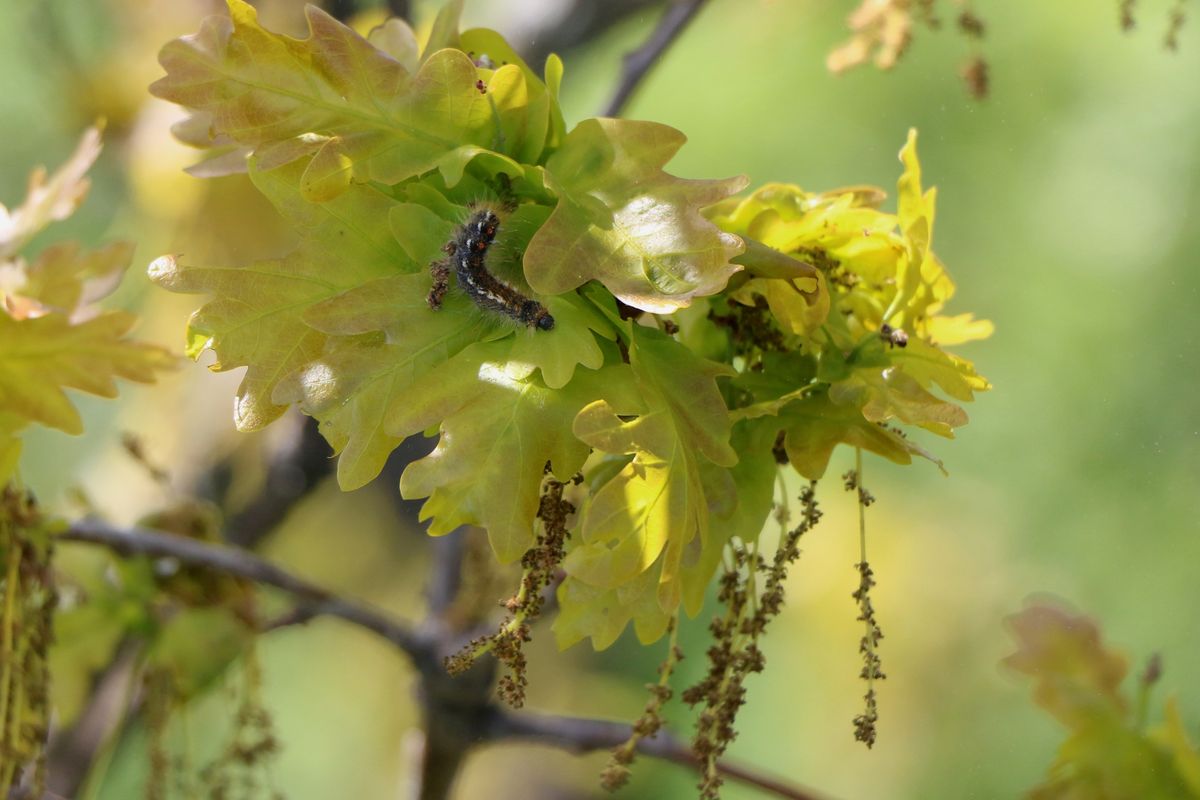
"The fact that plants can chemically attract parasitic wasps, predatory beetles and even birds when attacked by pests has been known for some time. In addition to the chemicals we have studied, changes in leaf colour, which predators can detect, are also involved in the process," says the main author of the study, Martin Volf of the Institute of Entomology at the Biology Centre of the Czech Academy of Sciences.
A phenomenon previously known from experiments has now been confirmed by a Czech-German team of scientists in the wild: in the canopy of a floodplain forest in Leipzig, Germany.
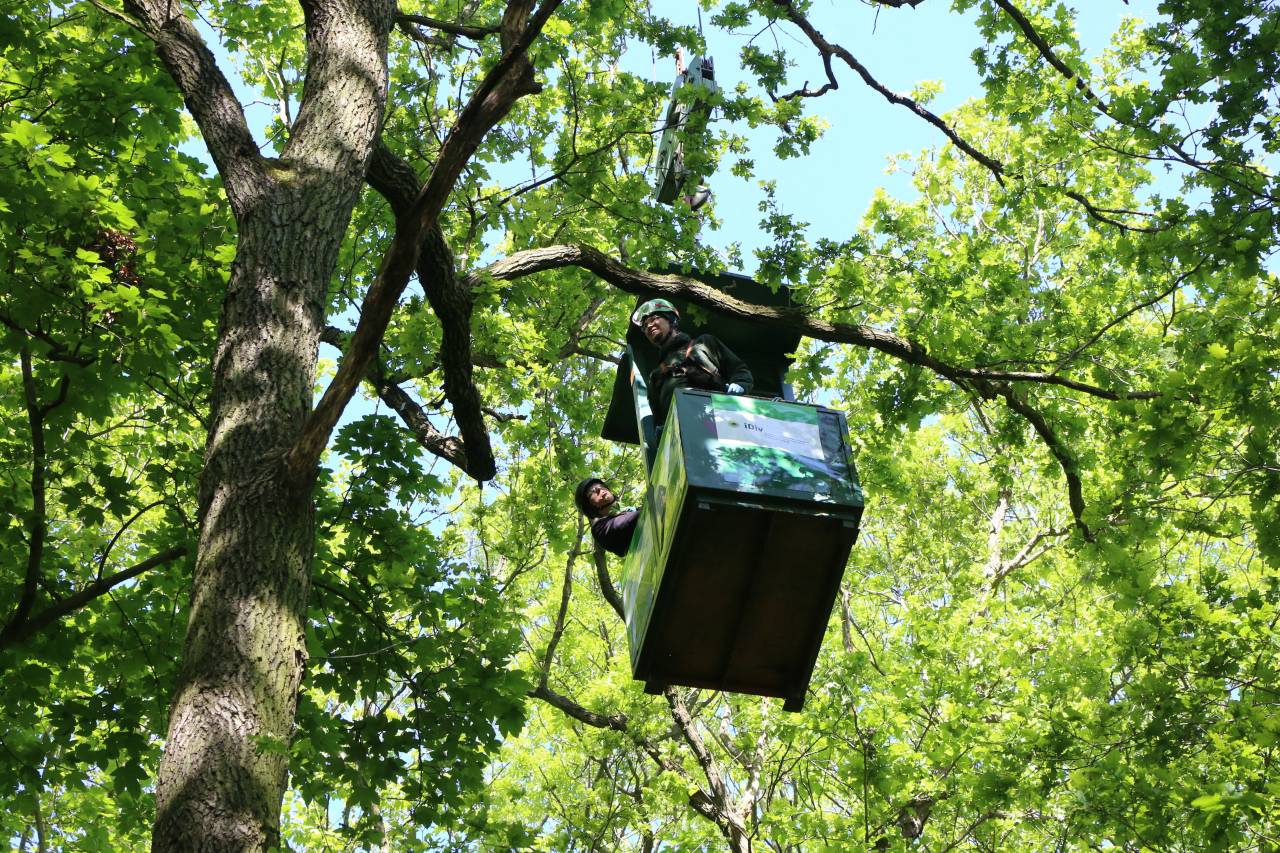
"This was made possible by a combination of research methods, where we monitored the behaviour of insects and predators in the tree canopy at a height of 40 metres on a Leipzig research crane and simultaneously, we carried out chemical analyses of plant scents using metabolomics," says Martin Volf. Metabolomics is a field that analyses chemical compounds produced during cellular processes. Knowledge from the research could be used in the future for natural pest control in agriculture and forestry. The scientists have published their discovery in the current issue of the Ecology Letters journal.
Plasticine caterpillars revealed invaders
The ecological experiment took place in a lowland forest in Leipzig over an area of approx. 1.65 hectares in a period of about one month during the leaf emergence period. The scientists selected eight sturdy oak trees and placed artificial plasticine caterpillars in their canopies. At the same time, they treated selected parts of the trees with a spray of methyl jasmonate to trigger the tree's defences.
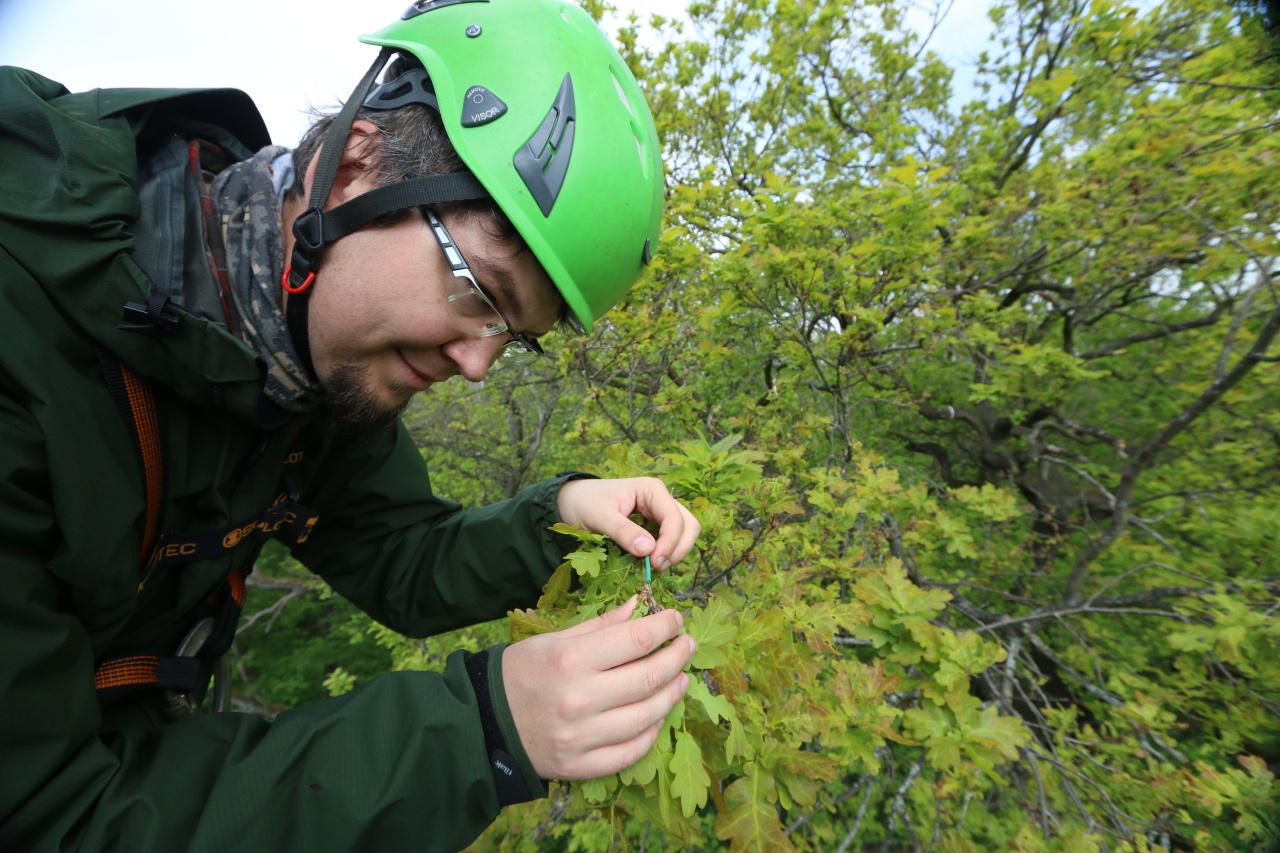
The researchers then observed a cascade of ecological events: how the chemical composition of the leaves changed, what substances the trees began to release into the air, what predators responded to these signals and attacked the caterpillars, and finally, how the abundance and species composition of insects in the tree canopy changed. Scientists documented the predator attacks on artificial caterpillars by the imprints of their beaks or pincers.
The researchers confirmed that predators flew more frequently on the experimentally treated branches (i.e., those "attacked" by pests) than on the untreated ones. The number of leaf-eating caterpillars on the oaks was thus significantly reduced. In addition, the treated leaves were clearly not attractive even to Lymantria dispar caterpillars in the laboratory because the trees produced the aforementioned substances that repel herbivorous insects.
Chemical alarm determines the composition of insects in the tree canopy
The study has shown that the chemical defences of trees elicited in response to damage largely determine the species composition of insects in the tree canopy. Simultaneously, the results reveal the complexity and interdependence of ecological processes between plants and animals. "The new findings can help us find alternative, natural strategies for pest management in agriculture and forestry and thus reduce the amount of pesticides," says another author of the study, Nicole van Dam, the head of the research group from the iDiv Institute and the University of Jena.
The study is also an excellent example of successful interdisciplinary research as it brings together very different scientific fields ranging from ecology, entomology, plant physiology to analytical chemistry.
Text: Eliška Zvolánková, Division of External Relations, CAS Centre of Administration and Operations
Photos: T. Volfová, Biology Centre of the CAS
Read also
- Czech Academy of Sciences Evaluation – Beyond Metrics, Accent on Peer Review
- Ordovician Fauna Beneath Prague – New Arthropod Found During Metro Line Dig
- Wildfires on the Rise in Europe and Set to Double by 2100. What Can We Do?
- The CAS Photogenic Science Contest Invites Entries
- The CAS Launches New Research Programs as Part of Its Strategy AV21
- Academy Assembly – Thirteen Priorities to Boost Basic and Applied Research
- We Must Prioritize Science, Czech President Petr Pavel Says on His Academy Visit
- Radomír Pánek Visits CAS Institutes, Aiming to Strengthen the Academy’s Unity
- Small but Mighty – The Enceladus Moon Is Flexing with Saturn’s Magnetic Field
- Light vs. Antibiotics – Can We Get Harmful Substances Out of Our Water?
The Czech Academy of Sciences (the CAS)
The mission of the CAS
The primary mission of the CAS is to conduct research in a broad spectrum of natural, technical and social sciences as well as humanities. This research aims to advance progress of scientific knowledge at the international level, considering, however, the specific needs of the Czech society and the national culture.
President of the CAS
Prof. Radomír Pánek started his first term of office in March 2025. He is a prominent Czech scientist specializing in plasma physics and nuclear fusion.