

How does the Academy Council plan to strengthen the Academy’s role? Part 2
17. 12. 2025
After the spring session of the Academy Assembly of the CAS, which determined the composition of the new Academy Council of the CAS, its members divided up their roles. With several months’ hindsight, they now outline their intentions. What are their priorities, and how do they plan to shape where the Czech Academy of Sciences will be heading?
The Academy Council of the CAS entered its 2025–2029 term of office with clearly defined priorities. Its aim is to support early-career scientists, secure stable research funding, develop doctoral studies, and open the institution more broadly to partners from both the public and private sectors. Issues such as sustainability, international cooperation, and the modernization of research infrastructure are also coming to the fore. What are the main priorities the thirteen members of the Academy Council have set for themselves, and what do they want to achieve during their mandate?
We asked all members of the Academy Council the following questions:
1 – What are your priorities within your agenda? What changes would you like to implement during your term?
2 – How can your experience and expertise help advance the Czech Academy of Sciences?
3 – How should the Czech Academy of Sciences strengthen its position within the Czech system of science policy in relation to its stakeholders?
In the second part of the survey, the following Academy Council members responded: Ján Matějka, Martin Pivokonský, Jiří Plešek, Ondřej Santolík, Patrik Španěl, and Mária Zedníková.
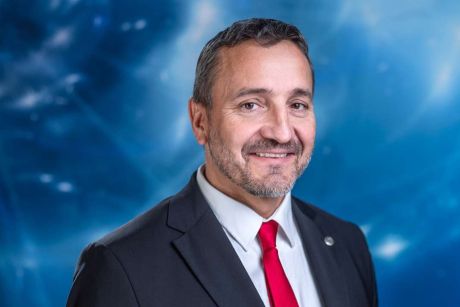
Ján Matějka, Member of the Academy Council of the CAS and Member of the Academy Council Presidium of the CAS, responsible for:
- methodological oversight of external legislation of the CAS
- coordinating cooperation with the Centre of Administration and Operations of the CAS during its transformation, including fulfilling the purpose and oversight of the subject of activities in relation to the founder
- coordinating operations, development, security, and the application of artificial intelligence (AI) at the CAS and its institutes
1 – My priority is external legislation, where I would like to make fundamental adjustments to the legal framework relating to the Czech Academy of Sciences. Not only does it no longer correspond to the actual way the Academy functions, in many respects it also fails to reflect the requirements of related legal regulations, including the key Act on Public Research Institutions. My aim is therefore to make this framework more transparent while at the same time preserving a degree of flexibility and ensuring compliance with applicable legislation.
Closely tied to the external legislation agenda is another of my responsibilities, namely the transformation of the Centre of Administration and Operations of the CAS. My ambition here is to ensure that its current legal status as a research organization is replaced with a more appropriate infrastructure-based model. The goal is to create an effective service facility with a clearly defined mandate that responds flexibly both to the shared needs of CAS institutes and to those of the Academy as founder, and whose activities produce clearly measurable outputs.
The last part of my portfolio concerns the development, security, and application of artificial intelligence. Here I would like to strengthen the strategic coordination and implementation of this crucial technology so that the Academy can keep pace with the latest trends. This requires, above all, a thorough analysis of the current needs of our institution and the establishment of a clear framework for the safe and ethical use of AI.
2 – As a lawyer specializing in information technology law and data protection, I am, among other things, the principal author of the commentary on the Act on Public Research Institutions. I believe I can therefore be of considerable help to the Academy in navigating not only the complex legal environment but also today’s technological – or rather data-driven – era. My experience includes leading research projects focused on data protection and the legal aspects of AI, as well as many publications on the legal regulation of the research, development, and innovation (RDI) system. During almost ten years as director of the Institute of State and Law of the CAS, I also gained experience in managing and administering a research organization, including work on legislative assignments and drafting expert opinions for state authorities and the private sector. These practical experiences are highly relevant for carrying out all three parts of my current agenda. A specific part of this portfolio is the coordination of AI operations. In 2019, I was appointed a member of the Artificial Intelligence Committee at the Czech Ministry of Industry and Trade, the only body in the Czech Republic that coordinates the objectives of the national AI strategy. My involvement in this committee enables me to transfer current knowledge, trends, and practices directly into the environment of the Czech Academy of Sciences – and vice versa.
3 – The Academy should play a more active role in shaping Czech science policy and legislation, especially in areas that affect not only its own operations but the entire RDI system. It is not enough to comment on proposals from the outside – we need to be present at their creation. The experience with advocating for the recent amendment to the Act on the Czech Academy of Sciences shows that when we are not afraid to step up and defend our interests, we can actually influence legislation. If the Academy wants to be a respected actor in the arena of science policy, it must act like a political player: with confidence, decisiveness, a strategic mindset, and an awareness of its own academic authority.
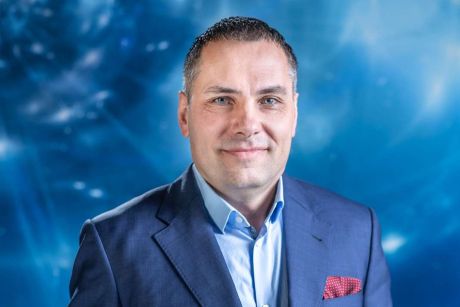
Martin Pivokonský, Member of the Academy Council of the CAS, responsible for:
- coordination and conceptual activities of the operation of CAS institutes in the field of environmental protection and sustainable development within the CAS
- coordination of the operation, development, security, and application of computer networks of the CAS and its institutes, including grant management in this area
- coordination of the agenda in the field of information technologies and systems and digitization, including grant management in this area
- coordination of cooperation with relevant providers (Czech Ministry of the Environment, Ministry of Defence, and Ministry of Agriculture)
1 – In the field of environmental protection and sustainable development, it is essential to prepare a strategy that the Academy will follow in the coming years. This must not be just a declaratory statement, but a set of concrete, achievable goals. In the future, the Academy should be a leader and disseminator of sustainable development ideas in our society. This requires cutting-edge, multidisciplinary basic and applied research that seeks solutions to global as well as local environmental challenges. Among other things, this will strengthen the Academy’s expertise in public debates on sustainability and ensure that environmental policy is based on scientific evidence.
When it comes to the operation, development, and security of the computer networks of the Academy and its institutes, I am something of a centralist. I believe that basic services, including their security, should be provided centrally from a single point. This, however, requires sufficient funding and staffing.
2 – Professionally, I specialize in hydrochemistry, water treatment, and environmental chemistry. I have many years of experience with applying research results in practice, particularly in the field of water treatment and purification technologies. I also spent eight years as director of the Institute of Hydrodynamics of the CAS, which gave me experience in research management and science policy. I would like to use this knowledge specifically in the field of environmental protection, where my goal is to prepare and implement the above-mentioned strategy that should move the Academy significantly forward toward sustainable development. I would also like to contribute to ensuring that society perceives our Academy as a bearer of progressive, yet realistic, environmental ideas.
3 – The Academy must definitely play an active role. It is essential that our institution not only contributes to science policy, but also helps to shape it in a meaningful way together with other partners. Since my portfolio also includes coordinating cooperation with relevant funding providers – specifically the Czech Ministry of the Environment, Ministry of Agriculture, and Ministry of Defence – I will strive to convince their representatives of the importance of working with the Czech Academy of Sciences and to propose relevant research areas in which our institutes could actively engage.
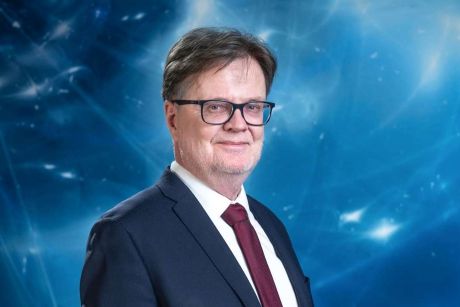
Jiří Plešek, Member of the Academy Council of the CAS, responsible for:
- coordinating and developing the programs and activities of the CAS Strategy AV21, including grant administration in this area
- addressing conceptual issues of program and project cooperation with the Technology Agency of the Czech Republic
1 – I am responsible for the CAS Strategy AV21, for communication with the Technology Agency of the Czech Republic – where I have been a member of the Presidium for two terms now – and for cooperation with the Technology Centre Prague. I consider these areas important for linking science with “the outside world”. My ambition is to strengthen these relationships further and raise them to a higher level – to make full use of my work experience so that cooperation between science and the world beyond the Academy delivers visible results. I want to contribute even more to ensuring that research is not just good on paper, but has a tangible impact. And my portfolio offers an excellent opportunity to make that happen.
2 – I outlined my vision and specific proposals for the functioning of the Academy in detail in my election program when I ran for President of the CAS in 2024. It still holds true that I am ready to contribute my experience and energy wherever they can be genuinely useful. I have long-standing experience in the world of academia, but I also have extensive contacts outside it – in business, in public administration, and internationally. I want to continue actively making use of these connections for the benefit of the Academy, so that it becomes an even stronger player not only in the scientific community but also in social and economic life.
3 – My guiding principle is the effort to understand how others think, to act diplomatically, and to grasp the needs of our partners or even opponents. This applies to cultivating relationships with public administration, universities, and the business sector. The Academy should remain on a course built on rigorous and honest scientific work, coupled with a humble attitude toward those who use its results or make decisions about them. Condescension, pride, and arrogance are the fastest route to isolation. Success begins at the point where we are willing to listen while also articulating our own vision clearly. In fact, it’s quite simple.
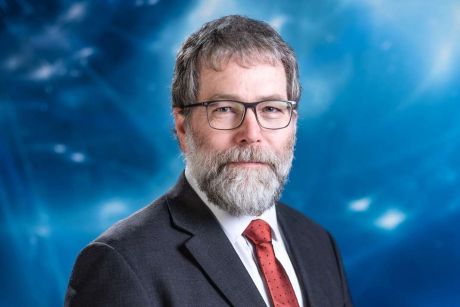
Ondřej Santolík, Member of the Academy Council of the CAS, responsible for:
- coordinating the involvement of the CAS in the European Research Area and related national program cooperation matters in coordination with state authorities, including grant management in this area
- coordinating and addressing conceptual issues of the international cooperation of the CAS, including grant management in this area
- coordinating cooperation with relevant institutions (Czech Ministry of Foreign Affairs)
- coordinating activities in the field of scientific information security (trusted research)
- representing the CAS Vice-President for Research Area I in addressing scientific-organizational matters of the CAS institutes in Sections 1–3
1 – I would like to help improve the effective involvement of the CAS institutes in cooperating with our European partners and the related funding opportunities within the European Research Area. Above all, those who actively conduct research should have the opportunity to influence the funded programs and research topics in their field. At the same time, I will strive to maintain continuity in all the successful international cooperation schemes in which our institutes have traditionally participated and continue to do so.
2 – For the previous two terms, I was elected by the Science Council of the CAS as Vice-President for the Natural Sciences. That role involved serving on various committees and councils, particularly those supporting excellence in research, across various research areas. Through this I came to understand the breadth of research in the Academy. I also became accustomed to discussions with representatives of different institutes, which, for instance, meant learning to accept differences in publishing practices. I have also gained experience from participating in European research programs. With the support of the Division of International Cooperation of the CAS Head Office and together with colleagues in the International Affairs Council of the CAS and other councils and committees, I will now do my best to support our research teams across various disciplines.
3 – A concrete example within my responsibility for international and European cooperation would be to increase the participation of our representatives in the advisory and management structures of European Research Area programs. I hope that enough experts at our CAS institutes will be willing to contribute to improving the way these programs operate. Through my service on the Academy Council, I would like to help make that happen.
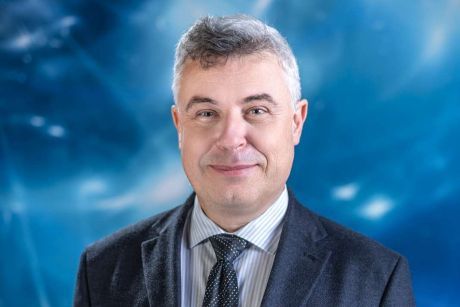
Patrik Španěl, Member of the Academy Council of the CAS, responsible for:
- coordinating the preparation and implementation of the periodic evaluation of CAS institutes, and aligning this agenda with the national system for evaluating research organizations
- coordinating Open Science activities within the CAS
- conceptual activities related to the participation of the CAS in EOSC (European Open Science Cloud), RDA (Research Data Alliance), and CoARA (Coalition for Advancing Research Assessment)
- representing the CAS Vice-President for Research Area II in addressing scientific-organizational matters of the CAS institutes in Sections 4–6
1 – I would like to help make the Academy an environment where researchers can systematically develop original ideas with long-term impact, grounded in deep expertise. This requires creating conditions that support creative freedom while also encouraging an honest, responsible, and focused approach to science. A central role here is played by clear, high-standard evaluations of teams and institutes – assessments that can distinguish genuine contributions to knowledge and their social relevance from the mechanical comparison of easy-to-measure indicators. I also want to place more emphasis on openness in science – not just in terms of data management and sharing results (Open Science), but also in engaging with the public, students, and international partners. Overall, my goal is for the Academy to cultivate a culture of responsible, honest, open, and original science over the long term.
2 – My research has long operated at the interface of physics, chemistry, biology, and medicine. For many years, our team pursued directions that were unconventional at the time but later proved valuable for both scientific progress and practical applications. For example, the analytical method SIFT-MS, which we developed more than twenty years ago based on research of ion reactions in interstellar clouds, is now used worldwide in industry, healthcare, and environmental monitoring. Experiences like this have shown me the importance of patience with new ideas while also supporting the ongoing raising of scientific standards and professionalism. I would also like to contribute my experience from leading a research team, my roles in management at the J. Heyrovský Institute of Physical Chemistry of the CAS, and serving on evaluation panels both in the Czech Republic and abroad.
3 – The Academy should steadily focus on building its reputation as an institution that generates both fundamental knowledge and practical results. Basic research and deeper understanding of the world are just as important as new technologies, methods, or treatments – and the two approaches need to be kept in balance. At the same time, we must be able to explain clearly and patiently to the public and to policymakers that the benefits of science often become visible only after years, sometimes decades. Many technologies we take for granted today were made possible via basic research that initially had no obvious practical goal. The ability to develop new directions is crucial for future innovation and for the resilience of society as a whole. The Academy should therefore not only follow global trends, but actively seek out new pathways, point the way forward, and determine topics that may become important for our society ten, twenty, or more years from now. In our institution’s relations with ministries, funding agencies, and universities, it is important to communicate clearly, factually, and consistently. A stable, well-founded stance of the Czech Academy of Sciences grounded in expertise can help shape an environment where Czech science will be able to prosper in the long run.

Mária Zedníková, Member of the Academy Council of the CAS, responsible for:
- coordinating efforts to strengthen institutional resilience within the CAS
- coordinating the implementation of the NIS2 Directive within the CAS and its institutes
1 – Strengthening institutional resilience and coordinating the introduction of the new Cybersecurity Act within the Czech Academy of Sciences requires fast and effective communication among all stakeholders – the National Cyber and Information Security Agency, the Academy Council of the CAS, and the CAS institutes. I would like to establish a two-way channel for information-sharing between the Academy Council, CAS institute directors, and designated staff. In cooperation with the Centre of Administration and Operations of the CAS, I would also like to provide central – organizational, technical, and educational – support in both these areas, which could save the CAS institutes considerable resources.
2 – In tackling complex engineering problems, we use a multiscale approach: analyzing the whole system, breaking it down into subsystems, identifying key processes within them, and describing how these link back to the whole. I believe a similar approach can be applied to challenges within the Academy. The Academy forms a complex whole, the CAS institutes are its subsystems, and understanding and setting up the right connections between them is key to the effective functioning of the entire system.
3 – Strengthening the Academy’s position should come about by means of intensive dialogue with individual stakeholders and discussions with ministries as well as universities. It is necessary to work systematically on raising the visibility of our research results – to the public, to policymakers, and to industry alike. In this way, we can demonstrate that the Academy is a key institution in addressing fundamental research questions in the public interest – in areas such as health, energy, education, and digitalization – as well as in technology transfer, to which many CAS institutes are deeply committed.
Written and prepared by: Zuzana Dupalová and Luděk Svoboda, External Relations Division, CAO of the CAS
Translated by: Tereza Novická, External Relations Division, CAO of the CAS
Photo: Jana Plavec, External Relations Division, CAO of the CAS
 The text and photos are released for use under the Creative Commons license.
Read also
- Small but Mighty – The Enceladus Moon Is Flexing with Saturn’s Magnetic Field
- Light vs. Antibiotics – Can We Get Harmful Substances Out of Our Water?
- Better ECGs and Industrial Superlasers – Real-World Results of CAS Research
- Czech Academy of Sciences to launch a joint-stock company
- In the Age of AI, Spotting a Fake Photo Is Harder Than Ever, Expert Says
- How to Turn Ideas into Successful Grants: The New ERC Incubator Is Offering Help
- SciComm 360° Tackled How to Communicate Science in the Age of Disinformation
- The Academy of the Future? A New Vision for Attracting Scientific Talent
- When Cars Fly and Bullets Swerve – Physics Gone Wrong on the Silver Screen
- The Academy to Boost Excellence and Careers in Research with New Programs
The Czech Academy of Sciences (the CAS)
The mission of the CAS
The primary mission of the CAS is to conduct research in a broad spectrum of natural, technical and social sciences as well as humanities. This research aims to advance progress of scientific knowledge at the international level, considering, however, the specific needs of the Czech society and the national culture.
President of the CAS
Prof. Radomír Pánek started his first term of office in March 2025. He is a prominent Czech scientist specializing in plasma physics and nuclear fusion.