
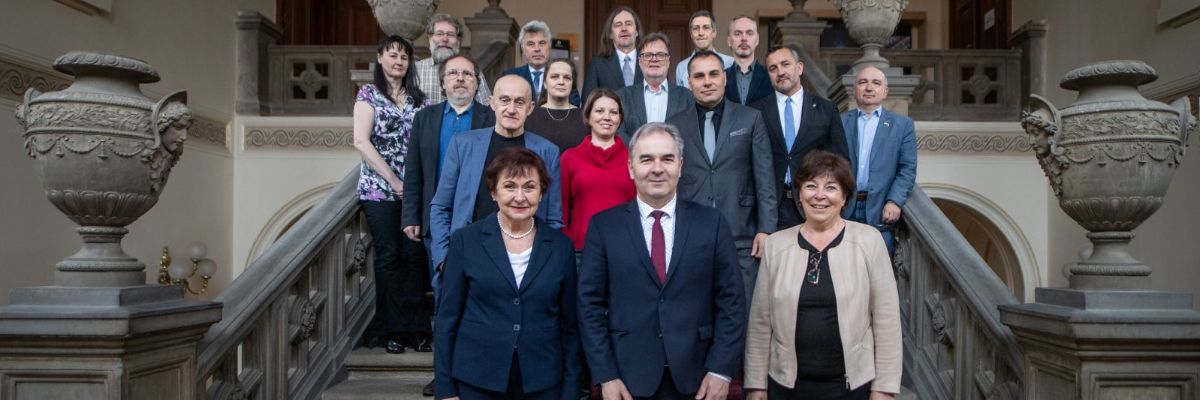
How does the Academy Council plan to strengthen the Academy’s role? Part 1
17. 12. 2025
After the spring session of the Academy Assembly of the CAS, which determined the composition of the new Academy Council of the CAS, its members divided up their roles. With several months’ hindsight, they now outline their intentions. What are their priorities, and how do they plan to shape where the Czech Academy of Sciences will be heading?
The Academy Council of the CAS entered its 2025–2029 term of office with clearly defined priorities. Its aim is to support early-career scientists, secure stable research funding, develop doctoral studies, and open the institution more broadly to partners from both the public and private sectors. Issues such as sustainability, international cooperation, and the modernization of research infrastructure are also coming to the fore.
We asked all members of the Academy Council the following questions:
1 – What are your priorities within your agenda? What changes would you like to implement during your term?
2 – How can your experience and expertise help advance the Czech Academy of Sciences?
3 – How should the Czech Academy of Sciences strengthen its position within the Czech system of science policy in relation to its stakeholders?
In the first part of the survey, the following Academy Council members responded: Petr Baldrian, Pavel Baran, Marcela Buchtová, Soňa Ehlerová, Pavel Janáček, Tomáš Kostelecký, and Jiří Kotek.
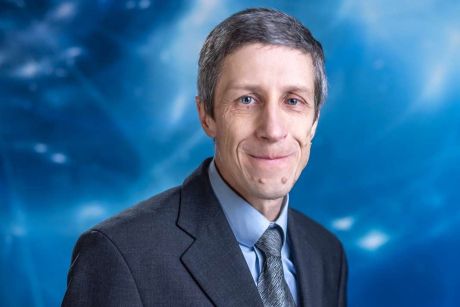
Petr Baldrian, Member of the Academy Council of the CAS, responsible for:
- coordinating the agenda of excellence-support programs within the CAS and in the international context (ERC, Horizon Europe, etc.), including grant administration in this area
- addressing conceptual issues of program and project cooperation with the Czech Science Foundation (GA ČR)
1 – My priority within the CAS is to improve support for excellent and promising scientists and the careers of especially younger colleagues. People with the drive for scientific pursuits are the Academy’s greatest wealth. If we want to remain the leading scientific institution in the Czech Republic, we have to nurture these researchers and ensure that they perceive the Academy as “their” institution – one that is friendly and approachable.
2 – I believe I can draw on my experience from the Czech Science Foundation and as a panelist for international funding agencies to help the Academy identify and support excellent science – and perhaps even be able to “sell” it a little.
3 – The Academy must show that it is not only a place that fosters excellent basic research, but also that our institution is of use to the Czech Republic. We should make better use of the fact that we contribute to the education of talented researchers during and after their studies, and that we are ready and able to provide our expertise in addressing practical complex issues important to the country.

Pavel Baran, Member of the Academy Council Presidium and President of the Science Council of the CAS, responsible for:
- addressing conceptual issues of science policy and public funding support for science in cooperation with state authorities in this area and the policy of research, development, and innovation (RDI) (Council for Research, Development and Innovation, Czech Ministry of Education, Youth and Sports, etc.)
- the agenda of grant administration for holders of the Doctor of Science (DSc.) title
1 – I would like to focus on supporting top-level science at the CAS institutes and securing an adequate increase in our scientists’ remuneration, thus making their salaries competitive. The Czech Academy of Sciences must be an attractive workplace for researchers. No less important, in my role as President of the Science Council, is to identify scientific topics that are not yet sufficiently researched at our CAS institutes. Needless to say, it is essential to pay constant attention to the conditions and quality of doctoral studies, especially in the context of cooperation between universities (including international ones) and CAS institutes. Finally, I must not overlook our effort to enshrine the scientific degree of Doctor of Science (DSc.) in Czech law.
2 – Science policy at the Academy often reminds me of surfing the waves, with recurring attempts at what is called “symmetric consolidation” of the research system – that is, a system without the Academy as an “autonomous” research institution. I have worked in science and research management for more than fifteen years. I have learned a great deal and gained both perspective and practical experience, including with similar attempts at “consolidation”. And now I would like to put this know-how to work for the benefit of the Academy and its institutes.
3 – Firstly: by conducting high-quality, cutting-edge research, including implementing its transfer to the commercial and social spheres. Secondly: through openness to our partners and their representatives – universities, state administration and departmental research organizations, and the business sector. Thirdly: through the ongoing involvement of the interested general public, including public outreach and the promotion of so-called citizen science. Fourthly: through regular and systematic contact with political representatives, with the particular aim of systematically determining agendas for “well-informed policymakers”.
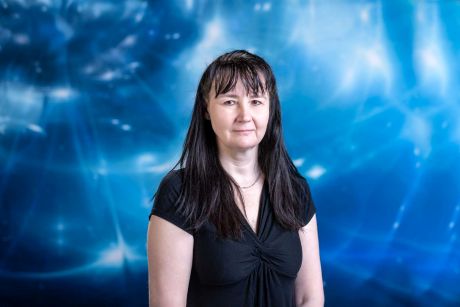
Marcela Buchtová, Member of the Academy Council of the CAS, responsible for:
- addressing conceptual issues of scientific training and cooperation of the CAS with universities and joint institutes, including doctoral study programs and cooperation with departmental institutes
- addressing conceptual issues of program and project cooperation with the Czech Ministry of Education, Youth and Sports, universities, and funding providers, including operational programs of structural funds
1 – One of my priorities is to strengthen our cooperation with universities, which has become even more urgent in connection with the recent amendment to the Higher Education Act. This amendment establishes new requirements for the standard and funding of doctoral studies and highlights the need for efficiency and the employability of graduates. It is therefore essential that the Academy take an active part in this discussion on setting the conditions for supervising PhD students, that we reduce administrative barriers, and at the same time strengthen inter-institutional trust. One concrete step I consider crucial is the stabilization and increase of funding for doctoral students. If doctoral study programs are to be internationally competitive and attractive to strong candidates, they must offer decent financial conditions and a clear perspective for further professional growth. The Academy should actively push for systemic changes that will stabilize the financial support for CAS institutes necessary for the joint supervision of PhD students together with universities.
2 – I have long-term experience working at the intersection of academia, higher education, and international cooperation. This allows me to contribute to strengthening ties between the Academy and universities, especially in regard to training young researchers. I also have experience with evaluating scientific performance, managing international projects, and engaging in interdisciplinary and inter-institutional cooperation – both on a national and international level. I want to offer a practical perspective to the Academy Council from my experience of leading a research institute and from my knowledge of the university environment. My aim is to help the Academy respond more effectively to changes in funding for PhD students as well as to the needs of our younger generation of researchers.
3 – One of the priorities of Czech science policy should be developing the Academy’s ties with universities, because strong links between these two pillars of Czech research are crucial both for training the new generation of scientists and for the quality of research itself. The Academy should strive to create a stable framework for institutional cooperation – for instance, by means of joint doctoral study programs, shared infrastructure, or more in-depth mutual integration of activities across both institutions, such as, from our side, involving CAS researchers in teaching or in supervising theses. It is also essential to harmonize the differing requirements of these two environments when it comes to balancing teaching and research activities. The Academy should systematically look for ways to bridge these differences and create conditions in which PhD students and supervisors from both institutions will have clearly defined roles, responsibilities, and support.
High-quality, respectful cooperation with universities can also help improve the integration of scientific knowledge into the educational process, while at the same time enabling the Academy to benefit from the pedagogical and study dynamics of the university environment. This would result in a more interconnected, effective, and internationally competitive research space.
In the context of the amendment to the Higher Education Act, it is necessary to work together on finding solutions for stable funding of doctoral studies, including the possibility of supporting supervisors at CAS institutes in securing funding for students, which would in turn strengthen their motivation to engage actively in doctoral education. Such a framework would also help reduce financial insecurity for PhD students as well as the burden on supervisors and research institute directors, who currently bear the responsibility for ensuring this funding without having adequate systemic tools at their disposal. This would create a more stable environment for long-term, high-quality supervision of PhD students and their theses.
The key, then, is to cultivate mutual understanding of the needs and functioning of both types of institutions – research institutes and universities – which may stem from different traditions and structures but share a common goal: to train the highest-quality graduates prepared for careers in scientific and specialized fields.
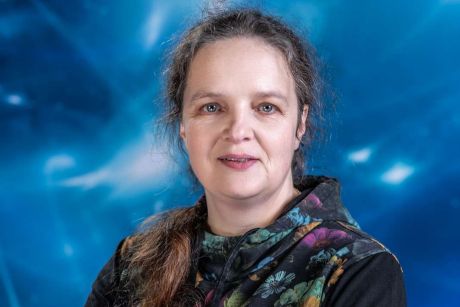
Soňa Ehlerová, Member of the Academy Council of the CAS, responsible for:
- conceptual issues of presenting the results of the CAS and its institutes, cooperation of the CAS with the media, and communication with the public, including grant administration in the field of science and research presentation
- coordination of public outreach and publishing activities
- coordination and conceptual activities in the field of equal opportunities within the CAS
1 – When it comes to public outreach and science communication activities, I want the Academy to be perceived as more than just a conglomeration of independent institutes. Of course, scientific research in the CAS institutes comprises the main reason for their existence, but the diverse environment of the Academy fosters inspiration and cooperation across our institutes and various fields. A good example of this are the CAS Strategy AV21 research programs. I would like – and will work toward – having our institutes cooperate in their public outreach efforts. I know many of them already are doing so, but I would like to further support and facilitate such collaboration.
In the area of equal opportunities, it is important to eliminate inequality where it should not exist, and to identify and promote good practices, whether they come from CAS institutes or abroad. Given the turbulent times we live in, it is not enough to set and implement conditions once and then hope they will work perfectly for many years.
2 – I worked for the Czech node of the ESO Science Outreach Network (ESON), and later served on the ESO Council. Besides building and operating top-class astronomical instruments, ESO is also a typical European organization: it consists of many member states – all working for the good and betterment of astronomy, but each is different and functions a bit differently. I see ESO as a good model for the Academy.
I was also involved with the international public outreach network of the Office for Astronomy Outreach, affiliated with the International Astronomical Union (IAU), where I gained a network of contacts. This is an incredibly diverse group of people with different backgrounds from many countries all over the world. Suddenly you come to realize that your experiences and problems are not the only ones possible – and at the same time you see that different groups share similar goals and interests.
In both of these organizations, the motto – with a touch of exaggeration – was “one for all, all for one,” and I think that motto is fitting for the Czech Academy of Sciences as well.
3 – I believe in decency and reasonable dialogue. The main way to strengthen the influence of the Academy is by means of substantive dialogue with other science policy actors. Our position should rest on awareness of our own strengths – our successes – but also on awareness of our social responsibilities. Unfortunately, there are times when decency and reason are not fully valued in society, but that does not mean we should abandon them. My agenda can contribute to this by highlighting the role of the Academy in all areas of scientific life – primarily in research, but also in educating future scientists. An important part of this is showing that the independence, non-partisanship, and stable funding of the Academy, as in the case of universities, are the best guarantees of long-term scientific performance.
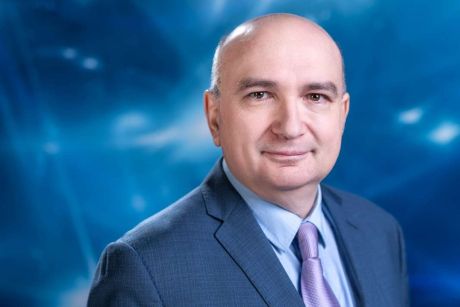
Pavel Janáček, Member of the Academy Council of the CAS, responsible for:
- coordinating property management of the CAS and handling the agenda of property management of the CAS institutes
- coordinating publishing activities within the CAS, including grant administration in this area
- methodological oversight of support for institute governing bodies and internal regulations of the CAS (supervisory boards, establishment charters of institutes, etc.)
- representing the CAS in addressing conceptual financial and budgetary matters and their implementation, including grant administration in this area
1 – My core agenda is tied to assessing the property dispositions of the CAS institutes – an ongoing task whose main outlines are set by legislation. I am watching closely to see how the Czech Parliament will handle the new Act on Research, Development, Innovation and Knowledge Transfer, and especially its accompanying amendment bill. Depending on whether the law is passed or not, we will move forward accordingly – in both knowledge transfer and the management of shared and development property. [Editor’s Note: The Act was adopted on 23 July 2025 and will enter into force on 1 January 2027.]
2 – Four years ago, what I primarily brought to the Academy were my experiences from heading a small-to-medium-sized CAS institute – the most common type of institute found within the Academy. Now, on my second term, I also bring experience from serving on the Academy Council, which is not gained easily. Seeing the Academy from the top looks very different than seeing it from the bottom, and only looking at it from both perspectives gives us the full picture. Thanks to this, I now have a clear sense of the internal risks our institution faces and their order of importance, and I am eager to support steps to eliminate them.
3 – By refusing to let itself be divided – even if the trend of attacks on academic institutions and the independence of research under the guise of efficiency, centralization, or common sense were to reach the Czech Republic. No single CAS institute is large enough to stand on its own for long as an independent actor. What gives us strength is the collective unity of the Academy. Together we are the most efficient scientific institution in the Czech Republic, spread across the country – a unique entity in which the state and the public interest meet academic autonomy.
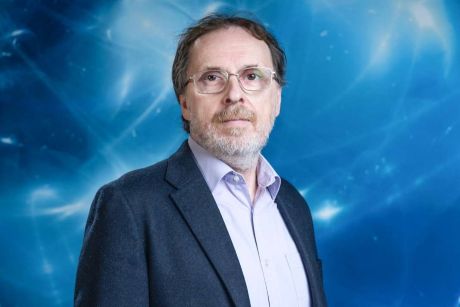
Tomáš Kostelecký, Member of the Academy Council of the CAS, responsible for:
- coordinating regional cooperation of the CAS with state administration, self-government, public law entities, and other institutions within the regions of the Czech Republic, including grant administration in this area
- coordinating applied research in the social sciences and humanities, and coordinating interdisciplinary research cooperation between the social sciences and the natural sciences, as well as coordinating Science for Policy
- coordinating cooperation with relevant providers (Czech Ministry of Labour and Social Affairs, Czech Ministry of Regional Development)
- representing the CAS Vice-President for Research Area III in addressing scientific-organizational matters of the CAS institutes in Sections 7–9
- representing the CAS in coordinating and addressing conceptual matters of international cooperation of the CAS, including grant administration in this area, and in coordinating the involvement of the CAS in the European Research Area and related national program cooperation matters in conjunction with state authorities, including grant administration in this area
1 – In the new Academy Council, my portfolio has shifted somewhat compared to my previous term, which also means my priorities have slightly changed and expanded. In regional cooperation, I want to engage more actively in dialogue with the users and beneficiaries of regional cooperation projects – above all, representatives of public administration at the regional and local level. The point is to be more attentive to what troubles our partners and to tailor at least some of our projects more closely to their needs. This emphasis is also reflected in my new “Science for Policy” portfolio. In this area, we will support and develop cooperation between the CAS institutes and public administration also at the national level.
2 – As a researcher and former director of the Institute of Sociology of the CAS, I have a wealth of experience with applied research in the social sciences. My work in the previous Academy Council has also given me a broader perspective and some practical experience with the potential applications of research in the humanities and with participation in multidisciplinary consortia. In addition, I have become a reviewer for ERC projects, which has given me greater insight into trends and modes of work at the European level. I hope all of this will prove useful and can be applied to advancing the Academy as a whole.
3 – The Academy should not shy away from engaging in dialogue with politicians, even if it sometimes feels like an encounter “from another world,” and should take a more active role in shaping policies relevant to us as scientists – both at the national and European level. I believe that in doing so, we can preserve our scientific independence while at the same time gaining valuable connections to potential partners from other sectors of research as well as from the business world.
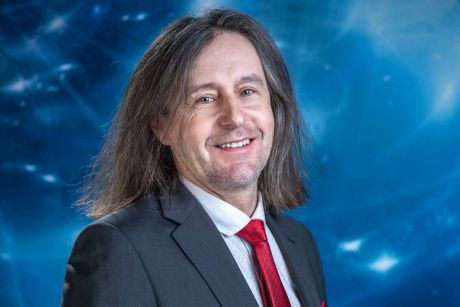
Jiří Kotek, Member of the Academy Council of the CAS and Member of the Academy Council Presidium, responsible for:
- addressing conceptual financial and budgetary matters and their implementation, including grant administration in the entrusted area
- coordinating infrastructure activities of the Centre of Administration and Operations of the CAS
- coordinating support for scientific societies, including grant administration in this area
- methodological oversight of the agenda of public administration audits at CAS institutes
1 – As follows from my agenda, which focuses on addressing conceptual financial and budgetary matters, my main priority must be to secure predictable, stable, and adequate funding for the institutes established by the CAS. Top-level science rests on three essential pillars – people, equipment, and facilities. Each of these areas requires targeted attention:
People
Strengthening the competitiveness of the Academy on the labor market – especially in relation to foreign institutions – is, in my view, fundamental. I want to focus on stable and high-quality support for our young generation of scientists, particularly PhD students, whose involvement in research is key to the sustainable development of science. It is essential that our CAS institutes have sufficient resources to cover the new legislative requirement of a guaranteed doctoral income, so that they can fully fulfil their role in training future scientists.
We must also address the remuneration of research staff. The proportion of highly qualified experts in the Academy is significantly higher than in other sectors, yet the average salary in the Academy is lower than the average in the capital city of Prague. The outflow of experts abroad or into the private sector is, in my view, a serious threat both to Czech science and to societal development as a whole. Nor must we overlook technical and technical-administrative staff, who form an indispensable backbone of the day-to-day functioning of research institutions.
Equipment
Nowadays, science cannot be conducted without top-class technical facilities. The days are long gone when Professor Otto Wichterle allegedly tested contact lenses by pressing them between his teeth – science today requires sophisticated technology and regular renewal of equipment. This priority also includes current challenges such as ensuring cybersecurity, digital archiving, and the implementation of open science principles.
All of these areas are interconnected. Their common foundation is the effort to increase and stabilize funding for science. My goal is for the Czech Academy of Sciences to have a strong, predictable, and sustainable financial base that will enable it to fulfil its role as a top research institution both on a national and international level. At the same time, I will advocate for fair distribution of funds among the CAS institutes, corresponding to their performance and specific needs.
Facilities
Another priority is the sustainability and modernization of our buildings, including the reconstruction of historically valuable structures that form an important part of the Academy’s facilities. It is necessary to actively seek new sources of funding – not only to complete projects already under construction, but also to ensure their subsequent operation.
Stable and efficient management of infrastructure is an essential prerequisite for high-quality research. Alongside strategic investments, we must not neglect everyday maintenance, which ensures operational functionality and safety.
2 – My experience gained from leading a CAS institute and my long-standing involvement in the Economic Council of the CAS have enabled me to understand both the specific needs of individual CAS institutes and the principles of strategic management of our institution as a whole. This allows me to perceive the system in a broader context and to seek solutions that respond both to the everyday realities of scientific work and to the demands of effective and transparent administration.
My work in the international arena – including my leadership of the European Polymer Federation – has provided me with valuable insight into how research institutions in countries of the Western world operate. I know how crucial institutional support for scientists is, as well as high-quality infrastructure, effective communication, and a strong emphasis on knowledge and technology transfer. I regard this context as an important source of inspiration for the further development of the Academy.
I believe I can be most useful in areas that require a systemic approach: from budgetary and grant policy to infrastructure development, to the strategic management of support services. My goal is to contribute to the Academy’s continued development as a trustworthy, modern, and open institution – with a clear vision, a stable structure, and solid backing for top-level research.
3 – The standing of the Czech Academy of Sciences in the Czech arena of science policy must rest above all on the quality of its research outputs and on credible, proactive engagement with other actors – universities, state administration, the application sphere, and the broader public. Credibility and academic excellence should be our fundamental tenet. In an era of disinformation and the relativization of knowledge, the Academy must be perceived as a stable source of verified, evidence-based information – not only for the Czech government and media, but also for the wider public.
In relation to state administration, it is important to further develop the Academy’s expert role, especially by providing analytical and substantive support for the formulation of public policies. In cooperation with universities, we should strengthen a partnership model that naturally connects teaching with excellent research. Toward the public, it is crucial to foster openness and comprehensibility – not only by means of public outreach and science communication activities, but also by involving the general public in the scientific process itself, for instance through citizen science projects. International cooperation and active participation in the European Research Area remain one of the pillars of further growth. In this respect, the Academy has the potential to be a confident and respected partner.
Written and prepared by: Zuzana Dupalová and Luděk Svoboda, External Relations Division, CAO of the CAS
Translated by: Tereza Novická, External Relations Division, CAO of the CAS
Photo: Jana Plavec, External Relations Division, CAO of the CAS
 The text and photos are released for use under the Creative Commons license.
Read also
- Small but Mighty – The Enceladus Moon Is Flexing with Saturn’s Magnetic Field
- Light vs. Antibiotics – Can We Get Harmful Substances Out of Our Water?
- Better ECGs and Industrial Superlasers – Real-World Results of CAS Research
- Czech Academy of Sciences to launch a joint-stock company
- In the Age of AI, Spotting a Fake Photo Is Harder Than Ever, Expert Says
- How to Turn Ideas into Successful Grants: The New ERC Incubator Is Offering Help
- SciComm 360° Tackled How to Communicate Science in the Age of Disinformation
- The Academy of the Future? A New Vision for Attracting Scientific Talent
- When Cars Fly and Bullets Swerve – Physics Gone Wrong on the Silver Screen
- The Academy to Boost Excellence and Careers in Research with New Programs
The Czech Academy of Sciences (the CAS)
The mission of the CAS
The primary mission of the CAS is to conduct research in a broad spectrum of natural, technical and social sciences as well as humanities. This research aims to advance progress of scientific knowledge at the international level, considering, however, the specific needs of the Czech society and the national culture.
President of the CAS
Prof. Radomír Pánek started his first term of office in March 2025. He is a prominent Czech scientist specializing in plasma physics and nuclear fusion.