
Groundbreaking study maps brain’s recovery process after stroke
21. 11. 2024
Every year, tens of thousands of people in the Czech Republic experience a stroke. A team of scientists from the Institute of Biotechnology of the CAS and the Institute of Experimental Medicine of the CAS, in cooperation with experts from the Institute for Clinical and Experimental Medicine (IKEM), has made significant strides in understanding how the brain recovers after a stroke. Their findings were published in Proceedings of the National Academy of Sciences (PNAS).
To create a detailed map of molecular and cellular changes in glial cells during the critical first week following an ischemic stroke in a pre-clinical mouse model, the researchers utilized advanced spatial transcriptomics. “Spatial transcriptomics allows us to see not just which genes are active, but precisely where they are active within the brain,” says Daniel Žucha, lead author of the study from the Institute of Biotechnology of the Czech Academy of Sciences (CAS), adding that “using a pre-clinical stroke model, this spatial context is crucial for understanding the complex interactions during stroke recovery and opens up exciting possibilities for deeper insights into the recovery process.”
The critical role of glial cells
By mapping gene expression patterns in their exact locations in the brain, researchers discovered how glial cells like astrocytes, microglia, and particularly oligodendrocytes enter activated states that vary depending on their proximity to the injury site.
“Understanding the spatial dynamics of glial cell activation helps us understand how the brain limits damage and promotes recovery,” says Miroslava Anděrová, a senior author from the Institute of Experimental Medicine of the CAS. A glial scar forms around the damaged tissue. As she explains further, this glial scar “is not just a barrier but a dynamic environment where crucial cell-to-cell communication occurs.”
The study also reveals how different cell types contribute to the formation of the glial scar, highlighting in particular the role of oligodendrocytes in modulating inflammation and supporting recovery. “Our findings highlight the active role of oligodendrocytes in this process, suggesting that they play a more involved role in recovery than previously thought,” notes Lukáš Valihrach, a senior author from the Institute of Biotechnology of the CAS. These recent findings provide a new perspective on the diverse functions of glial cells beyond passive support of neuronal cells.
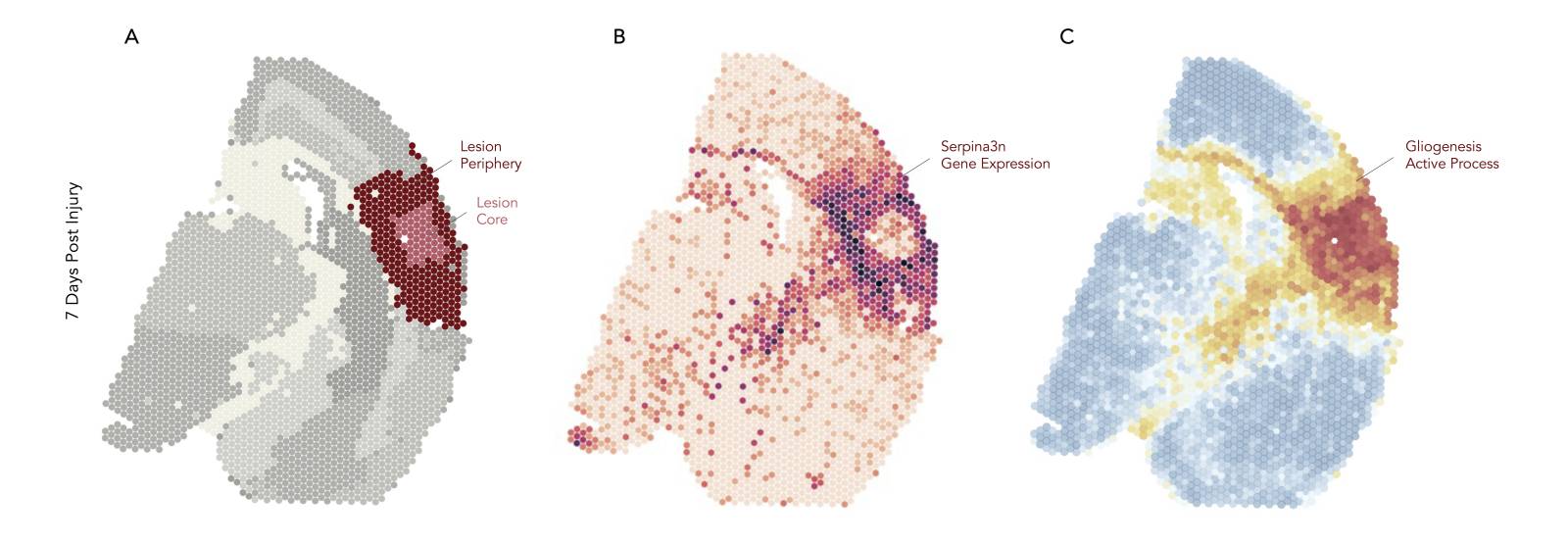
Key components of the cellular response to stroke.
Supported by the Czech Science Foundation (GACR), the research not only deepens our understanding of stroke pathobiology, but also highlights the transformative potential of spatial transcriptomics in neuroscience research. The team plans to build on these findings with a new study using human ischemic samples, bringing this line of research closer to potential clinical applications for stroke recovery.
Written and prepared by: Markéta Wernerová, External Relations Division, CAO of the CAS
Translated by: Tereza Novická, External Relations Division, CAO of the CAS, drawing on the CAS press release
Photo: Shutterstock; Institute of Biotechnology of the CAS
 The text is released for use under the Creative Commons license.
Read also
- New Academy of Sciences Program Already Has First ERC Grant Winners to Its Credit
- Three researchers from the Czech Academy receive prestigious ERC grants
- Ombudswoman of the CAS Dana Plavcová: I'm glad when things change for the better
- Early-Career Researchers from the CAS Received the 2026 Otto Wichterle Award
- Jackal Expansion Across Europe Facilitated by Humans, Curbed by Wolves
- Languages Don’t Overload the Brain, Psycholinguists Say
- Czech Academy of Sciences Evaluation – Beyond Metrics, Accent on Peer Review
- Ordovician Fauna Beneath Prague – New Arthropod Found During Metro Line Dig
- Wildfires on the Rise in Europe and Set to Double by 2100. What Can We Do?
- The CAS Photogenic Science Contest Invites Entries
The Czech Academy of Sciences (the CAS)
The mission of the CAS
The primary mission of the CAS is to conduct research in a broad spectrum of natural, technical and social sciences as well as humanities. This research aims to advance progress of scientific knowledge at the international level, considering, however, the specific needs of the Czech society and the national culture.
President of the CAS
Prof. Radomír Pánek started his first term of office in March 2025. He is a prominent Czech scientist specializing in plasma physics and nuclear fusion.