
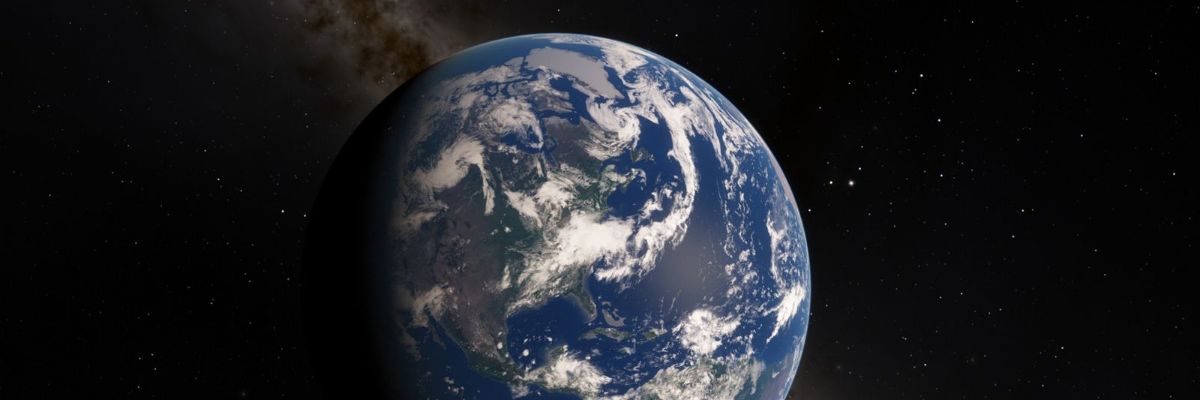
Astronomy helps find oil and gas deposits
01. 02. 2022
It started by accident in 2012 – now, it has become a method for finding oil and gas deposits backed by astronomers. Jaroslav Klokočník's team uses satellite data and a correlation between large hydrocarbon deposits and one of the quantities derived from the gravitational field model. The method does not require drilling and could thus inexpensively assist in the search for such deposits, ground water or paleolakes.
Astronomy and astrophysics are typical examples of basic research. They explore the universe but do not directly apply their research to areas of everyday life. Here the exception proves the rule.
A decade ago, Jaroslav Klokočník of the Astronomical Institute of the Czech Academy of Sciences (CAS) discovered purely by chance - while exploring impact craters on the Earth - a correlation between the existence of known giant hydrocarbon deposits and one of the gravitational aspects, i.e. quantities derived from the gravitational field model (EM). It is called the strike angle, which is very sensitive to underground density variations. Normally, its spatial orientation is chaotic, without order; however, at the sites of hydrocarbon deposits, groundwater, paleolakes, deep river valleys, or geological faults, it is aligned, "combed" - oriented unilaterally. This is a clue for the detective work of astronomers, geodesists and geologists.
EM is a set of numbers characterizing the Earth's gravitational field, calculated from a variety of satellite and other measurements.
However, the clue that the strike angle provides astronomers is not unambiguous, so other data and the collaboration of other experts are needed (topography, magnetic intensities, seismic data etc). The team of astronomers, who normally explore the orbital dynamics of the Earth's artificial satellites and the gravitational field, also includes a scientist from the Institute of Geology of the CAS and the Technical University in Ostrava.
 |
 |
 |
 |
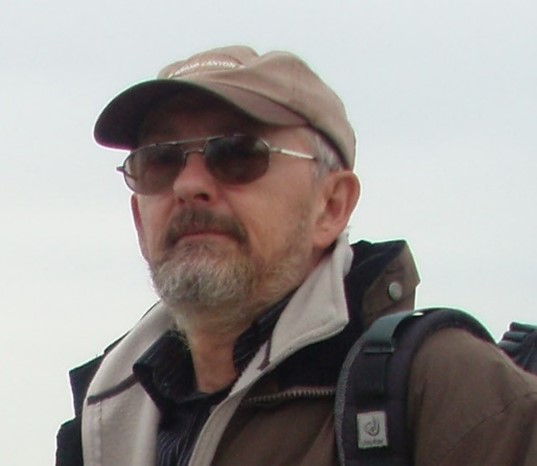
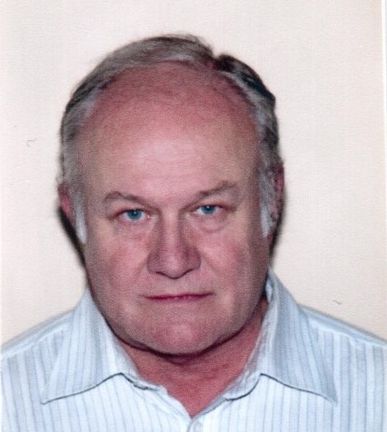
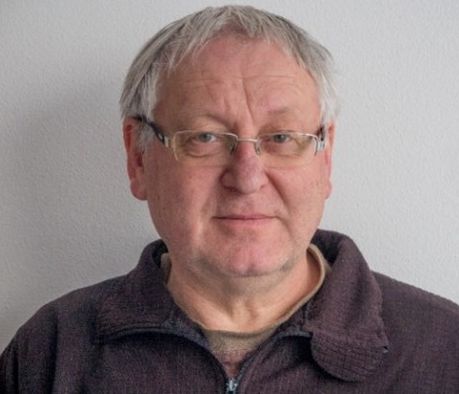
| The team: prof. Klokočník (AI of the CAS), prof. Kostelecký (TU in Ostrava), dr. Cílek (IG of the CAS), doc. Bezděk (AI of the CAS). |
|||
Tested, confirmed
The authors have already tested the method a decade ago at the well-known sites of Ghawar (Saudi Arabia), the Caspian Sea or the Persian Gulf, and now, they have extended it to the whole world. They have mapped out locations with an increased probability of oil or gas deposits, or water (which is also very important for certain countries).
"It seems like apparent nonsense how we can use satellite data to pick out the locations of oil and gas deposits, but we have tested it on known deposits and it works," says Jaroslav Klokočník from the Institute of Astronomy of the CAS. "I came up with the idea in 2012 and since then, we’ve already had a third publication on this subject. And now, we also have a geological and geophysical interpretation."
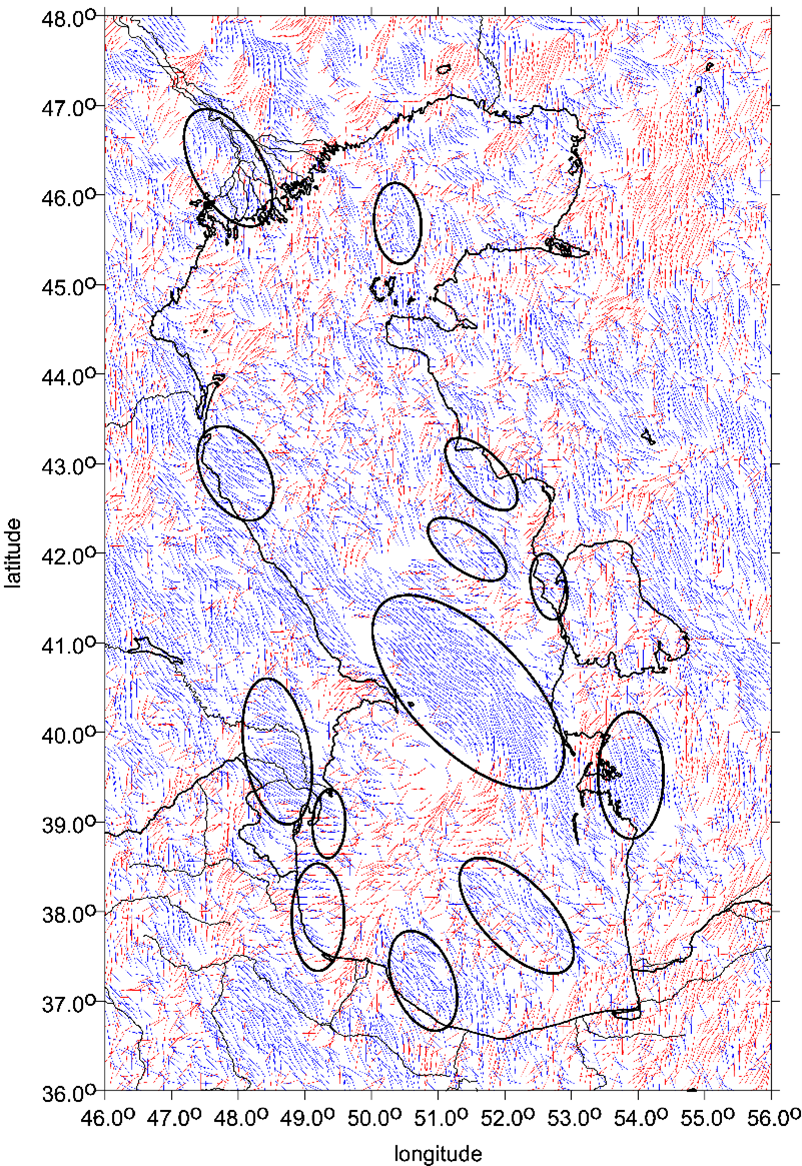
An example of a trial region to detect sites with possible oil and gas accumulation, already-known fields in the Caspian Sea region.
Cheap and without dry holes
The method does not require local deep drilling and could therefore be a cheap tool in the preliminary search for deposits in remote areas. It will reduce the risk of dry holes and thus, it can significantly reduce the costs. However, it cannot be used for small deposits - its resolution limit is based on the resolution of the gravitational field model on the Earth's surface, which is today about 9 km.
A comprehensive scientific paper has been published in the International Journal of Oil, Gas and Coal Technology 28(3), 306–332. The result may be important economically and strategically because there may still be many unused potential deposit sites over the whole world.
Text: Eliška Zvolánková, Division of External Relations, CAS Centre of Administration and Operations
Photos: Shutterstock; Astronomical Institute of the CAS
Read also
- We Must Prioritize Science, Czech President Petr Pavel Says on His Academy Visit
- Radomír Pánek Visits CAS Institutes, Aiming to Strengthen the Academy’s Unity
- Small but Mighty – The Enceladus Moon Is Flexing with Saturn’s Magnetic Field
- Light vs. Antibiotics – Can We Get Harmful Substances Out of Our Water?
- Better ECGs and Industrial Superlasers – Real-World Results of CAS Research
- Czech Academy of Sciences to launch a joint-stock company
- In the Age of AI, Spotting a Fake Photo Is Harder Than Ever, Expert Says
- How to Turn Ideas into Successful Grants: The New ERC Incubator Is Offering Help
- SciComm 360° Tackled How to Communicate Science in the Age of Disinformation
- The Academy of the Future? A New Vision for Attracting Scientific Talent
The Czech Academy of Sciences (the CAS)
The mission of the CAS
The primary mission of the CAS is to conduct research in a broad spectrum of natural, technical and social sciences as well as humanities. This research aims to advance progress of scientific knowledge at the international level, considering, however, the specific needs of the Czech society and the national culture.
President of the CAS
Prof. Radomír Pánek started his first term of office in March 2025. He is a prominent Czech scientist specializing in plasma physics and nuclear fusion.