
Young scientists discussed economic challenges with Nobel laureates in Lindau
15. 09. 2025
Climate change, the fragility of financial systems, and other pressing issues were at the center of discussions between young researchers and Nobel Prize laureates in economics at a meeting held from 26 to 30 August 2025 in Lindau, Germany. What impressed Clara Sievert from CERGE-EI, a joint workplace of the Czech Academy of Sciences and Charles University, in her conversations with the laureates?
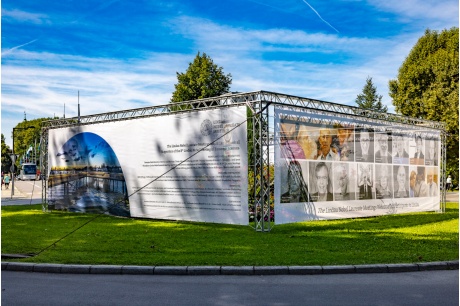
At Lake Constance in Lindau, late August provided a unique setting for dialogue between experienced scholars and early-career researchers. The eighth Lindau Nobel Meeting in Economic Sciences brought together twenty laureates of the world’s most prestigious award and more than three hundred young researchers from over fifty countries. The debates focused on urgent global challenges as well as long-standing questions in economics. In addition to lectures and panel discussions, the organizers also included more informal formats – such as science walks with Nobel laureates.
The main topics centered on the role of institutions in economic development, the fragility of financial systems, and the challenges associated with climate change and international cooperation. One discussion that attracted considerable attention focused on research and innovation in a so-called “tripolar world,” where diverse geopolitical and economic interests collide.
Young researchers actively contributed to the program with more than seventy presentations, complementing the contributions of renowned figures – including former President of the European Central Bank Mario Draghi. The highlight of the program was the gathering on Mainau Island, where participants debated whether institutions primarily strengthen a privileged minority or whether they can genuinely serve society as a whole.
Connecting the “young” and the “less young”
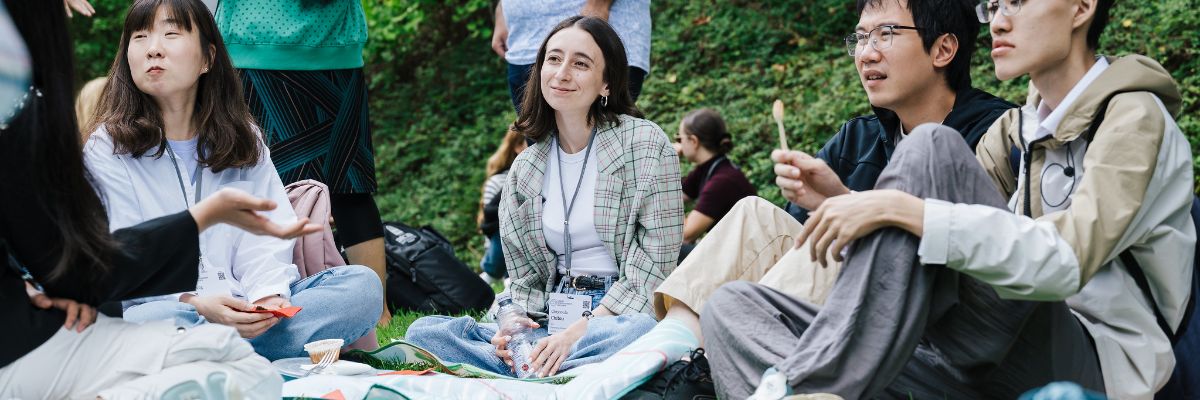
Clara Sievert from CERGE-EI, who specializes in development economics, political economy, and health economics, noted that a great benefit the Lindau meeting offers is networking. “I connected with many current PhD students from around the world, especially the US. The network is very important to stay up to date on the research frontier, for research exchange, organizing conferences, and advising students.”
The most memorable moment for Sievert came in the form of a talk by renowned scholar Yael Tauman Kalai on cryptography. One of the highlights of the event was a trip to Mainau Island with a discussion at the castle. She also described the atmosphere of the discussions as unique. What captured the researcher’s interest was how Nobel laureates applied their knowledge and expertise to reflect on the challenges of our time – particularly climate change and the consequences of artificial intelligence development. “These are the topics at the top of young scientists’ minds today,” Sievert says.
According to the economics researcher, it is precisely the networking across generations that distinguishes the Lindau meeting from other symposia. “The mixture of ‘young’ and ‘less young’ scientists – to use the Laureates’ words – is unique,” she notes, adding that she also appreciated the stellar organization of the entire event.
“It was an honor to see the Laureates in person. I like being able to connect what I’ve learned about the foundations of economics to those who gave us those ideas,” Sievert concludes.
Written by: Luděk Svoboda, External Relations Division, CAO of the CAS
Translated and prepared by: Tereza Novická, External Relations Division, CAO of the CAS
Photo: Lindau Nobel Laureate Meetings; Petra Špringer Šimonová
Read also
- Light vs. Antibiotics – Can We Get Harmful Substances Out of Our Water?
- Better ECGs and Industrial Superlasers – Real-World Results of CAS Research
- Czech Academy of Sciences to launch a joint-stock company
- In the Age of AI, Spotting a Fake Photo Is Harder Than Ever, Expert Says
- How to Turn Ideas into Successful Grants: The New ERC Incubator Is Offering Help
- SciComm 360° Tackled How to Communicate Science in the Age of Disinformation
- The Academy of the Future? A New Vision for Attracting Scientific Talent
- When Cars Fly and Bullets Swerve – Physics Gone Wrong on the Silver Screen
- The Academy to Boost Excellence and Careers in Research with New Programs
- Could an asteroid hit Earth? The risk is low, but astronomers are keeping watch
The Czech Academy of Sciences (the CAS)
The mission of the CAS
The primary mission of the CAS is to conduct research in a broad spectrum of natural, technical and social sciences as well as humanities. This research aims to advance progress of scientific knowledge at the international level, considering, however, the specific needs of the Czech society and the national culture.
President of the CAS
Prof. Radomír Pánek started his first term of office in March 2025. He is a prominent Czech scientist specializing in plasma physics and nuclear fusion.