
Tree rings reveal northward migration of tropical cyclones
07. 11. 2018
Destructive cyclones are moving to new areas. This is the conclusion of a new study which documents a long-term shift of the zones affected by tropical cyclones. The study was presented by an international team of scientists under the lead of Jan Altman from the Institute of Botany of the CAS in the prestigious journal PNAS, published by the United States National Academy of Sciences.
“So far, there was only limited knowledge about long-term changes in typhoon intensity as reliable data about typhoon activity exists only for recent decades (starting in the 1980s). In particular, it was not clear whether the increase of intense typhoons, observed in areas where they occurred very rarely in the past, is within the range of long-term natural variability or if these extraordinary changes could be connected to climate change,” says Jan Altman, lead author of the study. Beside Czech scientists, their colleagues from Russia, South Korea, and Switzerland participated in the research, as well.
Tree rings as a chronicle
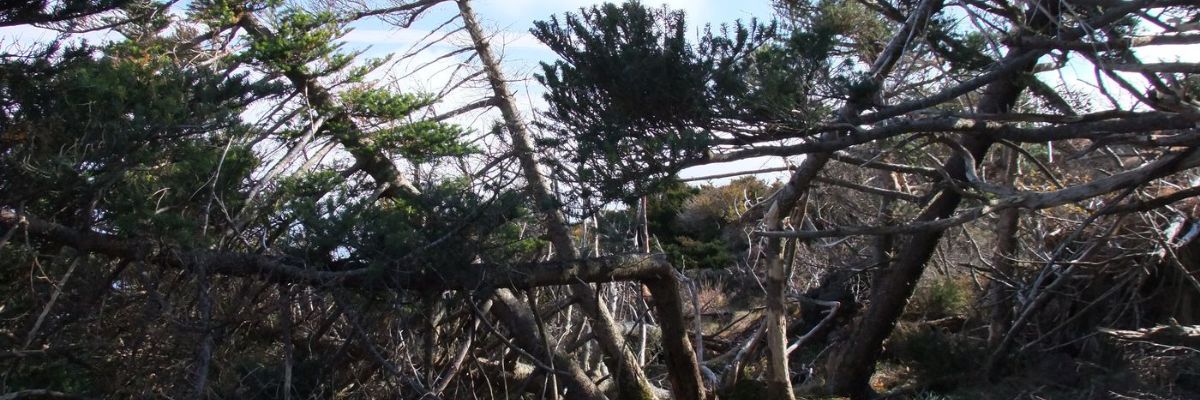
For assessment of variability of typhoons in Eastern Asia, where scientists from the Institute of Botany perform a long-term research, information stored in tree rings was used. “Tree rings serve as a chronicle where all important events occurring during tree life are stored,” explains Jan Altman. The authors of the study could, therefore, reconstruct the violation of natural tree cover caused by cyclones in the past 200 years, examining it on a 1300-kilometer long gradient in South Korea and Eastern Russia.
“Our results suggest that in the course of the 20th century a rapid increase in the destructive effects of tropical cyclones north of areas which are adjusted to typhoon occurrence took place. Our findings are important as affected regions were formerly situated at the edge of areas affected by cyclones, and these areas are more sensitive to cyclone hazards because of a lack of experience-based adaptation strategies,” adds Jan Altman.
Tropical cyclones (typhoons in Asia or hurricanes in America) cause vast damage including loss of human life, since it’s chiefly areas with high density of population that are exposed to these vicious storms.
The article in PNAS can be found here.
Original Czech text prepared by: Tereza Chýlová, Institute of Botany of the CAS, in collaboration with Alice Horáčková, Department of Media Communication of the Head Office of the CAS
Photo: Institute of Botany of the CAS
Read also
- Decoding Barley: Scientists Reveal It Acquired Genes from Distant Grasses
- Ombudspersons at the CAS Practised Navigating Difficult Conversations
- Highlights from the 2026 Week of the Czech Academy of Sciences
- New Cobalt Irradiator to Aid Radiobiology and Space Research
- Czech Academy of Sciences to Support Groundbreaking Research by Nine Scientists
- Cartilage, Step on the Gas: New Treatments for Rare Growth Disorders
- Water Is Not Enough for Settlement. Stone Was Equally Important
- A / Magazine: Toxins, Languages, and Lightning on Jupiter
- ERC-funded CLOSER Project Highlights the Middle East and North Africa Region
- Bernard Bolzano: An Inconvenient Genius Ahead of His Time
Contacts for Media
Markéta Růžičková
Public Relations Manager
+420 777 970 812
Eliška Zvolánková
+420 739 535 007
Lucie Peřinová
+420 777 728 090
Eliška Hadravová
+420 737 349 484