
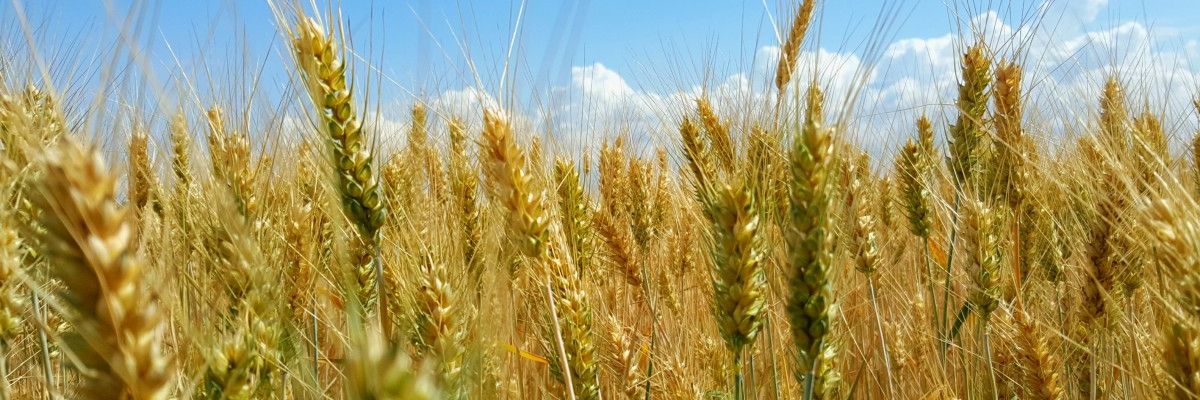
Study in PNAS journal warns of decline in climate resilience of wheat
16. 01. 2019
In last five to fifteen years, response diversity of wheat – an important sign of its resilience – has decreased significantly in most European countries. The loss of resilience occurs both in central European and northern European, as well as southern European countries. These findings, gathered with participation of Czech scientists, were published in the prestigious PNAS journal.
A group of European scientists, including Miroslav Trnka and Jan Balek from the Department of Climate Change Impacts on Agroecosystems at the Global Change Research Institute of the CAS, reached the conclusion that current breeding programs and cultivar selection practices do not provide wheat with sufficient resilience to climate change.
The scientists drew this assessment from many observations (in the order of thousands) of yield of wheat in nine European countries including the Czech Republic. On the basis of these observations they analysed how various cultivars react to weather. In wheat in fields they discovered different reactions to weather and proved their relation to climate resilience. Yield changes of all cultivars of wheat exposed to different weather conditions were similar in Northern and Central Europe, and in Southern Europe this was true especially in the case of durum wheat.
One variety is not enough
A serious problem throughout Europe, negatively affecting yields, is wheat’s low resilience to heavy rains. In general, however, it can be said that wheat yields can be severely damaged by rain, drought, heat, or cold in vulnerable phases of its vegetation cycle. Wheat yields are sensitive to even a few days of unfavourable weather conditions, including wet weather, which may cause proliferation of diseases. It also seems that drought limits the adaptation of wheat to climate change in Europe more than heat.
The scientists predict that greater variability and extremes in local weather conditions will lead to decrease in wheat yields and their significant fluctuation. Lower yields may not directly cause a food crisis; they can, however, lead to speculations and increases of prices on the market with this strategic commodity. This could jeopardize continuing availability of food to poor people, which could, in turn, lead to political instability and migration.
The authors stress that the prevalent approach to adaptation of crops to climate change, based on adaptation of genotypes to the most probable long-term change, is most likely insufficient. The ability of a single variety to maintain good yields in climatic extremes is limited. Diversity of responses to critical meteorological events could, however, effectively increase the climate resilience.
The entire study, published at the end of the last year in the PNAS journal, is available here.
Prepared by: Milan Pohl, Department of Media Communication of the Head Office of the CAS, with use of a press release by the Global Change Research Institute of the CAS
Photo: Pxhere.com
Read also
- Decoding Barley: Scientists Reveal It Acquired Genes from Distant Grasses
- Ombudspersons at the CAS Practised Navigating Difficult Conversations
- Highlights from the 2026 Week of the Czech Academy of Sciences
- New Cobalt Irradiator to Aid Radiobiology and Space Research
- Czech Academy of Sciences to Support Groundbreaking Research by Nine Scientists
- Cartilage, Step on the Gas: New Treatments for Rare Growth Disorders
- Water Is Not Enough for Settlement. Stone Was Equally Important
- A / Magazine: Toxins, Languages, and Lightning on Jupiter
- ERC-funded CLOSER Project Highlights the Middle East and North Africa Region
- Bernard Bolzano: An Inconvenient Genius Ahead of His Time
Contacts for Media
Markéta Růžičková
Public Relations Manager
+420 777 970 812
Eliška Zvolánková
+420 739 535 007
Lucie Peřinová
+420 777 728 090
Eliška Hadravová
+420 737 349 484