
Science advice offers unique benefits to policymakers, say experts
25. 07. 2019
Now more than ever, policymakers need good quality science advice to inform their decisions. Yet — as a new report by European academies highlights — the very policy issues for which scientific input is most needed are the ones where the science itself is often complex and uncertain.
This challenge is tackled by a new Evidence Review Report published by SAPEA and entitled “Making sense of science for policy under conditions of complexity and uncertainty”.
The report highlights the fact that many of the world’s most pressing problems are also incredibly complex — including climate change, environmental pollution, economic crises and the digital transformation of societies. What’s more, the scientific knowledge around these areas can often be uncertain or contested.
The report was written by a multidisciplinary group of leading scientists, nominated by academies across Europe and coordinated by Academia Europaea, part of the SAPEA Consortium. It will inform the forthcoming Scientific Opinion from the European Commission’s Group of Chief Scientific Advisors.
Professor Ortwin Renn, thechair of the working group that wrote the report, said: “Science advice for policymaking is in high demand and in urgent need. In today’s world of ‘fake news’, it is vital that we review the best available evidence and communicate it clearly to policymakers and the public. Where the science is uncertain, we must assess and explain those uncertainties, ambiguities and tensions. We live in democracies, where public scrutiny and accountability of both scientists and policymakers are inevitable and even desirable.”
The report (available here) highlights a number of key conclusions by the SAPEA working group:
- Science is one of many sources of knowledge that inform policy. Its unique strength it is that it is based on rigorous enquiry, continuous analysis and debate, providing a set of evidence that can be respected as valid, relevant and reliable.
- Science advice supports effective policymaking by providing the best available knowledge, which can then be used to understand a specific problem, generate and evaluate policy options and monitor results of policy implementation. It also provides meaning to the discussion around critical topics within society. The advice works best when it is guided by the ideal of co-creation of knowledge and policy options between scientists and policymakers.
- The relationship between science advisers and policymakers relies on building mutual trust, where both scientists and policymakers are honest about their values and goals.
- Scientific knowledge should always inform societal debate and decision-making. Citizens often have their own experiences of the policy issue under consideration and should be included in the ongoing process of deliberation between scientists, policymakers and the public.
Professor Sierd Cloetingh, Chair of the SAPEA Board, added: “How we provide good science advice to European Commission policymakers is a vital question that sits at the core of SAPEA’s mission. This report is a fundamental contribution to the future development of science advice and is based on the multidisciplinary expertise of a group of first-class scientists, all with practical experience of the world of science advice.”
About SAPEA
SAPEA (Science Advice for Policy by European Academies) brings together outstanding expertise in engineering, humanities, medicine, natural and social sciences from over 100 academies, young academies and learned societies across Europe. SAPEA is part of the European Commission’s Scientific Advice Mechanism. It is funded by grant 737432 from the European Union’s Horizon 2020 programme.
Prepared by: SAPEA
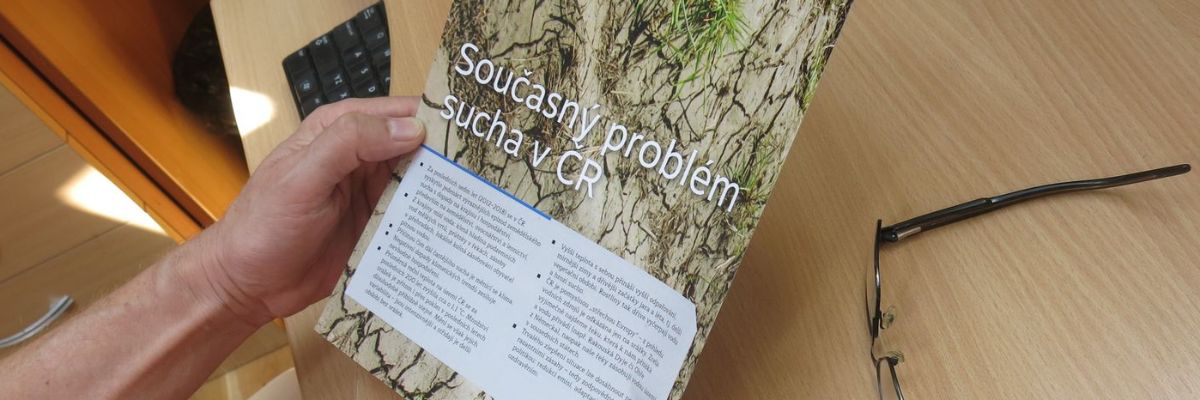
Photo: Milan Pohl, Department of Media Communication of the Head Office of the CAS
Read also
- Decoding Barley: Scientists Reveal It Acquired Genes from Distant Grasses
- Ombudspersons at the CAS Practised Navigating Difficult Conversations
- Highlights from the 2026 Week of the Czech Academy of Sciences
- New Cobalt Irradiator to Aid Radiobiology and Space Research
- Czech Academy of Sciences to Support Groundbreaking Research by Nine Scientists
- Cartilage, Step on the Gas: New Treatments for Rare Growth Disorders
- Water Is Not Enough for Settlement. Stone Was Equally Important
- A / Magazine: Toxins, Languages, and Lightning on Jupiter
- ERC-funded CLOSER Project Highlights the Middle East and North Africa Region
- Bernard Bolzano: An Inconvenient Genius Ahead of His Time
Contacts for Media
Markéta Růžičková
Public Relations Manager
+420 777 970 812
Eliška Zvolánková
+420 739 535 007
Lucie Peřinová
+420 777 728 090
Eliška Hadravová
+420 737 349 484