
Electron detector from Brno discovers new species of organisms
05. 11. 2018
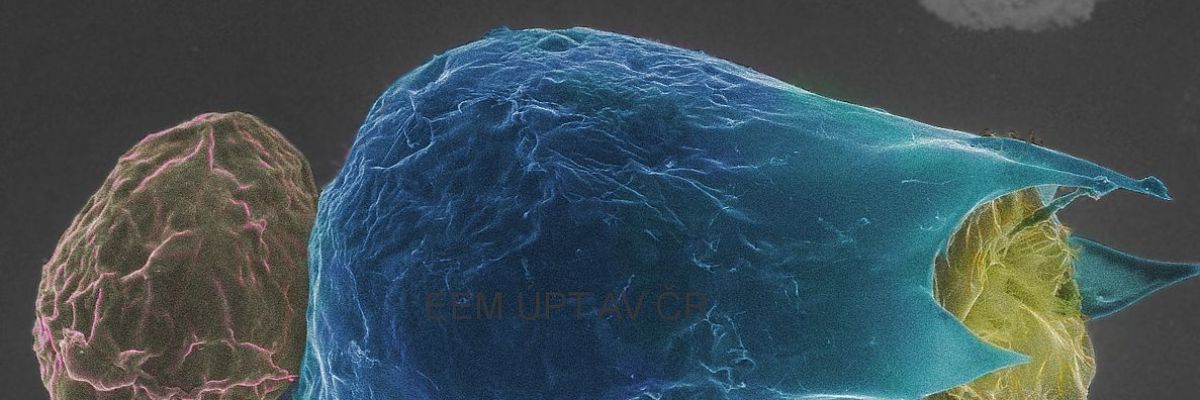
A unique electron detector, presented half a year ago in Brno, has accomplished its first major discovery. Thanks to the detector, the team in Brno was able to view rotifers from the Brachionus calyciflorus species complex in their natural wet environment, gaining the worldwide primacy in this respect. What’s more, the detector has also helped the scientists discover several hitherto unknown species of these tiny organisms, invisible to the naked eye.
The highly sensitive electron detector for the environmental scanning electron microscope (ESEM), developed by the team in Brno under the lead of Dr. Vilém Neděla, allows scientists to examine even very delicate samples in their natural condition. The team from the Institute of Scientific Instruments (ISI) of the CAS had been working on its development – which has been completed this spring – for more than ten years.
Samples from Greece, Finland, or Netherlands
In research of rotifers, Vilém Neděla’s team used a combination of a unique low-temperature method and special electron detector. “Rotifers are translucent organisms, invisible to the human eye. They move very quickly in water and can be seen only through a microscope. Using the new electron detector, we were able to view them without any modifications completely undamaged, which has been impossible until now,” Neděla stated. “These organisms are very well known. They are even considered a model organism, and yet, thanks to reverse taxonomy, new hidden species have been discovered. The research was led by a world-renowned expert on aquatic organisms and biodiversity, Steven A. J. Declerck. We have worked with an international team of scientists from Greece, Finland, and Netherlands. They were sending us samples from these countries and we had just a few hours to view these organisms,” explained Neděla and added that an article about new species of these organisms had been recently published by the prestigious scientific journal PlosOne.
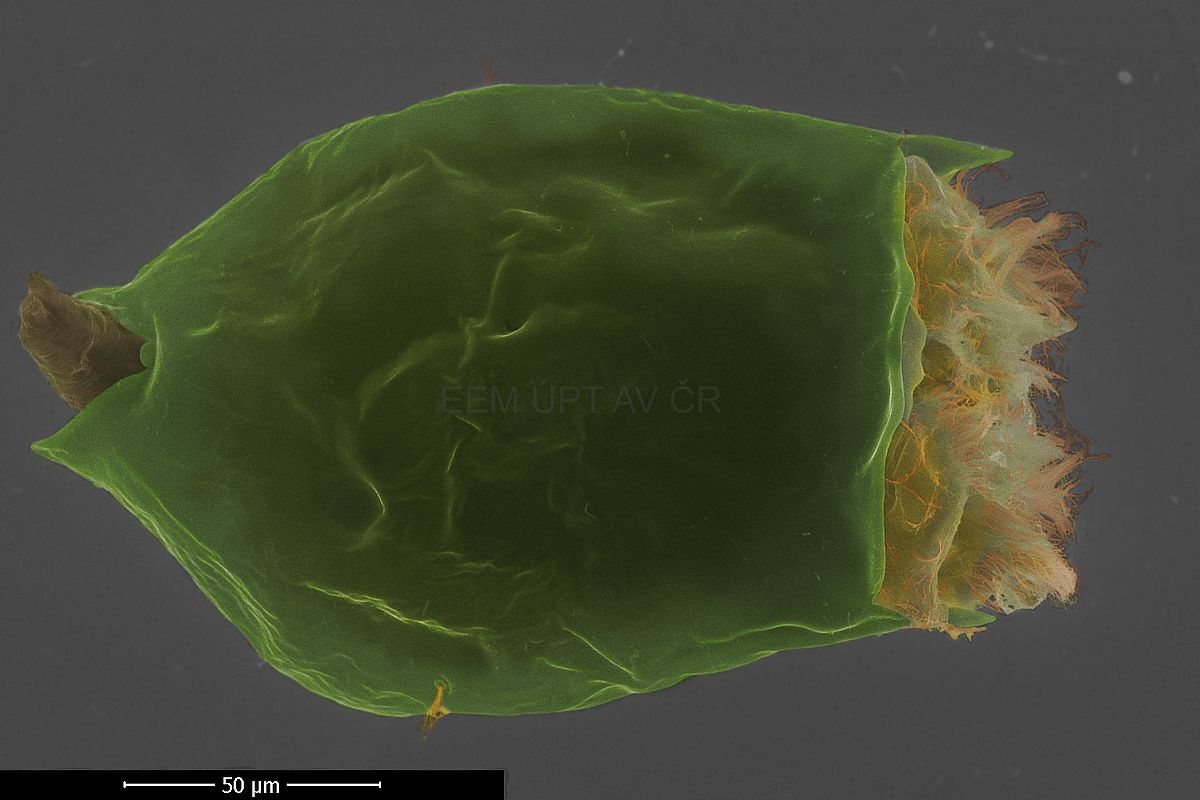
A detailed look at one of the microscopic rotifers
Rotifers inhabit mainly aquatic environments, but they also include species that can be found in mosses or soil. More than 2000 species of rotifers are known to science, but many species including common inhabitants of Czech ponds are also comprised of heretofore indistinguishable variations. For humans, rotifers have only an indirect importance; thanks to their high rate of reproduction, however, they constitute an important part of food networks and they also play a vital role in self-purification of waters.
Detector helps with development of medicines and vaccines
Examination of such organisms has been always complicated by the fact that they often live in water and themselves contain high amounts of water. With use of classic scanning electron microscopes, it was necessary to drain or freeze the samples and study them in a dead, often warped form. On the other hand, the environmental microscope from Brno, equipped with the new electron detector, does not deform the samples in any way. What’s more, the organisms can often stay alive, in their natural state.
“Even now, we work on another research in the area of plant as well as animal biology, participating in the development of new medicines and vaccines. We examine ice and chemical processes in it. We also focus on food industry and research of polymers,” Vilém Neděla summarised the contributions of the state-of-the-art electron microscope to interdisciplinary research.
Prepared by: Milan Pohl, Department of Media Communication of the Head Office of the CAS, based on press releases of the Institute of Scientific Instruments of the CAS
Photo: Institute of Scientific Instruments of the CAS
Read also
- Decoding Barley: Scientists Reveal It Acquired Genes from Distant Grasses
- Ombudspersons at the CAS Practised Navigating Difficult Conversations
- Highlights from the 2026 Week of the Czech Academy of Sciences
- New Cobalt Irradiator to Aid Radiobiology and Space Research
- Czech Academy of Sciences to Support Groundbreaking Research by Nine Scientists
- Cartilage, Step on the Gas: New Treatments for Rare Growth Disorders
- Water Is Not Enough for Settlement. Stone Was Equally Important
- A / Magazine: Toxins, Languages, and Lightning on Jupiter
- ERC-funded CLOSER Project Highlights the Middle East and North Africa Region
- Bernard Bolzano: An Inconvenient Genius Ahead of His Time
Contacts for Media
Markéta Růžičková
Public Relations Manager
+420 777 970 812
Eliška Zvolánková
+420 739 535 007
Lucie Peřinová
+420 777 728 090
Eliška Hadravová
+420 737 349 484